Search This Blog

Saturday, June 29, 2019

Karyopharm awaits a verdict on selinexor

A delayed decision on Karyopharm’s selinexor is the pick of the bunch for July.
On the US approvals front a quiet June is about to give way to an even quieter July. But the fact that 2019 has, so far, been a relatively slow year for the FDA will not bother Karyopharm if it can get the nod for its lead candidate, selinexor.
The project is due a decision in multiple myeloma by July 6, a three-month delay to its original PDUFA date, and approval is far from assured. Assets from Merck & Co and Shield Therapeutics are also in line for consideration, while Celgene’s Otezla could get a thumbs-up in a new indication, Behçet’s disease, as Bristol-Myers Squibb looks for a buyer for the product.
The FTC said this week that Bristol would have to sell the psoriasis drug for its purchase of Celgene to go through; investors reacted by knocking nearly $6bn off Bristol’s market cap.
Approval in Behçet’s is unlikely to make much difference to Bristol’s negotiations: the inflammatory condition is rare in the US and Europe. Celgene previously said it would also seek a supplemental approval for Otezla in moderate to severe scalp psoriasis in the second quarter.
Take two for selinexor
Meanwhile, Karyopharm’s investors face a nervous wait over selinexor, which is awaiting a decision in relapsed/refractory multiple myeloma patients who have received at least three prior therapies. The company’s share price plunged in February after an FDA advisory panel recommended delaying approval until readout of the Boston trial in earlier-line patients.
The subsequent delay gave investors hope that accelerated approval could still be within reach, with analysts speculating that the company had submitted some of the Boston data to the agency early (Karyopharm’s selinexor delay could speed approval, March 15, 2019).
There are concerns about toxicity with selinexor, but the very sick population that Karyopharm is initially targeting could work in the company’s favour. Still, even if it is approved it might remain a last-ditch option, and moving into earlier lines of therapy could be another story. In February, EvaluatePharma sellside consensus put 2024 selinexor sales at $1.2bn; expectations have now dropped to $370m.
NOTABLE FIRST-TIME US APPROVAL DECISIONS DUE IN JULY
ProjectCompanyPDUFA dateProduct NPV ($m)
SelinexorKaryopharmJul 61,646
MK-7655AMerck & CoJul 16
FeraccruShield TherapeuticsJul 2796
Source: EvaluatePharma.
Merck & Co is set to hear by mid-July on its latest antibacterial, a combination of relebactam, imipenem and cilastatin known as MK-7655A. The project is due a verdict in complicated urinary tract and intra-abdominal infections caused by certain Gram-negative bacteria in adults with limited or no alternative therapies.
Merck recently bagged approval for Zerbaxa, another antibacterial combination product, in the new use of pneumonia. Although there is a big need for new antibiotics, the market for such products is far from lucrative.
Meanwhile, a positive decision on the oral iron supplement Ferracru would give its originator, Shield Therapeutics, a big boost. The product is already available in Europe for the treatment of iron deficiency in patients with or without anaemia.
Finncap analysts expect Ferracru to get the US nod for iron deficiency anaemia, but noted that a general iron deficiency label would double the addressable market.
Shield’s future had looked dim after the failure of the Aegis-CKD trial in early 2018, but the UK company later carried out a new analysis, with better results. Earlier this year, the Aegis-H2H trial found that Ferracru was non-inferior to injectable iron. Shield will have to hope that this data package will be enough to convince the FDA.
Another project that could be due a nod is Samsung Bioepsis’s Humira biosimilar Imraldi, which was accepted for review by the FDA in September. Three other Humira biosimilars have US approval – Amgen’s Amjevita, Novartis’s Hyrimoz and Boehringer’s Cyltezo – although Humira’s maker, Abbvie, has agreements with most of their manufacturers to keep them off the market until 2023.
SUPPLEMENTARY AND OTHER NOTABLE APPROVAL DECISIONS DUE IN JULY
Product CompanyEvent typeDate
OtezlaCelgenesNDA for Behçet’s diseaseJul 21
ImraldiSamsung BioepisHumira biosimilar; FDA accepted filing in Sep 2018Possibly July
Source: EvaluatePharma.

Pivotal data readouts for Ardelyx and Rhythm will set the tone for next year

Both Ardelyx and Rhythm Pharmaceuticals are looking for phase III clinical wins to kick off filing discussions for pipeline leads.
Welcome to your weekly digest of approaching regulatory and clinical readouts.The next six months are going to be very busy for Ardelyx, which expects a raft of data with its lead project, tenapanor, in a number of indications.
First up is the phase III Amplify trial, looking at tenapanor as an adjunctive therapy to phosphate binders for patients with end-stage renal disease. The multipurpose asset is also looking to land its first approval, with a PDUFA decision in irritable bowel syndrome with constipation (IBS-C) due by September 12.
Tenapanor, a small molecule, targets the NHE3 transporter in the gut, resulting in the excretion of excess phosphate. While not in itself a treatment for renal disease it could reduce the pill burden of patients using phosphate binders, and therefore increase compliance.
The primary endpoint of the 214-patient Amplify study is change in serum phosphate levels after four weeks with tenapanor versus placebo. The project is also being tested as monotherapy in the phase III Phreedom study, which is due to read out in the fourth quarter. If it is successful in both trials it could become the only phosphate-lowering drug approved as a mono and adjunctive therapy.
In terms of IBS-C, tenapanor is designed to act directly in the gut to reduce absorption of sodium; this increases fluid in the gut, loosening stool and alleviating constipation. However, the project has had several setbacks in this setting, leaving it significantly behind the industry leader, Allergan’s Linzess.
TOP IBS-C PRODUCTS BY 2024
Annual indication sales ($m) 
ProductCompany20182024e
TenapanorArdelyx443
LinzessAllergan372434
MovicolNorgine188179
Analysts now forecast a launch in IBS-C in 2021. Given Linzess’s headstart, and the fact tenapanor has so far lagged on efficacy and adverse events, the latter will face a tough time achieving the $443m of IBS-C revenues expected in 2024. A partner could help Ardelyx drive sales, and the company has previously said it was in discussions; these could accelerate if tenapanor is approved.
If all of these catalysts turn out to be positive it could make for a year-end turnaround for Ardelyx, which has recently seen its shares fall by 15%.
Hungry for success
Meanwhile, Rhythm Pharmaceuticals is expected to announce topline data from two pivotal trials of its lead project, setmelanotide, in two ultra-rare genetic obesity disorders in the third quarter.
Patients with the diseases, homozygous pro-opiomelanocortin (POMC) deficiency and leptin receptor (LepR) deficiency, have insatiable hunger and suffer from obesity at an early age.
Setmelanotide is designed to activate the melanocortin-4 pathway, which should lead to increased energy expenditure and reduced appetite.
The primary endpoint of both studies is the number of setmelanotide-treated patients who achieve 10% reduction in weight from baseline after 52 weeks versus placebo. The studies also include a double-blind, placebo-controlled, eight-week withdrawal period to measure weight and hunger scores when the therapy is stopped.
If the results are positive a US filing could be on the cards for the end of 2019 or early 2020. So far, if phase II studies are anything to go by, the omens look good for approval. In phase II patients reported body weight reductions of 10-30% after 52 weeks, and setmelanotide has not demonstrated the cardiovascular side effects that have plagued previous MC4 receptor agonists.
However, even if setmelanotide succeeds in the clinic, its commercial chances look less clear, with questions remaining over the size of the market. Indeed, consensus sellside forecasts from EvaluatePharma put 2024 sales at just $47m.

Improved vaccine for bacterial meningitis and bloodstream infections

Researchers have now developed a new vaccine, a native outer membrane vesicle (NOMV) vaccine, for meningitis and bloodstream infections caused by “meningococcal group B” bacteria. This will allow younger people to be vaccinated and will address several limitations of the current vaccinations. The research is published this week in mBio, a journal of the American Society for Microbiology.
“We developed the improved version of the vaccine by making several genetic changes to the strain of bacteria used to produce the vaccine, resulting in a broadly protective vaccine rather than a strain-specific vaccine,” said Peter Beernink, Ph.D., Scientist at the Center for Immunobiology and Vaccine Development, Benioff Children’s Hospital Oakland.
There are currently only two licensed vaccines for prevention of meningitis and bloodstream infections caused by “meningococcal group B” bacteria, which are only licensed for use in people age 10 years and older. Both vaccines contain a bacterial protein known as Factor H binding protein (FHbp), which can bind to a host protein known as Factor H (FH). The licensed vaccines have several limitations, which include lack of effectiveness against some bacterial strains and low immune responses of infant humans.
The researchers immunized infant rhesus monkeys with the NOMV-FHbp vaccine, which induced higher levels of protective serum antibodies than a licensed vaccine against five of six bacterial strains tested. Two macaques immunized with the licensed vaccine, which contains FHbp that binds macaque FH, developed antibodies to the host FH protein whereas none of the animals given the NOMV-FHbp vaccine or a negative control vaccine developed such antibodies.
The monkey antibody responses to the vaccines were measured in the laboratory based on the ability of serum antibodies to kill the bacteria in a test that is widely considered to predict protection in humans. The sample sizes of animals were chosen such that the results are highly statistically significant.
“The experimental NOMV vaccine extends the approach of using outer membrane vesicle vaccines, which previously have been given to millions of persons during meningitis B epidemics in Norway, Cuba and New Zealand,” said Beernink.
Thus, in a relevant infant non-human primate model, the NOMV-FHbp vaccine elicited higher levels of protective antibodies than the licensed vaccine and anti-FH antibodies in fewer animals. “This shows that the vaccine has the potential to be developed into a more broadly protective vaccine for humans, to extend coverage to infants and toddlers, which are the age groups among the highest risk of developing meningococcal disease, and to increase vaccine safety,” said Beernink.
Story Source:
Materials provided by American Society for MicrobiologyNote: Content may be edited for style and length.

Journal Reference:
  1. Peter T. Beernink, Vianca Vianzon, Lisa A. Lewis, Gregory R. Moe, Dan M. Granoff. A Meningococcal Outer Membrane Vesicle Vaccine with Overexpressed Mutant FHbp Elicits Higher Protective Antibody Responses in Infant Rhesus Macaques than a Licensed Serogroup B VaccinemBio, 2019; 10 (3) DOI: 10.1128/mBio.01231-19

Brain cancer biotech CNS Pharma files, sets terms for $10 million IPO

CNS Pharmaceuticals, an early stage biotech developing therapies for brain cancer and other CNS tumors, announced terms for its IPO on Friday.
The Houston , TX-based company plans to raise $10 million by offering 2.1 million shares at a price range of $4 to $5. At the midpoint of the proposed range, CNS Pharmaceuticals would command a fully diluted market value of $77 million.
CNS Pharmaceuticals was founded in 2017 and plans to list on the Nasdaq under the symbol CNSP. The Benchmark Company is the sole bookrunner on the deal.

Carbs May Be Intrinsically Bad, Regardless of Weight

Welcome to Impact Factor, your weekly portion of commentary on a new medical study. I’m Dr F. Perry Wilson.
This week , another nail in the carbohydrate coffin as a small but rigorous study appearing in JCI Insight suggests that a low-carb, high-fat diet improves the metabolic syndromeeven when weight doesn’t change.[1]
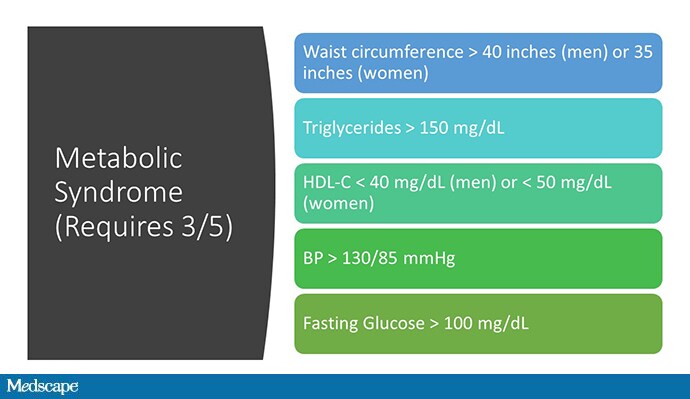
A quick reminder: Metabolic syndrome is defined as having at least three of the five factors on this list.
These factors seem to be tied to insulin resistance, so avoiding insulinsecretion (by limiting carb intake) has always made sense. Indeed, prior studies of low-carb diets have shown improvements in metabolic syndrome parameters, but those diets were also associated with weight loss, which led to a big question: Are low-carb diets beneficial because they help people lose weight or because there is something intrinsically bad about carbs themselves?
The JCI Insight paper finally gives us the answer, and the carb producers of the world aren’t going to like it.
This was a physiologic study; 16 individuals were randomized to three different diets for 4-week periods.
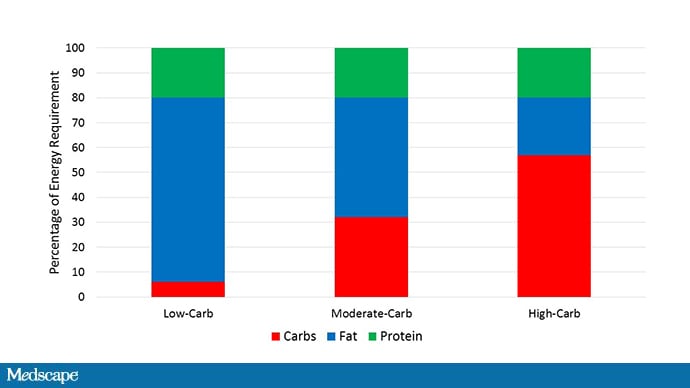
Each individual randomly received either a low-carb diet, a moderate-carb diet, or a high-carb diet. Protein levels were fixed, so think of low-carb and high-fat as synonymous here. Each participant received each diet with 2-week washouts in between. They thus served as their own control—a smart design choice in a small study like this. Critically, the diets were designed to have a total caloric content that would not lead to weight changes. This was not a weight-loss intervention; it was a pure dietary change intervention.
After each 4-week diet, researchers measured a slew of biochemical parameters, and the tale of the tape was quite telling.

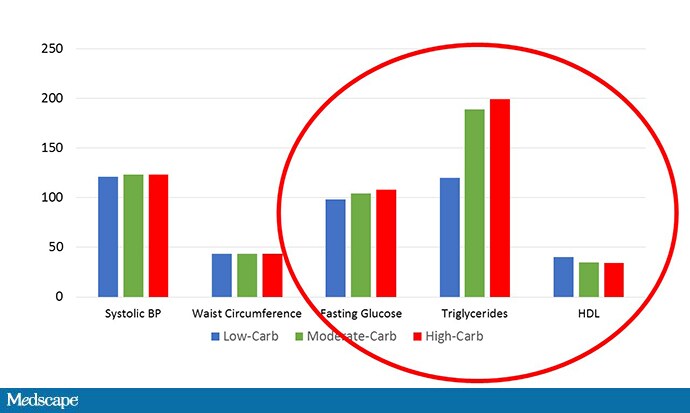
Looking at those metabolic syndrome parameters, there was no significant change in waist circumference or blood pressure, but fasting glucose levels and triglycerides were significantly lower in the low-carb diet group, while HDLwas higher.
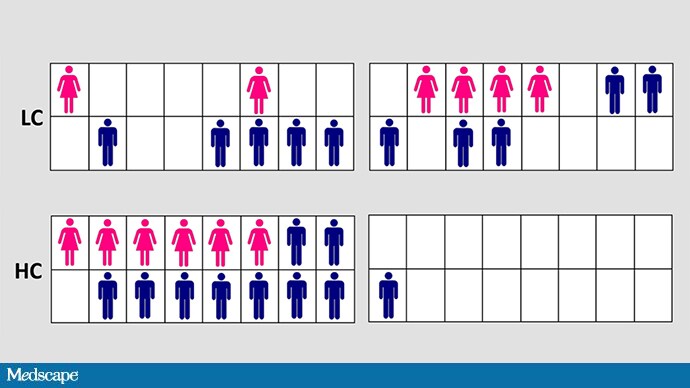
In fact, of the 16 individuals in the trial, nine no longer met criteria for metabolic syndrome after 4 weeks of the low-carb diet. By comparison, only one individual no longer met the definition of metabolic syndrome after 4 weeks of the high-carb diet.
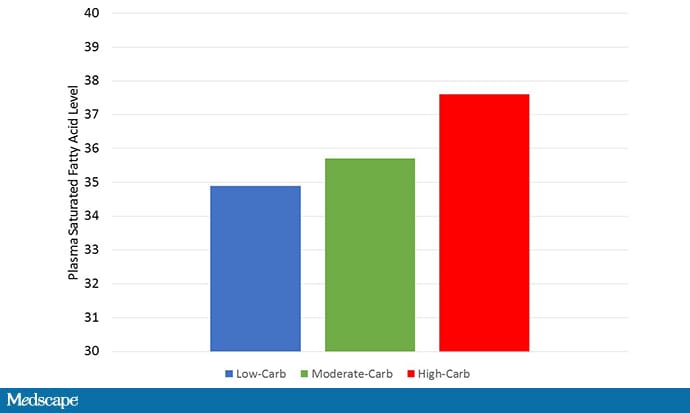
Other surprising findings: Blood levels of saturated fats were actually lower in the low-carb group, which had a substantially higher saturated fat intake (mostly in the form of cheese). This argues that the old canard “You are what you eat” doesn’t quite jibe with modern metabolic science.
Over the past five decades, carbohydrate consumption among Americans has skyrocketed, and rates of metabolic syndrome along with it. This study is the best so far to suggest that this relationship is not just driven by increases in weight but by the carbs themselves. The long-running war on fat may turn out to be a case of friendly fire.

More seniors dying due to falls; doctors can do more to reduce that risk

Experts call for a personalized approach to preventing falls, more involvement by clinicians and motivating older adults to take action.


KEY TAKEAWAYS

Older adults are probably more vulnerable to falls because they’re living longer with diabetes and cardiovascular disease and taking more brain-altering medications such as opioids.
Doctors should ask older adults three questions about falls: Have you fallen in the past year? Do you feel unsteady when walking or standing? And are you afraid of falling?

Older adults worried about falling typically receive general advice: Take an exercise class. Get your vision checked. Stop taking medications for sleep. Install grab bars in the bathroom.
A new study suggests that sort of advice hasn’t proved to be very effective: Nearly three times more adults age 75 and older died from falls in 2016 than in 2000, according to a recent report in the Journal of the American Medical Association.
In 2016, 25,189 people in this age group died from falls, compared with 8,613 in 2000.  The rate of fatal falls for adults 75 and older more than doubled during this period, from 51.6 per 100,000 people in 2000 to 122.2 per 100,000 people in 2016, the report found.
What’s needed to check this alarming trend, experts suggest, is a more personalized approach to preventing falls, more involvement by medical practitioners and better ways to motivate older adults to take action.
Elizabeth Burns, a co-author of the report and health scientist at the U.S. Centers for Disease Control and Prevention, said it’s not yet clear why fatal falls are increasing. Older adults are probably more vulnerable because they’re living longer with conditions such as diabetes and cardiovascular disease and taking more brain-altering medications such as opioids, she noted.
By 2030, the CDC projects, 49 million older adults will fall each year, resulting in 12 million injuries and more than $100 billion in health-related spending.
The steep increase in fatal falls is “definitely upsetting,” especially given national, state and local efforts to prevent these accidents, said Kathleen Cameron, senior director of the Center for Health Aging at the National Council on Aging.
Since 2012, the CDC has tried to turn the situation around by encouraging physicians to adopt evidence-based fall prevention practices. But doctors still are not doing enough to help older patients, Burns said.
She cites evidence from two studies. In one, published in 2016, researchers found that fewer than half of seniors who were considered high risk — people who’d fallen repeatedly or sought medical attention for falls — received a comprehensive fall risk assessment, as recommended by the CDC and the American Geriatrics Society.
These assessments evaluate a person’s gait, lower-body muscle strength, balance, medication use, problems with their feet, blood pressure when rising from a sitting position, vision, vitamin D levels and home environment.
In another study, published last year, Burns found that physicians and nurse practitioners routinely failed to review older adults’ medications (about 40% didn’t do so), recommend exercise (48% didn’t) or refer people to a vision specialist (about 62% didn’t) when advising older patients about falls.
Physicians’ involvement is important because older adults tend to take their doctors’ advice seriously, said Emily Nabors, program manager of the Fall Prevention Center of Excellence at the University of Southern California.
Also, seniors tend to underestimate their chance of falling.
“It’s very easy for people to look at a list of things that they should be concerned about and think, ‘That doesn’t apply to me. I walk just fine. I don’t have trouble with my balance,'” said Dorothy Baker, a research scientist at Yale School of Medicine and executive director of the Connecticut Collaboration for Fall Prevention.
What’s the alternative to giving seniors a laundry list of things to do and hope they pay attention? We asked experts around the country for suggestions:
Get a fall risk assessment. Doctors should ask older adults three questions about falls: Have you fallen in the past year? Do you feel unsteady when walking or standing? And are you afraid of falling?
If the answer is yes to any of these questions, you’re probably a good candidate for a comprehensive fall risk evaluation.
Dr. Muriel Gillick, a geriatrician at Harvard Medical School, believes older patients and their families should “clamor” for these assessments. “Tell your doctor, ‘We’re really worried about falls. Can you do this kind of evaluation?'” she said.
When you join Medicare, you become eligible for a “Welcome to Medicare” prevention visit, during which doctors should evaluate your chance of falling. (This is a brief screen, not a thorough examination.) Subsequently, seniors are eligible each year for a Medicare annual wellness visitwhich offers another chance for a physician to assess your fall risk.
If your doctor doesn’t offer these services, ask for a referral to another medical practice, said Leslie Allison, editor-in-chief of the Journal of Geriatric Physical Therapy. Physical therapists can provide an in-depth review of walking, muscle strength and balance, she noted.
The CDC’s Stay Independent” brochure lists 12 fall-related considerations for those interested in doing a self-assessment. Pay attention to the last one, about depression, which alters attention, slows responses and is often overlooked in discussions about falls.
Get a personalized plan. A fall assessment should identify risk factors that are specific to you as well as ways to address them.
“The goal is to come up with personalized recommendations, which older adults are far more likely to take up than generic non-tailored approaches,” said Elizabeth Phelan, a researcher of falls and associate professor of geriatric medicine at the University of Washington.
Take programs that address balance, for example. Some are designed for older adults who are frail, some for those who are active, and still others for those in between. “If a senior goes to a program that doesn’t meet her needs, it’s not going to work out,” said Mindy Renfro, associate professor of physical therapy at Touro University Nevada.
The single most important intervention is exercise — but not just any kind. Notably, simply walking — the type of exercise most older adults get — won’t help unless seniors have previously been sedentary. “If you’re walking, by all means, don’t stop: It’s good for general health and well-being,” Phelan said. “But to prevent falls, you need to focus on strength and balance.”
Exercise such as tai chi or the Otago Exercise Program could improve strength and balance, advises Cameron of the National Council on Aging. She suggested asking an area agency on aging, senior center, YMCA or YWCA about classes. The center also has formed fall prevention coalitions in 43 states. Look for one near you here.
national directory of resources that can help older adults make home modifications is being expanded through a new program led by USC’s Leonard Davis School of Gerontology. Occupational therapists can evaluate homes and suggest changes to reduce your chance of falling. Ask your physician for a referral.
Your doctor’s guidance will be needed to review medications that can contribute to falls. Using three or more psychotropic medications such as opioids, antidepressants, antipsychotics, benzodiazepines (such as Valium) and “Z” drugs for sleep (such as Ambien) puts seniors at substantial risk, said Dr. Donovan Maust, an assistant professor of psychiatry at the University of Michigan Medical School.
Be careful during transitions. Older adults coming home from the hospital or starting new medications should be especially careful about falling, because they may be weak, deconditioned, exhausted and disoriented.
new paper from researchers at the University of Michigan and Yale University highlights this risk. They looked at 1.2 million older adults readmitted to the hospital within 30 days of being discharged in 2013 and 2014. Fall-related injuries were the third most common reason for readmissions.
In other studies, Geoffrey Hoffman, an assistant professor at the University of Michigan School of Nursing, has asked seniors and caregivers about their experiences during discharge planning. None remembered receiving information about falls or being advised that they might be at risk.
Hospital staffers should discuss fall prevention before older patients leave the hospital, Hoffman said, calling it “a time when it’s critical to intervene on fall risk.”
Consider the message. In research studies and focus groups, older adults report they don’t like negative messages surrounding falls such as “You can hurt yourself badly or die if you don’t watch out.”
“Telling older adults what they need to do to be safe feels patronizing to many people and raises their hackles,” Hoffman said.
Instead, seniors respond better to messages such as “taking these steps is going to help you stay independent,” Burns of the CDC said.

In Secret, Seniors Discuss ‘Rational Suicide’

Ten residents slipped away from their retirement community one Sunday afternoon for a covert meeting in a grocery store cafe. They aimed to answer a taboo question: When they feel they have lived long enough, how can they carry out their own swift and peaceful death?
The seniors, who live in independent apartments at a high-end senior community near Philadelphia, showed no obvious signs of depression. They’re in their 70s and 80s and say they don’t intend to end their lives soon. But they say they want the option to take “preemptive action” before their health declines in their later years, particularly due to dementia.
More seniors are weighing the possibility of suicide, experts say, as the baby boomer generation — known for valuing autonomy and self-determination — reaches older age at a time when modern medicine can keep human bodies alive far longer than ever before.
The group gathered a few months ago to meet with Dena Davis, a bioethics professor at Lehigh University who defends “rational suicide” — the idea that suicide can be a well-reasoned decision, not a result of emotional or psychological problems. Davis, 72, has been vocal about her desire to end her life rather than experience a slow decline due to dementia, as her mother did.
The concept of rational suicide is highly controversial; it runs counter to many societal norms, religious and moral convictions and the efforts of suicide prevention workers who contend that every life is worth saving.
“The concern that I have at a social level is if we all agree that killing yourself is an acceptable, appropriate way to go, then there becomes a social norm around that, and it becomes easier to do, more common,” said Dr. Yeates Conwell, a psychiatrist specializing in geriatrics at the University of Rochester and a leading expert in elderly suicide. That’s particularly dangerous with older adults because of widespread ageist attitudes, he said.
As a society, we have a responsibility to care for people as they age, Conwell argued. Promoting rational suicide “creates the risk of a sense of obligation for older people to use that method rather than advocate for better care that addresses their concerns in other ways.”
A Kaiser Health News investigation in April found that older Americans — a few hundred per year, at least — are killing themselves while living in or transitioning to long-term care. Many cases KHN reviewed involved depression or mental illness. What’s not clear is how many of these suicides involve clear-minded people exercising what Davis would call a rational choice.
Suicide prevention experts contend that while it’s normal to think about death as we age, suicidal ideation is a sign that people need help. They argue that all suicides should be avoided by addressing mental health and helping seniors live a rich and fulfilling life.
But to Lois, the 86-year-old woman who organized the meeting outside Philadelphia, suicides by older Americans are not all tragedies. Lois, a widow with no children, said she would rather end her own life than deteriorate slowly over seven years, as her mother did after she broke a hip at age 90. (Lois asked to be referred to by only her middle name so she would not be identified, given the sensitive topic.) In her eight years at her retirement community, Lois has encountered other residents who feel similarly about suicide. But because of stigma, she said, the conversations are usually kept quiet.
Lois insisted her group meet off-campus at Wegmans because of the “subversive” nature of the discussion. Supporting rational suicide, she said, clashes with the ethos of their continuing care retirement community, where seniors transition from independent apartments to assisted living to a nursing home as they age.
Seniors pay six figures to move into the bucolic campus, which includes an indoor heated pool, a concert hall and many acres of wooded trails. They are guaranteed housing, medical care, companionship and comfort for the rest of their lives.
“We are sabotaging that,” Lois said of her group. “We are saying, thank you very much, but that’s not what we’re looking for.”
Carolyn, a 72-year-old member of the group who asked that her last name be withheld, said they live in a “fabulous place” where residents enjoy “a lot of agency.” But she and her 88-year-old husband also want the freedom to determine how they die.
A retired nurse, Carolyn said her views have been shaped in part by her experience in the HIV/AIDS epidemic. In the 1990s, she created a program that sent hospice volunteers to work with people dying of AIDS, which at the time was a death sentence.
She said many of the men kept a stockpile of lethal drugs on a dresser or bedside table. They would tell her, “When I’m ready, that’s what I’m going to do.” But as their condition grew worse, she said, they became too confused to follow through.
“I just saw so many people who were planning to have that quiet, peaceful ending when it came, and it just never came. The pills just got scattered. They lost the moment” when they had the wherewithal to end their own lives, she said.
Carolyn emphasized that she and her husband do not feel suicidal, nor do they have a specific plan to die on a certain date. But she said that while she still has the ability, she wants to procure a lethal medication that would offer the option for a peaceful end in the future.
“Ideally, I would have in hand the pill, or the liquid or the injection,” she said. She said she’s embarrassed that, as a former nurse, she doesn’t know which medication to use or how to get it.
Maine recently became the ninth state to allow medical aid in dying, which permits some patients to get a doctor’s prescription for lethal drugs. That method is restricted, however, to people with a terminal condition who are mentally competent and expected to die within six months.
Patients who aren’t eligible for those laws would have to go to an “underground practice” to get lethal medication, said Dr. Timothy Quill, a palliative care physician at the University of Rochester School of Medicine. Quill became famous in the 1990s for publicly admitting that he gave a 45-year-old patient with leukemia sleeping pills so she could end her life. He said he has done so with only one other patient.
Quill said he considers suicide one option he may choose as he ages. “I would probably be a classic [case] — I’m used to being in charge of my life.” He said he might be able to adapt to a situation in which he became entirely dependent on the care of others, “but I’d like to be able to make that be a choice as opposed to a necessity.”
Suicide could be as rational a choice as a patient’s decision to end dialysis, after which the patient typically dies within two weeks, he said. But when patients bring up suicide, he said, it should launch a serious conversation about what would make their life feel meaningful and their preferences for medical care at the end of life.
Clinicians have little training on how to handle conversations about rational suicide, said Dr. Meera Balasubramaniam, a geriatric psychiatrist at the New York University School of Medicine who has written about the topic. She said her views are “evolving” on whether suicide by older adults who are not terminally ill can be a rational choice.
“One school of thought is that even mentioning the idea that this could be rational is an ageist concept,” she said. “It’s an important point to consider. But ignoring it and not talking about it also does not do our patients a favor, who are already talking about this or discussing this among themselves.”
In her discussions with patients, she said, she explores their fears about aging and dying and tries to offer hope and affirm the value of their lives.
These conversations matter because “the balance between the wish to die and the wish to live is a dynamic one that shifts frequently, moment to moment, week to week,” said Conwell, the suicide prevention expert.
Carolyn, who has three children and four grandchildren, said conversations about suicide are often kept quiet for fear that involving a family member would implicate them in a crime. The seniors also don’t want to get their retirement community in trouble.
In some of the cases KHN reviewed, nursing homes have faced federal fines of up to tens of thousands of dollars for failing to prevent suicides on-site.
There’s “also just this hush-hush atmosphere of our culture,” said Carolyn. “Not wanting to deal with judgment — of others, or offend someone because they have different beliefs. It makes it hard to have open conversations.”
Carolyn said when she and her neighbors met at the cafe, she felt comforted by breaking the taboo.
“The most wonderful thing about it was being around a table with people that I knew where we could talk about it, and realize that we’re not alone,” Carolyn said. “To share our fears — like if we choose to use something, and it doesn’t quite do the job, and you’re comatose or impaired.”
People who attempt suicide and survive may end up in a psychiatric hospital “with people watching you all the time — the complete opposite of what you’re trying to achieve,” Quill noted.
At the meeting, many questions were practical, Lois said.
“We only get one crack at it,” Lois said. “Everyone wants to know what to do.”
Davis said she did not have practical answers. Her expertise lies in ethics, not the means.
Public opinion research has shown shifting opinions among doctors and the general public about hastening death. Nationally, 72% of Americans believe doctors should be allowed by law to end a terminally ill patient’s life if the patient and his or her family request it, according to a 2018 Gallup poll.
Lois said she’s seeing societal attitudes begin to shift about rational suicide, which she sees as the outgrowth of a movement toward patient autonomy. Davis said she’d like to see polling on how many people share that opinion nationwide.
“It seems to me that there must be an awful lot of people in America who think the way I do,” Davis said. “Our beliefs are not respected. Nobody says, ‘OK, how do we respect and facilitate the beliefs of somebody who wants to commit suicide rather than having dementia?’”
If you or someone you know has talked about contemplating suicide, call the National Suicide Prevention Lifeline at 1-800-273-8255, or use the online Lifeline Crisis Chat, both available 24 hours a day, seven days a week.
People 60 and older can call the Institute on Aging’s 24-hour, toll-free Friendship Line at 800-971-0016. IOA also makes ongoing outreach calls to lonely older adults.