Search This Blog

Saturday, April 17, 2021

Biotech week ahead, April 19

 Biotech stocks reversed course in the week ended April 16, with the sector rebounding along with the broader market. The week's news flow was fairly light. The American Association of Cancer Research's annual meeting provided a platform for oncology-focused biopharma companies to present data from their clinical programs.

A negative headline on COVID-19 vaccine, however, marred the week. The Food and Drug Administration and the Centers for Disease Control and Prevention announced their recommendation to pause the use of Johnson & Johnson's JNJ 1.03% COVID-19 vaccine following incidences of severe clots.

J&J's pain turned into  gains for other COVID-19 vaccine companies. Moderna, Inc. 

MRNA 6.84% added about 20% during the week, with positive preclinical data on variant-specific COVID-19 vaccines and positive analyst actions adding strength to the rally.

Avenue Therapeutics, Inc. ATXI 2.37% shares spiked ahead of the PDUFA date for its pain drug. With the company announcing Tuesday it has not heard yet from the FDA and the review is continuing, the shares lost about 42% for the week from Monday's intra-day high of $7.54.

Here are the key catalysts for the unfolding week:

Conferences

American Academy of Neurology, or AAN, 2021 Annual Meeting (virtual): April 17-22
Bloom Burton & Co. Healthcare Investor Conference: April 20-21

Clinical Readouts/Presentations

AAN Meeting Presentations

Prothena Corporation plc PRTA 3.12%: results from the Phase 1 study of PRX004 in ATTR amyloidosis, a rare disorder that occurs when there is a buildup of amyloid proteins in the body (Sunday, at 3-4:30 p.m.)

Alnylam Pharmaceuticals, Inc. ALNY 0.1%: full 9-month results from the HELIOS-A Phase 3 study of vutrisiran, an investigational RNAi drug for treating polyneuropathy of hereditary ATTR amyloidosis, a genetic disorder affecting a protein called transthyretin, produced in the liver (Monday, 2 p.m.)

Standalone Releases

Syndax Pharmaceuticals, Inc. SNDX 2.72% will host a conference call and live webcast at 8 a.m. on Tuesday to provide updated data from the Phase 1 dose escalation portion of its ongoing Phase 1/2 AUGMENT-101 trial of SNDX-5613 in patients with relapsed or refractory acute leukemias.


Earnings

Tuesday

Johnson & Johnson (before the market open)
Abbott Laboratories ABT 0.4% (before the market open)
Intuitive Surgical, Inc. ISRG 0.98% (after the close)

Thursday

Biogen Inc. BIIB 0.05% (before the market open)
Quest Diagnostics Incorporated DGX 0.71% (before the market open)

IPOs

IPO Pricing

Mountainview, California-based Neuropace Inc. has filed with the SEC to offer 5.313 million shares in an initial public offering, priced between $15 and $17. The commercial-stage medical device company manufactures brain-responsive neuromodulation system for epilepsy treatment. Neurospace expects to list its common stock on the Nasdaq under the ticker symbol NPCE.

Zymergen Inc. is an Emeryville, California-based company that engineers microbes to make novel biomolecules used in various products. The company proposes to offer 13.6 million shares at an estimated price range of $28-$31. The company has applied for listing its shares on the Nasdaq under the ticker symbol ZY.

IPO Quiet Period Expiry

Lava Therapeutics B.V. LVTX 3.97%
Design Therapeutics, Inc. DSGN 0.84%
Edgewise Therapeutics, Inc. EWTX 2.97%
Ikena Oncology, Inc. IKNA 2.49%
Achilles Therapeutics plACHL 3.77%   

https://www.benzinga.com/general/biotech/21/04/20665598/the-week-ahead-in-biotech-johnson-johnson-biogen-earnings-neurology-conference-and-ipos

Could common heart drug defeat obesity by preventing inflammation?

 Although the question of what causes obesity is hotly debated, one theory is gaining traction among researchers who study metabolic diseases: It could be the body’s reaction to inflammation. A team of researchers in Spain pursued that idea—and found evidence that preventing inflammation with drug used to treat heart disease could be an effective strategy.

Researchers at the Spanish National Cancer Research Centre (CNIO) tested digoxin, a drug used to treat heart failure and rhythm disorders, in obese mice. The animals lost 40% of their weight and suffered no adverse effects, they reported in Nature Metabolism.

Why digoxin? The drug tamps down an inflammatory molecule called interleukin 17A (IL-17A), the researchers explained. They discovered that IL-17A promotes changes in adipose tissue that lead to weight gain and metabolic changes that can cause type 2 diabetes, heart disease and other disorders related to obesity.

The mouse models the CNIO team used were fed a high-calorie diet before and after they were given digoxin. Their eating habits didn’t change, but the drug activated their “basal” metabolism, which in turn caused them to burn excess fat, the researchers observed. They lost weight within a few weeks and kept it off for up to eight months.

"It is tempting to propose that obese patients could take digoxin for a short period until weight loss stabilizes, and then follow a healthy diet," said lead author Ana Teijeiro, in a statement. The drug could also be useful for treating obesity-related diseases like type 2 diabetes and high cholesterol, she added.


This is not the first research group to zero in on inflammation as a pathway to treating obesity. A team led by the University of California at San Diego, for example, has published research showing that the asthma drug amlexanox inhibits the inflammatory enzyme TANK-binding kinase 1 (TBK1) and enhances the body’s ability to burn fat.

The CNIO researchers said they don’t know exactly how eating certain foods causes inflammation, or which cells make IL-17A. They are planning additional studies designed to answer those questions.

As for the potential of using digoxin in obesity treatment, they said clinical trials would need to be conducted to corroborate their mouse findings in people.

https://www.fiercebiotech.com/research/could-common-heart-drug-defeat-obesity-by-preventing-inflammation

Activist investor Elliott builds stake in Glaxo after fresh trial upset

 Activist investor Elliott Management has built a significant stake in GlaxoSmithKline, after a poor run of clinical trial results this year raised questions about management’s strategy to turn around the company’s fortunes.

The news follows another trial disappointment this week, where GSK’s feladilimab, combined with Merck & Co’s Keytruda (pembrolizumab), came up short in a trial of patients with head and neck cancer.

GSK decided to stop enrolling patients on the phase 2 INDUCE-3 trial, discontinuing treatment with feladilimab and has also axed the INDUCE-4 phase 2 trial, testing feladilimab versus placebo in combination with Keytruda and chemotherapy.

Another high-profile failure this year was the lung cancer hopeful bintrafusp alfa, the focus of a deal worth up to $4.2 billion signed with Germany’s Merck KGaA.

But that failed in a late-stage lung cancer trial comparing it with Keytruda in January.

And despite its expertise in vaccines GSK has been beaten soundly by rivals such as AstraZeneca and Pfizer in the race to develop COVID-19 shots, with a joint project with Sanofi delayed after a reformulation late last year.

According to press reports Elliott Management has built a “significant” stake in GSK, leading to speculation that the investor will push for changes at the company.

Neither GSK or Elliott Management have commented on the stories, which sent the UK pharma’s share price sharply up yesterday.

Elliott was founded in 1977 by Paul Singer and its European business is run by his son, Gordon.

The firm has a history of pressing for changed in pharma companies it invests in, pushing for the sale of Alexion before it was bought by AstraZeneca late last year for $39 billion.

Last year Elliott pushed for changes at Ireland’s Alkermes, which announced a “Value Enhancement Plan” drawn up following “constructive dialogue” with the investor.

That plan included multi-year profitability targets, a cost-cutting drive, potential sale of assets and appointment of two new directors.

Any intervention from Elliott would come at a crucial time for GSK, which is preparing to break split off its consumer healthcare business under the leadership of CEO Dame Emma Walmsley.

Walmsley has also hired highly-rated R&D guru Hal Barron on a bumper pay package, who concluded 2020 with a deal-making frenzy to boost the company’s pipeline.

With or without Elliott, it’s clear that GSK needs a break with several phase 3 readouts looming including from a potential asthma drug, Blenrep (belantamab mafodotin) in third line multiple myeloma and its rheumatoid arthritis hopeful otilimab.

https://pharmaphorum.com/news/activist-investor-elliott-builds-stake-in-gsk-after-fresh-trial-upset/

Expats returning to US to get COVID-19 shots

 Americans living abroad are returning back to the United States to receive their coronavirus vaccinations amid frustrations with delays in rollouts of the shots across the globe. 

Several Americans are opting to make the trip back to the U.S. rather than wait for a shot in places like Europe, where the World Health Organization (WHO) earlier this month said the vaccine rollouts have been “unacceptably slow.” 

Distribution issues have been compounded with the temporary suspension in several countries of the vaccine developed by AstraZeneca and Oxford University following concerns over rare blood clots. 

While a safety committee of the European Medicines Agency (EMA) earlier this month urged that the benefits of getting the AstraZeneca shot outweigh the potential risks, noting there was a “possible link” between the vaccine and brain blood clots, a number of countries have recommended against the shot for younger age groups, which have seen the majority of blood clots cases.

This week, Denmark became the first European country to permanently halt its distribution of the AstraZeneca shot after the country’s health agency said the vaccine “showed real and serious side effects.” 

Chloe Zeitounian, a 32-year-old American actor living in London, told The Wall Street Journal in an interview published Saturday that she decided to travel to the U.S. earlier this month to avoid the AstraZeneca shot, which has not been approved for emergency use in the U.S.

“I’ve definitely seen people talk about vaccine tourism,” Zeitounian said. “That’s basically what I did.” 

Zeitounian, who received a dose of the Moderna vaccine and plans to return for the second dose on a business trip later this year if she doesn’t get it in the U.K. first, is one of several expats noted by the Journal who decided to come to the U.S. after President Biden set April 19 as the date all U.S. adults would be eligible to receive the vaccine. 

Cheryl Walling, a 61-year-old retiree in Spain, said of her fellow citizens in Arizona, “They’re getting vaccinated right and left.” 

“I’m jealous. I’m so jealous,” Walling told the Journal. 

https://thehill.com/policy/international/548816-american-expats-returning-to-us-to-get-covid-19-shots

Federal officials reverse limits on fetal tissue research

 Federal officials on Friday reversed Trump administration restrictions on using human fetal tissue for medical research.

The changes clear the way for using government money on work that in the past has led to treatments for a variety of diseases, including COVID-19.

Government scientists now will be able to resume research that uses tissue from elective abortions. Scientists at universities also can now apply for federal grants without getting approval from a special ethics panel for any such work.

Health and Human Services Secretary Xavier Becerra determined there were “no new ethical issues that require special review,” so the agency will return to using procedures that had been in place for decades before then-President Donald Trump’s administration changed the policy in June 2019, a statement from the agency said.

Those provisions include following applicable laws, such as obtaining informed consent from anyone donating such tissue. The changes were detailed in a notice to researchers.

Two dozen members of Congress who had written to Becerra urging the change praised the move. The restrictions were “politically motivated and unnecessary,” they wrote earlier this week.

The American Society of Reproductive Medicine also issued a statement applauding the change. “The United States government has developed a robust system of oversight. .... Ideologically driven politicians must not be allowed to interfere with this system on a whim,” the group said.

Research using fetal tissue led to vaccines for rubella and rabies and drugs to treat HIV. But such work has long been targeted by abortion opponents.

The National Right to Life Committee condemned what it called a “sickening decision” by President Joe Biden’s administration. Tony Perkins, president of the Family Research Council, wrote in a statement that taxpayers now will be forced to pay for “barbaric experiments” using tissue from abortions “instead of using ethical and effective alternatives.”

https://apnews.com/article/science-medical-research-xavier-becerra-coronavirus-pandemic-e67fe53839ff4ea7910e5af43d5a6431

J&J Tries to Distance Itself From AstraZeneca Vax

 All adenoviral vector vaccine platforms are not the same, and the Johnson & Johnson COVID-19 vaccine may have different biologic characteristics and biologic effects than the AstraZeneca vaccine, researchers from Johnson & Johnson's Janssen unit argued.

In a letter to the New England Journal of Medicine published Friday, Macaya Douoguih, MD, of Janssen Vaccines and Prevention in the Netherlands, and colleagues responded to a case report on one of the six U.S. cases of cerebral venous sinus thrombosis (CVST) with thrombocytopenia associated with the vaccine, published in NEJM on Wednesday.

Not surprisingly, Douoguih's group asserted the cases were "insufficient evidence" of a causal relationship between the J&J vaccine and CVST with thrombocytopenia, claiming the rate occurs within the expected background rate for this "extremely rare" event. However, they went further, attempting to distance their adverse events from those associated with AstraZeneca's vaccine.

Douoguih and colleagues rejected the theory of a class effect, noting that the vectors and spike protein inserts in the two vaccines are "substantially different. The Johnson & Johnson vaccine uses a human Ad.26-based vector, whereas AstraZeneca uses a chimpanzee adenovirus-based vector, ChAdOx1."

Because they use different species of adenovirus, "these two vectors use different host cell receptors and are likely to have different phylogenetic and biologic characteristics." They also "may have quite different biologic effects," Douoguih and colleagues argued.

They noted that the one case of CVST with thrombocytopenia in a vaccine recipient during a phase III trial was judged to be unrelated to the vaccine, though they added that the recipient was found to have antibodies against platelet factor 4. The authors acknowledged the pause on the vaccine instituted by the FDA and CDC on April 13, and continued by the CDC's Advisory Committee on Immunization Practices (ACIP) on April 14. (Another ACIP meeting to discuss the issue is set for April 23.)

However, many more cases of thrombosis and thrombocytopenia were linked to the AstraZeneca vaccine. Data presented by CDC at ACIP indicated 79 cases of thrombosis with thrombocytopenia, with 19 fatalities, including 44 cases of CVST with 14 fatalities in the U.K. There were also 62 cases of CVST and 24 cases of splanchnic vein thrombosis with thrombocytopenia, and 18 fatalities in the European Union.

During a call with clinicians on Thursday, CDC staff acknowledged they are "still learning the extent to which those cases [after the Johnson & Johnson vaccine] represent the same syndrome" as cases associated with the AstraZeneca vaccine.

More AstraZeneca Vaccine-Linked Cases of Thrombosis Accrue

Adding to cases already reported from Germany, Austria, and Norway, Marie Scully, MD, of University College London Hospital's NHS Foundation Trust, and colleagues, reported findings in NEJM about 23 patients presenting with thrombosis and thrombocytopenia 6-24 days after receiving the AstraZeneca COVID-19 vaccine.

Similar to in prior research, 21 of 23 patients tested positive for antibodies to platelet factor 4 unrelated to use of heparin therapy.

Median age was 46, though patients ranged from ages 21 to 77. Sixteen patients were younger than 50, and 14 were women. One patient had a history of deep venous thrombosis and one was taking oral contraceptives.

Thirteen patients had clinical features consistent with cerebral venous thrombosis, four had pulmonary embolism, two had an ischemic stroke affecting the middle cerebral artery territory, and two had portal vein thrombosis.

Interestingly, the authors reported all patients had D-dimer levels much higher than patients with acute venous thromboembolism -- levels "typically seen in patients with cancer." All patients had low or normal fibrinogen levels.

The authors cautioned that these patients should not be treated with transfusions, "because such treatment would provide a substrate for further antibody-mediated platelet activation and coagulopathy."

Seven patients died, and available postmortem results revealed evidence of thrombosis in the lungs, intestines, cerebral veins, and venous sinuses, and evidence of extensive intracerebral hemorrhage.

An accompanying editorial by Douglas Cines, MD, of the University of Pennsylvania in Philadelphia, and James Bussel, MD, of Weill Cornell Medicine in New York City, raises a number of questions, including, "what components or components of the vaccine ... elicit a new (or recall) response to a seemingly unrelated host protein, PF4?"

Cines and Bussel also posed a chicken-or-the-egg question: "Is PF4 a bystander component within an immune complex that activates platelets or does it contribute directly to clot propagation?"

"Detailed study of anti-PF4 antibodies after natural infection and in recipients of each of the SARS-CoV-2 vaccines may provide insight into the risk of [vaccine-induced thrombotic thrombocytopenia] and into the pathophysiological mechanisms underlying the condition," the editorialists wrote. "The next step should be a direct demonstration that the anti-PF4 antibodies described here cause thrombosis and thrombocytopenia in an in vivo model."


Disclosures

Sadoff disclosed support from Janssen and Biomedical Advanced Research Development Authority, as well as a pending patent on COVID-19 vaccines.

Douoguih disclosed support from Janssen.

Other co-authors disclosed support from Janssen.

Scully disclosed support from Shire, Novartis, Octapharma, Sanofi, Alexion, and Takeda.

Other co-authors disclosed various ties to industry.

One co-author disclosed a pending patent on a blood test for bacterial meningitis.

Cines and Bussel disclosed varying ties to industry.

80% of fatal e-scooter crashes involve cars

 About 30 people in the United States have been killed riding electric scooters since 2018. Most – 80% – were hit by drivers of cars.

Publicly available e-scooters arrived to U.S. cities in 2017 as an energy-efficient and fun new way to get around town. By 2019, e-scooter rides had soared from zero to 88 million trips annually.

But putting e-scooter riders on the same roads as cars without good infrastructure or clear rules has been dangerous. Making streets safer will require urban policymakers, not to mention drivers, to understand where and why cars collide with these new vehicles.

The few empirical studies on e-scooter safety come from emergency departments in cities where e-scooters launched early, like Los Angeles and Austin. They meticulously describe which injuries occurred and which bones were broken in crashes – primarily wrists and minor head injuries – and document the location on the body of other injuries, like scrapes and sprains.

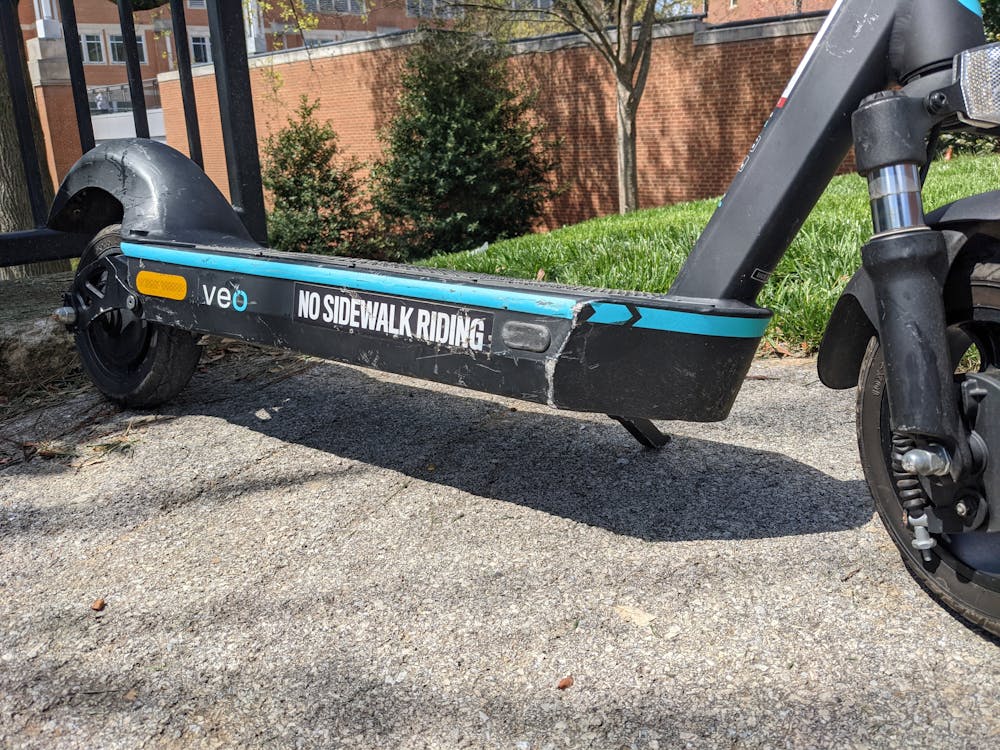
Up-close image of an e-scooter
E-scooters have small electric motors and handlebar throttles. Christopher CherryCC BY

But they do not provide insight about how and why these injuries happened. My “micromobility” research team, which studies lightweight and low-speed vehicles like e-bikes and e-scooters, has now conducted an in-depth study on e-scooter traffic safety, in Nashville, Tennessee.

Our findings, published in April 2021 in the Journal of Safety Research, found that e-scooter crashes with cars follow different patterns than bicycle crashes – but both result from unsafe infrastructure for nonmotorized vehicles.

Where e-scooters and cars collide

Safety has been a persistent barrier for cities in encouraging residents to adopt greener, alternative modes of transportation. Nationally, two-thirds of the more than 1,000 bicycle fatalities in 2018 occurred when riders were struck by a vehicle driver.

To better understand how e-scooter collisions with cars compare, we scoured Nashville police reports of crashes between 2018 and 2020. E-scooters launched in Nashville in 2018.

In total, we identified 52 documented e-scooter crashes and 79 bicycle crashes, with one scooter rider fatality and no bicyclist fatalities.

About 80% of both bike and e-scooter crashes happened at intersections, and about 70% occurred in daylight. That was somewhat surprising. An influential 2019 study on e-scooter safety in Austin, Texas identified nighttime riding as riskiest.

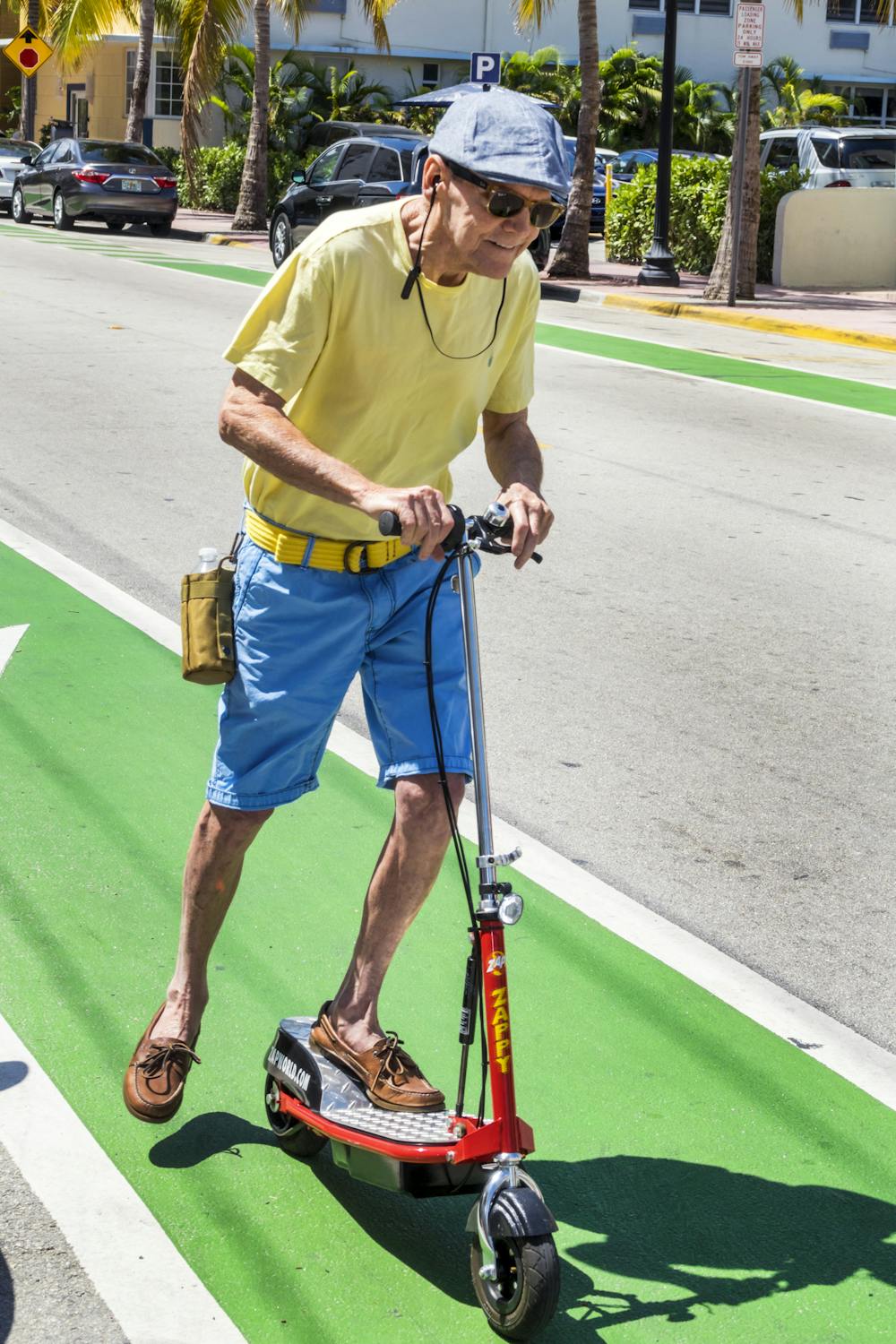
Older man on a scooter in a bike lane
Scooter riders are supposed to use bike lanes. Jeffrey Greenberg/Universal Images Group via Getty Images

Instead, our study points to riding on the sidewalk as the main risk on e-scooters.

Despite local rules prohibiting scooter-riding on sidewalks, more than 60% of crashes between cars and scooters happened when a sidewalk scooter rider and driver collided at either a driveway or crosswalk. The scooter was almost always coming from the car’s right, where drivers likely aren’t expecting moving vehicles to come off the sidewalk and into traffic.

Nashville cyclists mostly ride on the road, so they crash at driveways and crosswalks about as half as often. They are much more likely to be hit from behind, or when either the driver or bike rider turns across the other’s path on the roadway. This finding aligns with other studies on bicycle-car crash patterns.

Policy implications

E-scooter and bicyclist crashes with cars aren’t as different as they may seem. They both reflect a lack of infrastructure designed for people who choose alternate modes of transportation.

In many cities, bicycle lanes end or zigzag suddenly across the road. Intersections leave riders stranded in a dangerous swarm of moving vehicles.

Connected bike lines combined with protected intersections that give riders – particularly novices – intuitive ways to cross and turn would make streets safer. Simply limiting right-turn-on-red also reduces collisions between drivers, pedestrians and cyclists, studies show.

E-scooter parking is a problem, too.

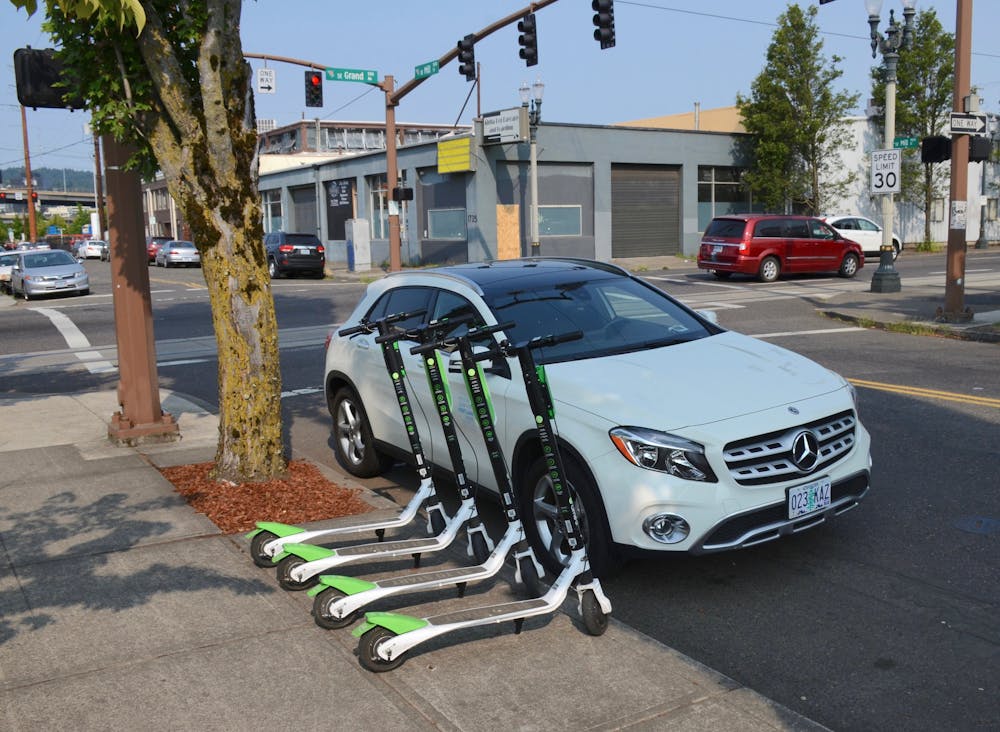
Currently, scooter-share companies like Lime require scooters to be parked on sidewalks, placing riders onto the sidewalk at the beginning and end of each trip. Providing on-street parking can induce adult riders of powered e-scooters onto the street, where they belong.

Four scooters lined up on the edge of a sidewalk, near the street and a car
Lime electric scooters parked in Portland, Ore. Steve Morgan/Wikimedia commonsCC BY

But only better infrastructure will keep them there.

So far, in Nashville as in other cities, the main tactics made to keep scooter riders off sidewalks are educational campaigns, in-app messages and sidewalk decals. Clearly, that’s not working – and it is leading to crashes.

Hit-and-runs

Alcohol is not a major factor in e-scooter crashes in Nashville. Only two of Nashville’s 52 scooter riders involved in crashes were reported as intoxicated. Drunk cyclists were similarly rare.

This finding contradicts early data from San Diego and Austin pointing to alcohol as a factor in e-scooter crashes.

Drunk drivers did not seem to be a major cause of car-scooter and car-bike collisions in Nashville, either. That said, we know the intoxication level of only the drivers who stuck around to speak with police.

Of 104 Nashville drivers involved in e-scooter or bike crashes, 27 of them fled the scene.

https://theconversation.com/80-of-fatal-e-scooter-crashes-involve-cars-new-study-reveals-where-and-why-most-collisions-occur-158609