Search This Blog

Friday, December 13, 2024

Sen. Rand Paul Urges Immediate US Withdrawal From Syria Amid Failed State & 'ISIS 2.0' Fears

 US Senator Rand Paul has called for the immediate withdrawal of American forces from Syria in a statement on X earlier this week, with just over a month ago before the Trump administration enters the White House.

President-elect Trump and his team will have a lot of major and key decisions to make on conflict zones in various parts of the globe. Syria will be a crucial focus, given it is now essentially a failed state and is poised to further become a terrorist hotbed, and given US-designated terror group Hayat Tahrir al-Sham now controls Damascus and much of the country.

"Bring our troops home! The war pits Islamists against socialist Kurds against Iranian proxies. Not our fight. 900 US troops scattered about Syria are a target, not a deterrent," Sen. Paul posted on X in reference to the ongoing 'mini-civil war' still raging in Deir Ezzor area and the north.

While the Pentagon recently claimed there are no plans to expand the US military presence in northeast Syria, there's no hint of bringing any troops home either.

US forces are there propping up the Syrian Kurds (SDF/YPG), who also control Syria's oil and gas fields, but the US proxies are now locked in a battle for survival with the larger and better armed Turkish-backed Syrian National Army (SNA). The SDF has just been kicked out of Manbij, and fighting is still happening.

These US proxies are now bogged down enough to have to give up any pretense at a 'counter-ISIS' mission, which is the "official" reason the Pentagon is supposed to be there in the first place.

All of this is a huge flaming mess to say the least, and Trump will inherit it from day one, including the likelihood of a greatly resurgent ISIS, which can now have free reign in many parts of Syria...

Pentagon chief spokesman Air Force Maj. Gen. Pat Ryder has meanwhile confirmed US forces have come under sporadic attack amid the chaos, and that there have been a few troop injureis: "As you know, those numbers can fluctuate. I’m not aware of any other injuries at this time," the said.

"Again, we’ll not hesitate to take appropriate action and protect our forces if they are threatened," he added. Days ago, as the shock of the HTS advance against Assad forces was happening elsewhere in Syria, the US launched major airstrikes against alleged ISIS locations across the east of Syria.

Meanwhile... Rand Paul is RIGHT:

'WSJ: Trump Team Weighing Options For Preemptive Airstrikes On Iran's Nuclear Program'

 Just days after the rapid collapse of the Syrian government of Bashar al-Assad, and now with Israeli warplanes having complete domination over Syria's skies for the first time in modern history, the priorities of US and Israeli officials in the region have drastically changed.

Both US and Israeli leaders are now mulling the possibility of striking Iran's nuclear program, amid several reports in recent weeks saying the Islamic Republic is expanding its program and enriching more nuclear-grade material. Tehran is now much more on the defensive, and could be more desperate to achieve nuclear weapons.

A significant Friday report in The Wall Street Journal says that "President-elect Donald Trump is weighing options for stopping Iran from being able to build a nuclear weapon, including the possibility of preventive airstrikes, a move that would break with the longstanding policy of containing Tehran with diplomacy and sanctions."

"Trump has told Israeli Prime Minister Benjamin Netanyahu in recent calls that he is concerned about an Iranian nuclear breakout on his watch, two people familiar with their conversations said, signaling he is looking for proposals to prevent that outcome," the report continues.

"The president-elect wants plans that stop short of igniting a new war, particularly one that could pull in the U.S. military, as strikes on Tehran’s nuclear facilities have the potential put the U.S. and Iran on a collision course."

Currently the United States still has some 1,000 troops occupying northeast Syria, and they have come under internecine attacks by Iran-backed militias over the recent years. In any broader US-Iran war, these troops would be sitting ducks for attack via Tehran's proxies in the region.

Trump in his first administration tried but failed to bring the troops home, but deeper entanglement in striking Iran could surely draw these troops into a broader conflict. The Pentagon would in that case likely expand its deployed forces in the region as well.

"Iran has enough highly enriched uranium alone to build four nuclear bombs, making it the only nonnuclear-weapon country to be producing 60% near-weapons-grade fissile material," WSJ has noted further. "It would take just a few days to convert that stockpile into weapons-grade nuclear fuel."

Iran has long maintained it develops only peaceful nuclear energy, and there's little doubt that after the dramatic events unfolding in Syria, and with Hezbollah top leadership largely decimated, Tehran finds itself on a back foot. 

Some Israeli and Western officials believe that all of this will make Iranian leaders more desperate to ensure they have a final and ultimate defense against any threats (as in rapidly developing a nuke).

But if Trump were to authorize strikes on Iranian facilities, this would also obviously violate his frequent vows to his voters to not start new wars in the Middle East. The reality is that even 'limited' strikes still constitute an act of war. The potential for runaway escalation involving the US, Iran, and Israel would be a much bigger likelihood. 

https://www.zerohedge.com/geopolitical/trump-team-weighing-options-preemptive-airstrikes-irans-nuclear-program

Does Marijuana Harm Your Lungs? The Unclear Truth

During a recent walk with my 6-year-old, he told me he smelled marijuana. His comment speaks to its increased (and more open) use since legalization in our state. The macho, misguided part of my dad psyche was proud of his "street cred" but the thinking part of my brain was concerned. He seemed a little young for a talk about drugs. 

I was able to provide a simple, watered-down list of reasons why he shouldn’t smoke marijuana or anything else. The "drugs are bad" aphorism sufficed for my 6-year-old but wasn’t worthy of an academic pulmonologist.

I retired from the military 2 years ago, so marijuana (I’m using the terms "marijuana" and "cannabis" interchangeably here) knowledge wasn’t required for regular practice. I recall one 60-year-old patient who reported smoking four joints a day for years. He had marked emphysema on CT, severe obstruction on spirometry, and he was functionally limited. Buttressed by scattered reports of acute lung injury due to dabbing or marijuana vaping, this anecdotal "n of 1" led to a predictably pedantic conclusion: Smoking marijuana is bad for the lungs and preaching cessation is worth my time and effort. 

I now work in an inner-city hospital. My 6-year-old could identify the smell permeating the hallways and clinic rooms. I’ve reverted to counseling cessation using little more than my "drugs are bad" speech. When I came across a recent review in Seminars in Respiratory and Critical Care Medicine, I recognized the opportunity to read and do better. This summary is based heavily on that review.

Spoiler alert: The data aren’t great. By federal law, marijuana has been illegal in the United States since 1970, so neither funding nor recruitment has come easy. There’s lots of observational data that depend on self-report and are confounded by cigarette use. A lack of regulation results in variations in composition and concentration. In summary, though, smoking marijuana is associated with changes to the bronchial tree and respiratory symptoms, similar to those seen with chronic bronchitis. These symptoms improve with cessation

The relationship between marijuana and airflow obstruction and lung function is complicated. A mix of contradictory data shows a reduction in the ratio of the forced expiratory volume in the first 1 second to the forced vital capacity (FEV1/FVC), an increase in FVC, and changes in conductance. 

Biologic plausibility, essential to bolster causality but easy to manufacture, seems intuitive for the airway changes (decreased FEV1/FVC and conductance). The increase in FVC, explained by either the anti-inflammatory properties of delta-9-tetrahydrocannabinol (THC) or the impact from deep inhalations typical of marijuana use, is more difficult to understand. Regardless, I came away from the review less confident about marijuana’s impact on lung structure and function. 

The Seminars review also explores marijuana’s association with lung cancer, emphysema, and other structural changes seen on CT of the chest. There’s certainly noise here but the data at present are underwhelming. 

This all speaks to the general misconception I’ve had, perhaps shared by others, that the well-defined effects on the lung from tobacco abuse can be extrapolated to marijuana. In the past, I’d even gone so far as to equate a pack-year (smoking one pack of cigarettes per day for a year) to a joint-year (smoking one joint per day for a year), a rather dramatic oversimplification. While both are attempts to quantify exposure, the latter connotes far less information. The content of a joint can vary considerably in ways that the content of cigarettes does not, and there have been no formal studies of the comparative impact on the lung. 

Final Thoughts

The nuance here matters for several reasons. Legalization means an increase in use and presumably more open reporting by patients. In a vacuum, it seems reasonable to council cessation to reduce symptoms and because additional harms can be assumed, given what we know about smoke inhalation in general. Will cessation drive patients to an increase in tobacco use where harm is better established? 

Given its mixed effects on lung function, is it worth spending behavior change capital, the most precious of patient commodities, on marijuana counseling? Marijuana has numerous effects outside the lung that haven’t been touched on here. How should those be incorporated into our guidance? Legalization and regulation provide the opportunity to obtain the better data that are sorely needed.

Aaron B. Holley, MD, is a professor of medicine at Uniformed Services University in Bethesda, Maryland, and a pulmonary/sleep and critical care medicine physician at MedStar Washington Hospital Center in Washington, DC. He covers a wide range of topics in pulmonary, critical care, and sleep medicine

https://www.medscape.com/viewarticle/does-marijuana-harm-your-lungs-unclear-truth-2024a1000mou

'Self-Replicating mRNA Vaccine for COVID Prevention'

 Europe's Committee for Medicinal Products for Human Use (CHMP) recommended granting marketing authorization for two drugs for preventing COVID-19: a monoclonal antibody called Kavigale (sipavibart) and a self-amplifying mRNA vaccine known as Kostaive (zapomeran). The recommendations are now in line for approval by the European Commission.

The active ingredient in Kavigale is sipavibart, which is an immunoglobulin, antiviral monoclonal antibody that provides passive immunization against SARS-CoV-2 by binding its spike protein receptor binding domain.

Kostaive’s active substance is zapomeran, a self-replicating mRNA that encodes the SARS-CoV-2 spike protein. It makes more copies of itself once inside host cells following intramuscular injection. The cells can then make copies of the spike protein. This induces the production of neutralizing antibodies and a cellular immune response to target the spike protein, thus protecting against COVID-19. 

Kavigale

The recommendation for Kavigale comes after results from AstraZeneca’s SUPERNOVA phase 3 trial. The trial compared the efficacy of sipavibart with control (tixagevimab/cilgavimab or placebo) for reducing the risk for symptomatic COVID-19 among immunocompromised patients aged 12 or older from multiple SARS-CoV-2 strains. 

Sipavibart ultimately outperformed both tixagevimab/cilgavimab and the placebo. The greatest reductions in symptomatic disease occurred for non-F456L mutation‒containing SARS-CoV-2 variants. The most common side effects of sipavibart were injection- and infusion-site reactions.

Kavigale will be made available as a 300 mg solution for injection or infusion. It is indicated to prevent COVID-19 in adults and adolescents aged 12 or older who weigh at least 40 kg and who are immunocompromised because of either a medical condition or immunosuppressive treatments. 

The medication should be used in accordance with official recommendations and information on the drug’s activity against current variants. 

Kostaive

The CHMPS’s recommendation of Kostaive comes after results from a study in which adults received either two doses of zapomeran or a placebo. Zapomeran led to greater reductions in the proportion of patients who developed symptomatic COVID-19 between 1 week and 3 months after the second dose. Another, smaller study also found that zapomeran is effective as a heterologous booster vaccine.

The most common side effects from zapomeran included injection-site reactions, arthralgia, myalgia, headache, dizziness, fatigue, chills, and pyrexia. 

Kostaive will be made available as a powder for dispersion for injection and should be used according to official recommendations. The vaccine is indicated for active immunization to prevent COVID-19 caused by SARS-CoV-2 in individuals aged 18 years or older. 

Detailed recommendations for both Kavigale and Kostaive will be described in the summary of product characteristics, which will be published following marketing authorization by the European Commission. 

https://www.medscape.com/viewarticle/self-replicating-mrna-vaccine-covid-prevention-2024a1000n53

Hiding The Truth: Horowitz's Modified Jan 6 'Limited Hangout'

 by James Howard Kunstler,

"We can fairly mark this down to Biden’s native ineptitude: Any careful review of his career reveals him to be - no apology for my word choice - very stupid."

- Patrick Lawrence

From The New York Times:
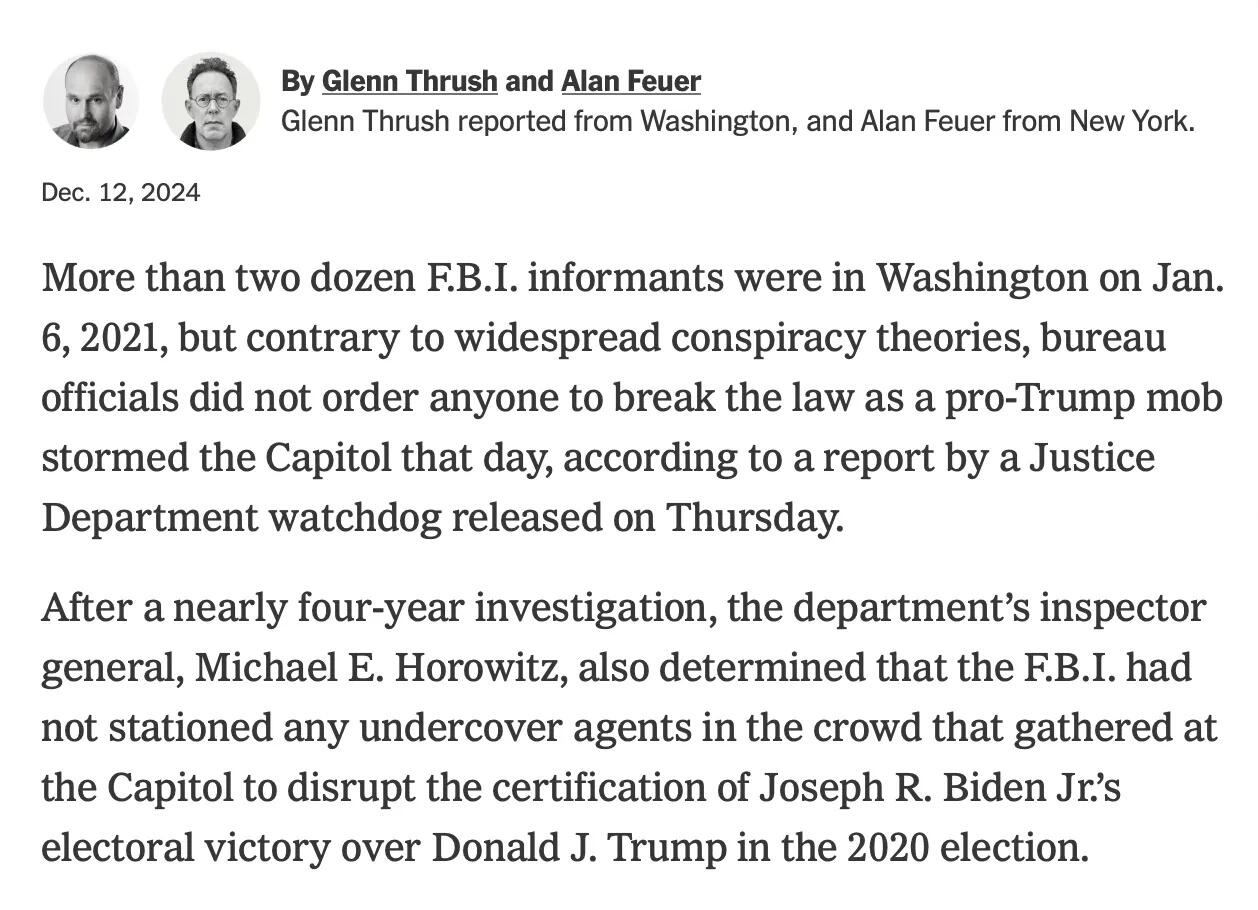
Do you detect the conspicuous lack of conviction in DOJ Inspector General Michael Horowitz’s report on the Jan 6, 2021, riot at the US Capitol building, which has been the central device for defeating the populist revolt against the treasonous DC blob?

And did you notice that it took him four years to report on the event? Weird, a little bit, ya think?

I’ll tell you why: because when investigators genuinely interested in the truth come on the scene, soon to happen, a very different story will be revealed.
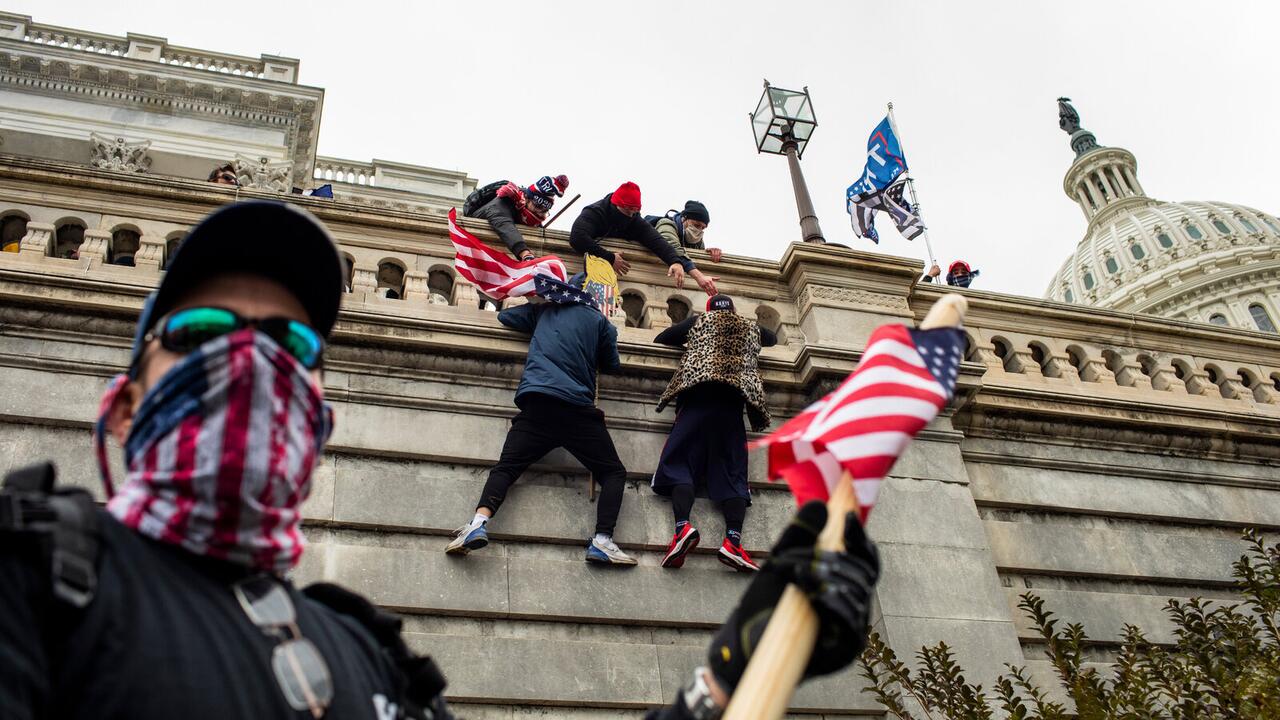
The Horowitz report is a last ditch attempt, at the very last moment, to get ahead of that true story — which is that the FBI and its parent, the DOJ, have been lawlessly and in bad faith acting against their oaths to defend constitutional government.

For eight years — including the four when Mr. Trump as president — the FBI and DOJ worked tirelessly to run him out of office and make sure he could never return. The effort was prodigious and, astoundingly, it failed. It was launched initially to conceal the crimes of Bill and Hillary Clinton, especially their moneygrubbing in Russia around the Skolkovo project — Russia’s Silicon Valley — and the Uranium One scandal — which involved the sale of US nuclear assets to Russia’s state-owned Rosatom company. The Clinton’s problems became especially acute in the summer of 2016 when Hillary’s private (outside government) email server came to light with its thousands of potentially incriminating memos. Looked like trouble.

The cure for that was to accuse candidate Trump of conniving with Russia, a sort of political homeopathy. It began as a mere Hillary campaign prank — the Steele Dossier — but CIA Director John Brennan and Barack Obama dumped it in FBI Director James Comey’s lap, and asked him to run with it. Mr. Comey stupidly complied, and before long he marshaled the executive officers of the FBI into the massive hoax that became RussiaGate.

The Mueller Investigation was intended to convert all that into a prosecutable Trump crime while covering up the FBI’s own crimes, but it proved a fiasco when the Mueller report issued in March, 2019, came up empty — to the horror of the Trump-deranged public.

Inspector General Horowitz’s report on these FBI shenanigans came out in December of that year, finding little amiss besides some “errors” in FISA applications and FBI attorney Kevin Clinesmith’s forgery of an email as to whether one Carter Page was ever a CIA asset. The big news media let it all slide. Mr. Trump somehow survived, to the blob’s horror, and prepared to run for re-election.

The 2020 election was a fantastic trip laid on the American public.

Covid-19 allowed for drastic changes in voting rules. The Democratic Party managed in plain sight to maneuver the obviously senile Joe Biden to head their ticket, and an array of very conspicuous late-night frauds got him elected. On Jan 6, 2021, Republican legislators were poised to contest the results out of several swing states where the frauds occurred in the requisite Congressional certification ceremony. The law plainly allowed for such challenges. It could not be allowed to happen.

Hence: the operations to interrupt the proceedings.

The primary device would be the pipe bombs planted at the nearby DNC and RNC headquarters — terrorists on-the-loose! The backup plan was to turn the large protest group gathered around the Capitol into a mob that would somehow provoke an evacuation of the building. Between the FBI’s assets (“confidential human sources”) planted in the crowd, plus the Capitol police firing rubber bullets and “flash-bangs” into them, and mysterious figures ushering-in protesters through unlocked security doors, the breach of the Capitol was accomplished and the lawmakers fled the building. Nancy Pelosi arranged for the national guard to not be called onto the scene to fortify the understaffed Capitol Police. She was thrilled at how well it worked (captured on film). And the pipe bomb caper was swept under the rug, despite a ton of evidence that indicated the person-of-interest on the scene was a federal contractor, his movements recorded in cell-phone records and closed-circuit cameras.

When the lawmakers returned late that night in a great fugue of histrionic consternation, the majority decided to dispense with those challenges to the vote in swing states. “Joe Biden” became president and the DOJ under new Attorney General Merrick Garland commenced a raft of vicious prosecutions against anyone and everyone present at the Capitol on Jan 6. The next step was to mount a barrage of prosecutions against Mr. Trump himself, guaranteed to prevent him from ever running again, to bankrupt him, and to stuff him into prison for the rest of his natural life.

Amazingly, none of that worked. The cases against Mr. Trump were lame to an extreme, prosecuted by oafs, and adjudicated by bungling judges. Four years of “Joe Biden” pretending to run things came close to wrecking the country, and too many citizens did not fail to notice. His inept stand-in for this year’s election, Kamala Harris, made a fool of herself and her party, and now Mr. Trump is back with a much-enhanced populist opposition to the quivering DC blob.

The crew he has chosen to manage this government are pretty clearly determined to correct what has been happening in it, and the office-holders still lodged in many positions of power — where they have been waging war against the citizens of this country — have nowhere to run and hide now. They know that they are guilty of abusing their power and bringing harm to their fellow Americans. They know that something is coming for them — the dreaded consequences that they worked so diligently to evade.

Notice, you are not hearing any vows of magnanimity from incoming Trump appointees. They are not pretending to forgive and forget. Neither are they crowing about retribution. They are reaching by law for the levers of power. They will discover and disclose the files that the blobists have not already managed to destroy. And where the files are missing, they are going to depose the blobists under oath and get them to say on-the-record what they did, and why, and who ordered them to do it. And you can be sure the blobists will be ratting-out each other to stay out of prison.

This is true even of such seemingly mild fellows as Inspector General Michael Horowitz, in office since 2012 through all this monkey business in his agency, who let his report about the Jan 6 business slide until he could no longer conceal it, and who confabulated it into the modified, limited hang-out that it, dishonorably, is.

https://www.zerohedge.com/political/hiding-truth-horowitzs-modified-jan-6-limited-hangout

Early Perspective on Health Care Price Transparency’s Effects

 By James C. Capretta

Senior Fellow and Milton Friedman Chair, American Enterprise Institute


Turquoise Health, an industry leader in the collection and analysis of health care pricing data, has recently produced a preliminary examination of the effects of the government’s transparency rules on market results. The findings are interesting and mostly encouraging.

The push for greater price transparency in the health sector is still in its early phase as the norms from decades of financial opacity have only started to give way, albeit slowly. The continued foot-dragging by some key players indicates that policymakers were right to impose the disclosure requirements.

The current suite of rules is the product of multiple statutory authorities and regulatory actions dating back to the Affordable Care Act (ACA) and the second term of the Obama administration, with new specifications coming online at regular intervals over the past decade. This pattern of continued rule refinement seems likely to continue in future years. As an example, starting in July of this year and then again in January 2025, the Centers for Medicare and Medicaid Services (CMS) will begin enforcing tighter restrictions on both the content and formatting of disclosures.

In general terms, hospitals must now post online all relevant pricing data (including negotiated rates with payers) for both inpatient and outpatient services in formats that allow for ready capture and assessment by data technology companies. Further, insurers must do likewise for the rates they have agreed to pay to all providers of services. Finally, consumers paying cash for services have the right to an advance estimate of their expected charges. In theory, these rules are expansive enough to bring pricing data into the market that affects the entirety of most patient bills.

The pace of rule adjustments might even accelerate starting next year. The original Trump administration was bullish on transparency and a return to its aggressive posture is to be expected when the second Trump administration begins in January.

The author of the Turquoise report examined pricing trends from December 2021 through June 2024 for 37 hospital billing codes across 234 facilities located in the 10 largest US metropolitan areas. The prices were pulled from the posted rates negotiated by the facilities with commercial payers and were tied to codes from both the outpatient and inpatient sides of the industry. The total number of pricing observations in the study was over 390,000. Among the services analyzed were MRI scans of the brain with and without contrast (billing code 70553), allergy testing (86003), and inpatient room and board stays (various codes).  

The main finding was that in most markets, there was convergence between high and low pricing over time even as the overall trends were modestly downward. In other words, there was a tendency for the highest priced providers to moderate their pricing and move closer to the median, and the lowest-priced providers to move in the opposite direction. After adjusting for inflation, the highest-priced providers (those above the 75th percentile in absolute price levels) posted negotiated charges that declined in real terms (after adjusting for inflation) at an average annual rate of 6.3 percent. At the same time, the lowest-priced facilities (below the 25th percentile) pushed their inflation-adjusted prices up at an average annual rate of 3.4 percent. The middle of the market (above the 25th percentile and below the 75th) reduced their prices for these services modestly, at an average annual rate of 1.1 percent.

These results are encouraging but should be interpreted cautiously because they do not reflect any movement in market-shares among the competing facilities. Further study is needed to determine the overall effect on total costs paid by insurers and patients.

The Turquoise study also highlights other interesting details:

  • In some markets (about 17 percent of the examined service categories), the pricing did not converge over time. In these cases, the collected data show pricing drops across all examined facilities.
  • Pricing converged more for outpatient than for inpatient services, with 88 percent of outpatient billing codes trending toward convergence and 63 percent of those pulled from the inpatient side following this pattern.

Overall, the study validates the policy decision to force greater transparency on the market as there is a clear indication that price disclosure can help bring more discipline and balance to an unruly and still very arbitrary market.

It also points to what should be the focus going forward, which is helping consumers reduce what they pay for care. Employers sponsoring health coverage will not lead the transformation the market needs because they are too risk-averse. Individual patients, however, may be more willing to break free from past practice and migrate to providers willing to charge much less for their services. It is time to give them the tools to bring this kind of disruption to a still grossly overpriced market.

https://www.aei.org/economics/an-early-perspective-on-health-care-price-transparencys-effects/

MedPAC Members Support Upping Medicare Pay Rates Close to Inflation Rate

 Members of the Medicare Payment Advisory Commission (MedPAC) seemed favorable Thursday to a proposed recommendation to Congress that Medicare should pay physicians based on the rate of medical inflation and give primary care doctors who serve low-income beneficiaries an extra pay bump.

"I think the chair's recommendation is directionally correct," said commission member Cheryl Damberg, PhD, MPH, of the RAND Corporation in Santa Monica, California.

"I really support the idea of this being paired with the Medicare safety net add-on payment; I think that's a critical factor, and I hope that policymakers will seriously consider that piece of it," she said. "The data around access issues for low-income beneficiaries is really spotlighting the need to do more targeted payments to this group of physicians."

Commission members were discussing a proposed "chairman's recommendation" that called for Congress to:

  • Update the 2025 Medicare base payment rate for physicians and other health professional services by the projected increase in the Medicare Economic Index (MEI) -- a measure of medical inflation -- minus one percentage point. The rate would take effect in 2026.
  • Enact the commission's March 2023 recommendation to establish safety-net add-on payments under the Medicare Physician Fee Schedule for services delivered to low-income Medicare beneficiaries. Under that recommendation, primary care clinicians would get a 4.4% increase, while all other clinicians would get a 1.2% increase.

Commissioner Larry Casalino, MD, of Weill Cornell Medical College in New York City, also supported the recommendation, with some reservations." I don't believe that in the short term, a percentage point or two above or below inflation in the Physician Fee Schedule will have much effect, one way or the other, on the beneficiaries' access to care or on the quality of care," he said. "But I do believe that over time, the cumulative effect of annual payment increases that are less than inflation are very likely to affect both beneficiaries' access to care and the quality of care, primarily because I think that over time, this sends an extremely negative message to physicians.... No one likes to be told that their annual pay each year, indefinitely, year over year, is not going to keep up with inflation over time. I think that's likely to affect the morale of physicians and other clinicians."

"If our recommendation for 2026 was simply MEI inflation minus 1%, I wouldn't vote for it," said Casalino. "But I do think that the two-part recommendation that the chair has made -- that's the MEI minus 1% and the higher payment rate for care for low-income patients -- is quite reasonable," he added.

Commissioner Brian Miller, MD, MBA, of Johns Hopkins University in Baltimore, focused on a survey taken by MedPAC researchers that found that 31% of beneficiaries who looked for a new specialist in the past year had to wait 3 to 5 weeks for an appointment, while 13% had to wait 6 to 8 weeks and 16% had to wait more than 8 weeks. "Objectively, access for many Medicare beneficiaries is terrible," he said. (The survey also showed similar numbers for those with private insurance; 29% had to wait 3 to 5 weeks, 16% had to wait 6 to 8 weeks, and 22% had to wait more than 8 weeks.)

"If you are 75 and you have a lot of health problems, [3 to 8 weeks or more] is a long time to wait to get prescription refills established with a new doc, to try and get things done," said Miller. "If you have a new diagnosis of cancer, if you fractured something and are in a sling waiting for your post-hospital follow-up to see an orthopedic surgeon -- if the discharge instructions tell you to see someone within 14 days, but half [of beneficiaries] have to wait 3 to 8 weeks, that's objectively terrible, just on a clinical basis."

Miller added that not enough attention was being paid to non-physician primary care providers such as nurse practitioners and physician assistants. "We should have a specific chapter [in an upcoming report to Congress] on the role of non-physician providers in the Medicare program," he said.

Commission member Stacie Dusetzina, PhD, of Vanderbilt University School of Medicine in Nashville, Tennessee, said that although she agreed that long wait times for beneficiaries were a concern, "Medicare beneficiaries aren't necessarily waiting longer than commercially insured people, and in some pieces, a little bit less. So there is a question of how much more payment fixes that, versus this is really a market constraint issue that I think is a problem for everyone who needs healthcare services." Dusetzina expressed support for the recommendations, especially the one concerning safety-net providers.

Commissioner Robert Cherry, MD, MS, of UCLA Health in Los Angeles, said he supported the recommendations only for the short term. "Continuing on below inflation is really not sustainable if we want to maintain a viable physician workforce for the next generation," he said. "It's not unreasonable to make this recommendation, but [doing it] year after year is not a sustainable model for us."

MedPAC chair Michael Chernew, PhD, of Harvard Medical School in Boston, tried to reassure the commission members. "Our charge for now is just 2026," he said. "I understand the concern that what we've done in the past is not what we want going forward." He noted, however, that "higher payments to providers of any type means higher premiums and higher beneficiary cost-sharing.... When we pay more [we] have to think about what we're getting for that. The cost is ultimately borne by beneficiaries, taxpayers, and others -- so there's this balance."

https://www.medpagetoday.com/publichealthpolicy/medicare/113367