Search This Blog

Tuesday, May 29, 2018

Philadelphia’s first medical marijuana dispensary to open this week

Meeting its goal with one day to spare, Restore Integrative Wellness Center is opening Philadelphia’s first medical marijuana dispensary on Wednesday.
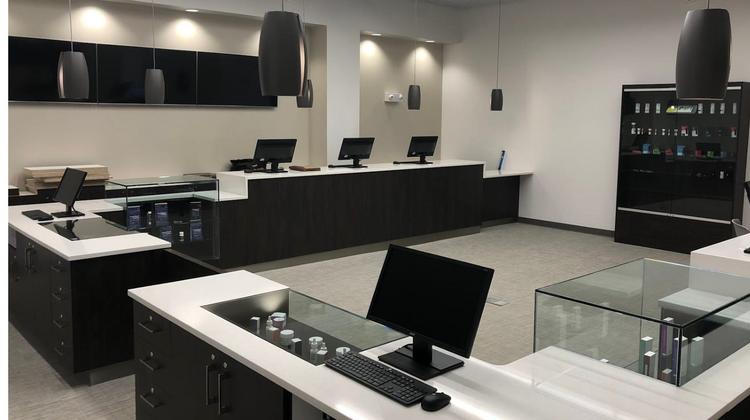
The center is in the city’s Fishtown neighborhood on Frankford Avenue across from the Fillmore. The 5,000-square-foot dispensary is in a renovated building that dates back to the 1870s and was previously a welding shop.
The company had set a goal of opening the dispensary in May.
Restore’s initial hours of operation will be Monday through Saturday from 11 a.m. to 5 p.m. Its product offering will encompass of variety of products from all five of Pennsylvania’s operational medical marijuana growers.
“Our mission is to be a friendly and reliable source of medical marijuana,” the company said in a statement.
Restore is led by co-owner Steven O, who is also the owner and operator of Reboot Integrative Wellness Center. Reboot has offices in Chinatown and Elkins Park. Other Restore owners include Vipul Patel, the company’s COO, and Dimple Thakrar, marketing director.
The company plans to open a second location in Elkins Park this fall. It has not yet decided on a site for its third dispensary allowed under its permit, according to Restore spokesman Jonathan Monk.
This spring has been was a busy month for medical marijuana dispensaries in southeastern Pennsylvania.
  • In late April, TerraVida Holistic Centers opened Montgomery County’s first dispensary in Abington.
  • Earlier this month, two other dispensaries started filling medical marijuana prescriptions when Illera Healthcare opened a site in Plymouth Meeting, and Keystone Shops opened a site in King of Prussia.
  • Also in May, Beyond/Hello open a medical marijuana dispensary in Bristol, Bucks County. Beyond/Hello expects to open the first dispensary in Center City Philadelphia on the 1200 block of 1206 Sansom St. this fall.
The new dispensaries joined existing facilities that opened during the first quarter of the year in Devon (Keystone Shops), Sellersville (TerraVida) and Phoenixville (Cure Pennsylvania).

Reverse aging by removing wrinkles inside our cells?


A new discovery about the effects of aging in our cells could allow doctors to cure or prevent diabetes, fatty liver disease and other metabolic diseases—and possibly even turn back the clock on aging itself.
The new finding from the University of Virginia School of Medicine suggests that  and other unwanted effects of aging may be the result of our cells’ nuclei—the compartment containing our DNA—getting wrinkly. Those wrinkles appear to prevent our genes from functioning properly, the UVA researchers found.
There’s no wrinkle cream for nuclear membranes, but there is a tantalizing possibility: We might use viruses to smooth the membranes’ surfaces—and restore the cells to functioning as they did in the glow of youth.
Lumpy Membranes
The  from the lab of Irina M. Bochkis, Ph.D., of UVA’s Department of Pharmacology, shows that the location of our DNA inside the cell’s nucleus is critically important. Genes that are turned off are shoved up against the nuclear membrane, which encases the nucleus. But with age, our nuclear membranes become lumpy and irregular, and that prevents genes from turning off appropriately.
“We have the same DNA in every single cell but each cell is different,” Bochkis explained. “So how does that work? Well, actually, certain genes need to be on in the  and they have to be turned off in the brain, for example, and vice versa. If they’re not turned off appropriately, then you have problems.”
Looking at a model of fatty liver , Bochkis found that our livers become studded with fat as we age because of the wrinkly nuclear membranes. “When your nuclear membrane is no longer functioning properly, it can release the DNA that’s supposed to be turned off,” she said. “So then your little liver cell becomes a little fat cell.”
The accumulation of fat inside the liver can cause serious health effects, increasing the risk of type 2 diabetes and cardiovascular disease, even potentially leading to death. “The liver can end up looking like Swiss cheese,” Bochkis said.
The membrane wrinkling stems from a lack of a substance called lamin, a cellular protein that comes in various forms. By putting the appropriate lamin back, we might smooth out the , like Retinol helps smooth face wrinkles.
Getting it there is the challenge. But Bochkis has an idea: We could use viruses to deliver the shipment. Scientists are already modifying viruses for beneficial medical purposes, and it would be particularly easy to get a modified virus to the liver because of the organ’s role in detoxifying the body. And if it works? “You’re going to have normal cells—normal, healthy —and they will appropriately express the  that should be expressed and … you’re going to eradicate the stuff that shouldn’t be there,” she said.
Bochkis suspects the wrinkling of the  is responsible for unwanted effects of aging in other parts of the body as well. “Every time I give this talk to colleagues, they say, ‘Well, do you think this is a universal mechanism?'” she said. “In my opinion, I think it is.”
More information: Holly Whitton et al, Changes at the nuclear lamina alter binding of pioneer factor Foxa2 in aged liver, Aging Cell (2018). DOI: 10.1111/acel.12742

Novo Nordisk Phase 3a oral diabetes med trial hit primary endpoint


Novo Nordisk announced the headline results from Pioneer 2, the second Phase 3a trial with oral semaglutide for treatment of adults with type 2 diabetes. Oral semaglutide is a new GLP-1 analogue taken once daily as a tablet. The 52-week, open label trial investigated the efficacy and safety of 14 mg oral semaglutide compared with 25 mg empagliflozin in 816 people with type 2 diabetes, inadequately controlled on metformin. The confirmatory endpoints were defined after 26 weeks of treatment. The trial achieved its primary objective according to the primary statistical approach by demonstrating a statistically significant and superior improvement in HbA1cwith oral semaglutide compared to empagliflozin at 26 weeks. Difference in weight loss at 26 weeks between oral semaglutide and empagliflozin was not statistically significant when applying the primary statistical approach. When applying the secondary statistical approach, people treated with 14 mg oral semaglutide achieved a statistically significant improvement in HbA1cof 1.4% at 26 weeks and 1.3% at 52 weeks, compared to an improvement in HbA1cof 0.9% and 0.8% with 25 mg empagliflozin at 26 and 52 weeks, respectively. The 14 mg dose of oral semaglutide demonstrated weight loss of 4.2 kg at 26 weeks and 4.7 kg at 52 weeks versus 3.8 kg with 25 mg empagliflozin at both 26 weeks and 52 weeks. The increased weight loss with oral semaglutide was statistically significant compared to empagliflozin at the 52-week time point. In the trial, oral semaglutide was well-tolerated and with a profile consistent with GLP-1-based therapy, Novo said. The most common adverse event for oral semaglutide was mild to moderate nausea, which diminished over time, it added. In Pioneer 2, 20% of people treated with oral semaglutide experienced nausea during the trial. The proportion of subjects who discontinued treatment due to adverse events was 11% for people treated with 14 mg oral semaglutide compared to 4% for people treated with 25 mg empagliflozin

Northwest Biotherapeutics has positive Phase 3 data from brain cancer trial


 Northwest Biotherapeutics (OTCQB: NWBO) — (“NW Bio”), a biotechnology company developing DCVax® personalized immune therapies for solid tumor cancers, announced today the publication of interim blinded survival data from its Phase 3 clinical trial of DCVax®-L for newly diagnosed Glioblastoma brain cancer. The data were collected by the independent contract research organization managing the trial, tabulated by an independent statistical firm and published with 69 co-authors in the peer reviewed Journal of Translational Medicine (JTM).
The trial is ongoing while the data continue to mature, and the Company, the investigators and patients all remain blinded. The interim data set forth in the JTM publication are blinded aggregate data which include patients from both arms of the trial combined: the arm with 2/3 of the patients, who received standard of care plus DCVax-L, and the arm with 1/3 of the patients, who received standard of care plus a placebo. When the patients experienced tumor recurrence, all patients from both arms were allowed to cross over and start receiving DCVax-L, but without being unblinded as to what they had received before tumor recurrence. The patient population enrolled in the trial is similar to that in other recent trials, and more than 75% of the patients were over 50 years old (a factor associated with less favorable outcomes).
Due to the crossover design, nearly 90% of the total 331 patients in the trial have received DCVax-L treatment. For the total 331 patients (both arms of the trial combined) the median survival as of this analysis was 23.1 months from surgery. With the standard of care (SOC) today (surgery, radiation and chemotherapy), median survival for newly diagnosed Glioblastoma is 15-17 months.
For patients with methylated MGMT gene status (131 patients), median survival was 34.7 months from surgery. With standard of care today, median survival for these patients has been reported in the literature as 21.7 months. For patients with unmethylated MGMT gene status (162 patients), the median survival was 19.8 months from surgery. With standard of care today, the median survival for these patients has been reported in the literature as 12.7 months. (MGMT data was not available for 38 patients.)
The top 100 patients (30%) of the total 331 patients in the trial showed particularly extended survival, with median survival of 40.5 months from surgery. This extended survival was not fully explained by known prognostic factors such as age younger than 50 years, methylated MGMT gene status and complete resection (surgical removal) of all of the tumor. Only 8% of these 100 patients had the favorable status on all 3 of these prognostic factors.
With immune therapies, the “long tail” of the survival curve is of particular importance and focus. In this DCVax-L trial, patients who survive past certain time points, have continued onwards to substantially extended survival. The patients are continuing to move through time points based upon when they had their surgery, and only some of the patients had reached certain time points in this trial as of this analysis. For example, 223 patients were ≥30 months past their surgery date as of this analysis; 67 of these (30.0%) have lived ≥30 months and these patients have Kaplan-Meier (KM)-derived median survival estimate of 46.5 months. Also as of this analysis, 182 patients were ≥36 months past their surgery date; 44 of these (24.2%) have lived ≥36 months and these patients have KM-derived median survival estimate of 88.2 months.
The administration of DCVax-L involves only an intra-dermal injection in the arm, similar to a flu shot, 3 times in the first month of treatment, 3 additional times over the rest of the first year (at months 2, 4 and 8), and twice a year thereafter. It thereby involves only a minimal burden on the patient.
DCVax-L has shown an excellent safety profile in the trial. The DCVax-L product has been administered well over 2,000 times, and only 7 of the 331 patients (2.1%) have experienced a serious adverse event that was deemed at least possibly related to the treatment. The rate of total adverse events (including non-serious events) was comparable to the rate of adverse events with standard of care alone.
“These are just interim data, and the data may get either better or worse as they continue to mature” commented Linda Powers, the Company’s CEO. “However, the survival times we are seeing are encouraging, especially in light of how little progress has been made in decades in treatments for Glioblastoma.”
“We have noted a growing recognition in the immuno-oncology field of the exceptional heterogeneity and complexity of Glioblastoma, and the need for treatments to target multiple antigens on these tumors” Ms. Powers continued. “DCVax-L is designed to use Nature’s system to mobilize an anti-tumor immune response, targeting the full set of antigens on a patient’s tumor and doing so in a fully personalized way. We believe this approach is key to the clinical results we are seeing.”
“The safety profile of DCVax-L is also quite encouraging, with almost no serious adverse events related to the treatment, no necessity for additional drugs to manage side effects and no hospital in-patient stays as are often required with certain other kinds of immune cell therapies” Ms. Powers noted. “This safety profile is quite important to patients, and we believe it can also facilitate combining DCVax-L with a variety of other types of treatments.”
The reported data are from the most recent prior full data collection in 2017. The Company is undertaking another full data collection, which is a multi-month process and will be continuing over the coming months.
The publication can be found on the JTM website at https://doi.org/10.1186/s12967-018-1507-6 .

Educational Development conference call May 30


EDUCATIONAL DEVELOPMENT CORPORATION (NASDAQ:EDUC) Files An 8-K Results of Operations and Financial Condition
Item 2.02. Results of Operations and Financial Condition.
Item 7.01. Regulation FD Disclosure.
On May 29, 2018, Educational Development Corporation, announced via press release, fiscal 2018 results. Educational Development Corporation’s earnings call will be held on May 30th, 2018 at 2:00 cst. A copy of the press release is furnished herewith as Exhibit 99.1 and is incorporated herein by reference.
Item 8.01. Other Events.
On May 25th, 2018 Educational Development Corporation declares, via press release, a quarterly dividend. A copy of the press release is furnished herewith as Exhibit 99.1 and is incorporated herein by reference.
Item 9.01. Financial Statements and Exhibits.
EDUCATIONAL DEVELOPMENT CORP Exhibit
EX-99.1 2 exh_991.htm PRESS RELEASE EdgarFilingEXHIBIT 99.1Educational Development Corporation Announces Record Fiscal 2018 TULSA,…
To view the full exhibit click here

Shareholders demand Japan’s Takeda assuage fears over Shire deal


Japanese drugmaker Takeda Pharmaceutical Co Ltd faces demands from disgruntled shareholders to put to a vote its $62-billion (46.8 billion pounds) acquisition of London-listed Shire and do more to assuage concerns over the record-breaking deal.

The deal “carries overly high risks to the company” given its size, 12 shareholders said in a proposal to be voted on at next month’s annual shareholders’ meeting, adding that new shares to be issued to fund the deal threaten “a danger of causing a great disadvantage to existing shareholders”.
The Shire deal and any future deals worth more than 1 trillion yen (£7 billion) should be put to a shareholder vote, says the proposal – which will need two thirds of votes at the meeting to pass, according to a Takeda spokesman.
Takeda’s board of directors opposes the proposal, according to the company’s notice of convocation that contained the proposal, saying the need for prior approval for such deals would damage competitiveness and the company’s ability to make decisions.
However, the drugmaker already plans to put the Shire deal to a vote at an extraordinary general meeting, with two-thirds support needed. It will also need three-quarters backing from Shire investors.
Many investors have been lukewarm on the deal, fearing it will overstretch Takeda’s finances, with shares at the drugmaker trading down more than 25 percent since it first said it was considering bidding for Shire.
The proposal was received on April 27, a Takeda spokesman said, before the terms of the Shire deal were announced on May 8.

Bayer wins approval to buy U.S. seed and agrichemical giant Monsanto

Bayer won U.S. antitrust approval for its planned takeover of Monsanto on Tuesday on condition that it sell about $9 billion (6.8 billion pounds) in assets, the Justice Department said, clearing a major hurdle for the $62.5 billion deal.