Search This Blog

Saturday, January 19, 2019

Stem Cell Therapy Shows Early Promise Against Macular Degeneration


Age-related macular degeneration is the leading cause of vision loss in seniors, and existing treatments are few.
But now, experiments in pigs and rats suggest that stem cell therapy might help curb at least one form of the disease.
The results could soon lead to the first human trials of this therapy for macular degeneration, according to researchers from the U.S. National Eye Institute (NEI).
The rats and pigs in this study had geographic atrophy, the advanced “dry” form of the illness.
One eye specialist was cautiously optimistic about the new report.
“This could lead to improved visual function for people with age-related macular degeneration of the dry form, for which there is currently no cure,” said Dr. Mark Fromer, an ophthalmologist at Lenox Hill Hospital in New York City.
However, despite the early promise from these animal studies, “human clinical trials are necessary to develop these new groundbreaking techniques,” Fromer said.
The new research was led by Kapil Bharti, who directs the NEI’s Unit on Ocular and Stem Cell Translational Research. His team used human blood cells and, in the lab, converted them into what are known as induced pluripotent stem cells (iPS cells). These are cells that can develop into any type of cell in the body.
In this case, iPS cells, or iPSC, were programmed to become retinal pigment epithelial (RPE) cells –the cell type that dies off in the early stage of AMD.
RPE cells are essential to vision because they nurture photoreceptors, the light-sensing cells in the eye’s retina.
According to the NEI researchers, just 10 weeks after special “patches” of human iPSC-derived RPE cells were implanted in the retinas of pigs and rats, they had integrated within the retina and were functioning properly.
One major concern with any type of stem cell therapy is the risk of cells multiplying uncontrollably and forming tumors. But a genetic analysis of the iPSC-derived RPE cells used in this study revealed no such gene mutations, Bharti’s team said.
And because the patient’s own cells are used as the source of the transplanted cells, this “minimizes the chance of [transplant] rejection,” Bharti explained in an NEI news release.
Based on these promising results, planning for an early stage trial in humans to test the safety of the stem cell therapy is already underway. The trial would begin after approval from the U.S. Food and Drug Administration, the researchers said.
Dr. Matthew Gorski is an ophthalmologist at Northwell Health in Great Neck, N.Y. He agreed that “the successful results of this study are important steps towards finding a treatment for certain types of macular degeneration.”
Still, experiments performed on animals don’t always pan out in humans, so “many more years of experiments will need to be completed before we can know if this technology can successfully be used to treat macular degeneration,” Gorski said.
The study was published Jan. 16 in the journal Science Translational Medicine.
More information
SOURCES: Mark Fromer, M.D., ophthalmologist, Lenox Hill Hospital, New York City; Matthew Gorski, M.D., ophthalmologist, Northwell Health, Great Neck, N.Y.; U.S. National Eye Institute, news release, Jan. 16, 2019


Metabolic Changes in Aging Cells


Aging is caused by the deterioration of various cellular organelles and physiological processes. The pathways elements that are affected during ageing include insulin resistance, changes in body composition, decline in growth hormone, insulin-like growth factor, and sex steroids.

Metabolic decline

Metabolic changes are the most common sign of aging within cells. This increases the risk of diseases such as type 2 diabetes, stroke, and hypertension. Insulin resistance is a major metabolic syndrome observed in older adults. This can lead to hepatic gluconeogenesis, adipose lipogenesis, defective glycogen synthesis, and glucose uptake.
Another problem associated with aging cells is abdominal obesity. Although many individuals have normal BMI, being abdominally obese can predispose them to a plethora of diseases.
Proinflammatory cytokines released by aging cells or immune cells can also interfere with insulin production and increase the number of senescent cells. Adiponectin is another metabolic regulator that is derived from adipose tissue and is associated with aging. This hormone is increased in lean individuals or those following calorie restricted diets. An increase in adiponectin has also been observed in centenarians and long-lived mouse mutants.

Mitochondrial decline

One of the major theories in the field of aging suggests that mitochondrial dysfunction is one of the primary causes of cellular senescence. Mitochondrial dysfunction releases reactive oxygen species (ROS) which can cause oxidative damage to macromolecules.
Studies have shown that mutant mice with impaired mitochondrial DNA repair processes undergo accelerated ageing, impaired mitochondrial function, and sarcopenia. There is also evidence to show that there is association between insulin resistance, glucose tolerance and mitochondrial activity.
Researchers are continuing to research the role of mitochondria in aging, and further studies are still required to prove that mitochondrial biogenesis causes metabolic decline in ageing.

Reduction in endocrine function

Various hormones have been implicated in the ageing process. One of the studies hypothesized that replacing estrogen and progesterone could reverse age-related issues in older women. However, rise in these hormones could increase the risk of cognitive decline, breast cancer, and cardiovascular diseases.
This raised the possibility that different hormones may be responsible for various conditions in pre- and post-menopausal women. Growth hormone and Insulin-like growth factor (IGF-1) decrease with age.
Low levels of IGF-1 have been linked to type-2 diabetes, cardiovascular diseases, sarcopenia, osteoporosis etc. However, artificially increasing the levels of growth hormone comes with serious side-effects, including increasing the risk for several cancers.
Thyroid hormones regulate energy expenditure; reducing thyroid hormone levels in rats extended their life, while increasing their levels led to reduced lifespan. Thyroid hormone may regulate ageing by regulating metabolic rate, body temperature, oxygen consumption, reactive oxygen species generation and oxidative damage.

Are there any strategies that can delay celular aging?

Animals on a calorie restricted diet show changes in their stress hormone levels, transciptome, metabolome, proteome. Therefore, it is thought that eating healthily, rather than undereating, is the best way to prevent premature aging.
Finally, other potential ways to delay ageing include modulating the levels of AMPK activators, mTOR signaling, and growth hormone levels. These factors are currently under investigation.

Sugar Substitutes: Types and Uses


Sweeteners are popular sugar substitutes that provide the same (or possibly enhanced) sweet taste while having very few or virtually no calories at all. Their role in reducing the prevalence of obesity, type II diabetes and heart disease, as well as simply in weight loss has been explored by nutritional scientists, dietitians and physicians for a few years now.
With many different types of sugar substitutes available on the market today, the choices range from completely artificial to natural, with the caloric value ranging from no calories at all to a reduced number of calories. However, their impact on overall health and long-term weight management is also unclear at the moment.

Types of Sugar Substitutes

In general, sugar substitutes may be divided into three categories: functional sweeteners, artificial sweeteners, and enhancing natural sweeteners/sweet taste enhancers.
Functional sweeteners include mainly polyols (sugar alcohols), as well as bulking agents and rare sugars. Polyols are the most commonly used. These are carbohydrates in a reduced form – for example, mannitol is a reduced form of the carbohydrate mannose. Sugar alcohols occur naturally in certain fruits and vegetables. Those used as sweeteners include sorbitol, mannitol, xylitol and erythritol. They are lower in calories than sugar, but are often less sweet as well. As such, they may be a good option for those prone to dental caries and diabetes. Moreover, they are popular among food manufacturers, as they can be used as a bulking agent, as well as being helpful in keeping the food products moist.
Spoon with sugar substitute, sorbitol. Image Credit: Photosiber/ Shutterstock
Artificial sweeteners, on the other hand, are chemically produced sugar substitutes that do not occur naturally. In the US, there are currently five artificial sweeteners on the market with FDA approval: saccharin, acesulfame, aspartame, neotame, and sucralose.
Natural sweeteners are sugar substitutes that can be extracted as such from plants. An example of such a sweetener is stevia, which is the only natural sweetener that has been approved by the FDA so far. It is important to note that some sweeteners are difficult to regulate due to their varied content and the number of different ways in which they can be manufactured.
Alternative sweetener stevia. Image Credit: Bjoern Wylezich / Shutterstock

Impact on Physical Health

The response of the human body and brain to sugar substitutes is very complex. The perception of sweet taste is mediated by the type 1 taste receptor 2 (T1R2) and type 1 taste receptor 3 (T1R3), both of which are found in the mouth. These receptors receive and send information to the brain about the calorific and nutrient contents of the foods with which they come into contact.
Since the sweet taste receptors do not differentiate between artificial sweeteners and natural sugars, they have been an active target for research while developing new types of sugar substitutes.
One concern regarding the use of artificial sweeteners is the possibility that the individual will make up for the lost calories from sugar by replacing them with other foods. This could potentially undo the effects of any good that arises from using sugar substitutes, if the total caloric intake exceeds a healthy amount.
In addition, it is necessary to consider any adverse effects arising from the consumption of such sugar substitutes as well.
Another question is whether the regular use of artificial sweeteners could in fact affect the way that we taste foods in the long run. Since these molecules produce a constant enhancement in the level of stimulation of the sweet taste receptors, the routine use of artificial sweeteners inures the palate to such a high level of sweetness that less sweet foods, though with more complex flavors, become unappealing. This could lead to the avoidance of most healthy and filling foods in favor of those which are merely sweet, though with much less nutritional value.
On the psychological level, the regular use of large amounts of sugar substitutes could affect the way the brain links sweetness to the caloric intake. This could in turn cause a stronger preference for sweet foods rather than those which are rich in nutrients, leading to weight gain.

Uses of Sugar Substitutes

Sugar substitutes are widely used in food products, beverages, dietary supplements, as well as pharmaceuticals.
Artificial sweeteners are commonly used in processed foods, such as soft drinks, canned foods, baked pastries and sweets, as well as other types of desserts, jams and jellies and dairy products, including sweet yoghurts.
Polyols are not commonly used in home cooking, but may be found in several products, such as chocolate and chewing gum, as well as toothpaste. They are commonly used in processed foods since they not only add sweetness, but also bulk and texture to foods, and aid in keeping the product moist.

Sources

Infrared Therapy versus LED Therapy


Cosmetologist setting LED lamp for color light therapy. Image Credit: Dragon Images / Shutterstock
Light therapy is one of the oldest modalities used to treat a variety of health conditions. The use of coherent light sources (like lasers) and non-coherent light sources (like light emitting diodes or LEDs) have opened new avenues in medical sciences. These light therapies have been used to treat a variety of medical conditions.
Infrared therapy involves the use of infrared radiation to produce local heat; whereas LED therapy is a non-thermal therapy used in a variety of dermatological processes, and wound healing.
Back pain. Infrared heat light lamp therapy. Image Credit: Jaroslav Moravcik / Shutterstock

What are the Similarities and Differences in the Mechanisms of Action Between Infrared and LED Therapy?

LEDs comprise of complex semiconductors, which convert electrical currents into incoherent narrow spectrum light.
Each wavelength of light penetrates a specific depth of skin tissue and, hence different wavelengths of lights can be used to treat different conditions.
The photons emitted by LEDs are absorbed by chromophores like porphyrin and flavins present in the body.
In infrared therapy, light is thought to be able to penetrate approximately 3 inches into the body. Thus, it is possible to heat the body’s tissues from the inside, which helps in fighting infections, and promotes healing. Application of infrared light to body tissues causes the release of nitric oxide.
Nitric oxide is known to improve circulation at the site of treatment, which speeds up the healing process.
It is also known to stimulate collagen production, and it also stimulates the production of adenosine triphosphate (ATP), which ultimately provides the chemical energy needed to improve cell function.

Comparison of Effects

The power output from LED is significantly lower than that of infrared, which tends to make it less invasive, and potentially less harmful to targeted tissues. LED phototherapy presents as a safe therapy compared to other thermal based dermatological therapies.
They do not cause thermal injuries, and hence safeguard the epidermal and dermal layers of the skin. It is also a noninvasive or painless treatment, and patients do not complain of any redness, or swelling with the treatment.
As infrared therapy involves the use of thermal energy, it is more likely to cause side effects. Side effects include thermal burns due to the overheating of skin tissues.
The overheating of skin tissues also impairs the skin’s ability to repair DNA damage, and thus makes the tissues more susceptible to mutations.
Thermal burns can be avoided by strictly following the prescribed therapy times. Maintaining safe distance from the infrared source can also help to prevent burns.

What are the Applications of Infrared and LED Therapies?

Both infrared and LED therapies have significant bodies of evidence backing their efficacy.
LEDs have been utilized in wound healing, acne vulgaris, psoriasis, cancerous skin lesions, and skin rejuvenation. The broad utility of LED therapy makes it a promising procedure for a plethora of medical and cosmetic applications.
Infrared therapies can help in relieving the pain, and stiffness that is typically found with rheumatoid arthritis and ankylosing spondylitis. They can also be employed to treat a variety of ophthalmic, neurological, and psychiatric disorders. Moreover, they can be used to stimulate the proliferation of certain stem cells.
Other applications include neural stimulation or direct activation of neural tissue and photoaging. They can also be used as anticancer agents. Infrared therapy can inhibit the proliferation of cancer cells and thus potentiate the effectiveness of chemotherapy.

Acute Flaccid Myelitis Causes and Diagnosis


Acute flaccid myelitis (AFM) is a medical condition characterized by muscular weakness and myelitis, which is the medical term used to describe inflammation of the spinal cord. It is a rare disease affecting the gray matter, which is the region of the brain responsible for muscle control and sensory perception.
AFM is classified as a sub-type or variant of transverse myelitis, which clinically presents with symptoms and signs that are typical of neurologic dysfunction in the sensory and motor tracts on both sides of the spinal cord.
Even though the disease is predominantly observed in older children (median age 7 years), AFM may also develop in adults as well.

What Causes Acute flaccid Myelitis?

Although no definite cause of AFM has been found to date, certain viruses have been associated with the development of this serious condition. Viruses, such as enteroviruses A71, West Nile virus and poliovirus, have been found to be potentially implicated in the pathogenesis of AFM. In the year 2014, an outbreak of respiratory illness associated with D68 enterovirus was reported in the United States. During this outbreak, a cluster of AFM cases were also found in Colorado and California.
The symptoms associated with AFM are usually found to develop after a prodromal illness.  However, the exact mechanism responsible for initiating the trigger is still unknown.  Sometimes the spinal fluids of the affected person are void of any traces of pathogens.

How is Acute Flaccid Myelitis (AFM) Diagnosed?

The symptoms associated with AFM are often similar to other neurological conditions, such as transverse myelitis and Guillain-Barre syndrome (GBS). This makes differential diagnosis of AFM difficult. However, certain tests and neurological examination may aid prompt diagnosis of the condition.
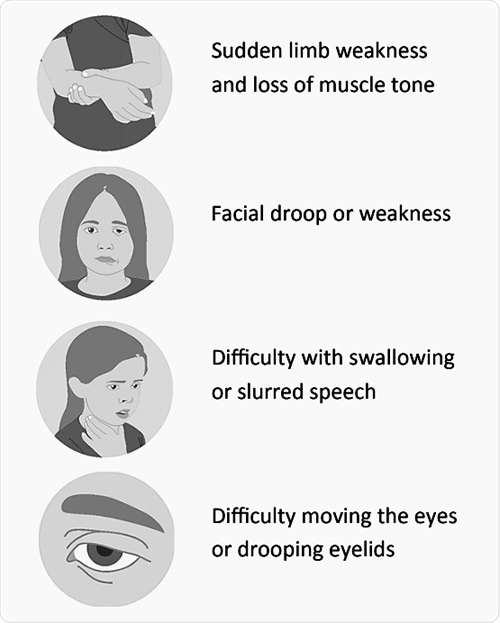
Symptoms of AFM
Symptoms of AFM
Typical diagnosis strategy includes complete physical examination, magnetic resonance imaging (MRI), cerebral spinal fluid (CSF) testing, electromyography or electrodiagnostic tests, and nerve conduction velocity tests. Respiratory tract samples may be examined for the presence of any causative viral component.
Lesions suggesting spinal motor injury are found in MRI scans. Motor neuropathy or neuronopathy are depicted in electromyography. Sensory abnormalities are not typically found in testing, because the myelitis is limited to exclusively the gray matter of the spinal cord.
Cerebrospinal fluid (CSF) tests in most patients depict pleocytosis or abnormal amounts of white blood cells. Proteins in the range of 19-99 mg/dL may also found to be present in CSF.
As per the Centers for Disease Control and Prevention (CDC), the diagnosis of AFM requires two criteria:
  • Acute asymmetric flaccid paralysis characterized with weakness, and
  • Lesions specifically in the gray matter of the brain in MRI scan comprising of one or more spinal segments.
As the definite causative agent of AFM is not known, there are no vaccines to prevent the condition. Current treatment strategies usually involve physical and occupational therapies to manage the limb weakness. There is urgent need to establish the long-term effects of this rare disease, and research is directed towards this need, as well as to better understanding of the condition and its pathogenesis.

Amid scrutiny, Memorial Sloan Kettering bans execs from pharma directorships


  • Memorial Sloan Kettering will no longer allow its top executives to simultaneously sit on corporate boards of for-profit, health-related companies, including drugmakers.
  • The decision comes as the New York-based cancer center has found itself the center of public scrutiny following a series of investigative reports published by The New York Times and ProPublica that raised ethical questions on the nonprofit’s relationships with industry. The organization’s chief executive, Craig Thompson, resigned in Octoberfrom his seat on the board of Merck & Co.
  • This decision was outlined in a memo sent Friday to MSK employees that also described several other changes to how MSK will interact with industry in the future. Additional new policies will limit investment and board service for other MSK employees with spin-off ventures. The document was first reported by The New York Times and ProPublica.
While MSK’s situation has drawn the most attention for its ties to industry, leaders of nonprofit health systems commonly lead pharmaceutical companies at the same time, a BioPharma Dive review from November found.
From that analysis, about two-thirds of the industry’s largest drugmakers had at least one board member who was also leading a nonprofit, creating a potential financial conflict of interest between the two roles.
The typical compensation package from the pharma companies to these directors was worth more than $475,000, while the average director also held roughly $1.7 million in stock of the particular drugmaker they helped to lead.
This MSK memo from Debra Berns, the cancer center’s senior vice president and chief risk officer, establishes some new limits the organization will put in place on its leaders.
The five highest-ranking roles will not be permitted to serve on boards of external, for-profit health- or science-related companies, the memo stated. These roles are the chief executive, chief operating officer, chief financial officer, physician-in-chief and director of MSK.
However, these five leaders can be exempt from the ban if they provide a compelling institutional reason for board service and obtain approval from the executive committee of MSK’s board of managers, according to the document.
Another new policy will limit the relationship with for-profit spin-off companies that MSK officers can have. MSK officers cannot serve on boards of spin-off companies, and the Board of Overseers and Managers cannot invest in or serve on these boards.
Finally, MSK will co-host a symposium in February to start crafting a framework on financial disclosures in research publications.
The changes are limited in scope, and policies can always be modified in the future when public scrutiny fades.
For instance, Partners HealthCare, which runs Massachusetts General Hospital and Brigham and Women’s Hospital, also received front-page coverage from The New York Times when it capped outside directorship payments to $5,000 per day in 2010. A few years later, its board of directors quietly voted to scrap the limit, BioPharma Dive previously reported.
The internal review at MSK is still ongoing, and Berns wrote these actions are “only a start.” Some other institutions are also rethinking their approaches to industry relationships, according to The New York Times and ProPublica, including the Dana-Farber Cancer Institute and the Fred Hutchinson Cancer Research Center.

As shutdown stalls IPOs, companies mull creative paths to market


  • Amid a slowdown of initial public offerings held up by the largely shuttered Securities and Exchange Commission, some companies that planned to go public in the first few months of 2019 are mulling a legal workaround to bypass regulators.
  • Some biotechs in the midst of the IPO process are considering the unusual step of using a technical amendment to their registration forms and listing publicly without final SEC clearance, legal experts said in interviews.
  • But as companies consider the move, the Nasdaq stock exchange has begun adopting a case-by-case approach in deciding whether it will allow IPOs that haven’t fully cleared the SEC review, several sources familiar with the matter told BioPharma Dive.

As the government shutdown lingers with few signs of progress, the IPO market — and by extension emerging companies in biotech and other industries — has felt the effects of a hamstrung SEC.
Before a lapse in funding closed large parts of government offices in late December, private companies were proceeding through the IPO process as usual. But the shutdown has put a freeze on the typical dialogue between commission employees and filing companies.
The absence of IPOs so far this month stands in stark contrast to last year’s January, which was the busiest month for IPOs since 2000, according to PwC. All told, there were 47 IPOs in the first quarter of 2018.
​Some biotechs potentially impacted include Gossamer Bio, Alector and Cirius Therapeutics, all of which are actively attempting an IPO. One biotech, Alzheon, notified the SEC on Jan. 16 that it would withdraw its registration statement and is no longer pursuing an IPO, but did not give a reason for that decision. Alzheon also withdrew an earlier attempt to go public.
One workaround is a legal exception, lawyers said, where a company modifies the language in its registration filing with the SEC to bypass whatever remains of their SEC review, moving directly to market.
This alternative route requires a company to pick a price for its IPO and then wait 20 days, with a listing fixed at that price.
Michael Bison, a partner at Goodwin, said this method, while technically legal, is seldom used in normal circumstances. It exposes the company to “a fair amount of market risk,” he said in an interview, noting the potential risks in market fluctuations during that waiting period.
Still he said companies were increasingly weighing it as an option to secure needed funding, a point echoed by other lawyers.
But while it might be legal, the Nasdaq appears wary.
The exchange where biotechs often debut is now grappling with how to deal with companies that may make that change, as it opens up the possibility of newly minting public companies that could face disputes with the SEC once the government reopens.
“There certainly could be someone who’s been through several rounds, who is far enough along, that they are very comfortable in saying they’ve cleared all their comments [with the SEC],” Andrew Fabens, a partner at Gibson, Dunn & Crutcher, a law firm, said in an interview with BioPharma Dive. “Theoretically, that’s possible.”
Even when the funding is restored at the SEC, agency workers will have to dig themselves out of a backlog of work that continues to pile up.
“I think interest from investors in the IPO market remains strong, however I am concerned about the potential backlog of offerings,” Matthew Feinberg, a managing director at the investment bank B. Riley FBR, said in a statement provided to BioPharma Dive. “Once the government reopens, it may create some challenges for competing companies with similar stories, but I don’t expect that to have a major impact on the quality names.”
Fabens said the only thing certain about the backlog is that there will be one, and a large one at that. It’s unclear how the SEC would prioritize that work, or whether they would decide to expedite reviews.
The government shutdown has put pressure on the pharma and biotech industries, affecting multiple agencies that work with both sectors. In addition to the SEC, the Food and Drug Administration and the Treasury Department have been impacted, holding consequences for some drug companies.
The FDA can’t review drugmaker applications for product approvals submitted after Dec. 22, for instance, as the agency can’t accept new user fees during a lapse in funding. Commissioner Scott Gottlieb has estimated the agency will exhaust its remaining balance for Prescription Drug User Fee Act programs by around mid-February.
Even the private market could feel an impact, Bison said. A pilot program operated by the Treasury Department requires pre-clearance in certain circumstances for foreign investment into U.S. companies or technologies. Those filings are not being reviewed during the shutdown as well, making it increasingly difficult to take money from investors outside the U.S.
“I think it will have a lasting effect on the industry both from an operational perspective and also in accessing public markets,” Bison said.