UBS Group assumed coverage on shares of Align Technology (NASDAQ:ALGN) in a research report sent to investors on Thursday morning, www.benzinga.com reports. The brokerage issued a buy rating and a $230.00 target price on the medical equipment provider’s stock.
January historically brings deals and rumors of deals in the biopharmaceutical industry. The first few weeks in 2019 haven’t disappointed, with a couple of big buyouts already announced and rumors flying about more that could be on the way.
Perhaps the juiciest gossip right now relates to a potential acquisition of Amarin(NASDAQ:AMRN) by Pfizer(NYSE:PFE). Nine days ago, StreetInsider.com reported that Pfizer could be looking to buy Amarin. Neither Amarin nor Pfizer made public comments about any discussions, but the story stirred interest among investors.
Amarin’s share price soared on the speculation about an acquisition. Pfizer’s shares, on the other hand, fell. But was that reaction warranted? Could Pfizer shareholders actually emerge as big winners with an acquisition of Amarin?
Arguments against a deal
Probably the biggest argument against Pfizer buying Amarin is that the drugmaker really doesn’t have to make a deal right now. Pfizer’s pipeline is as strong as it’s been in a long time. The company’s top products, including blood thinner Eliquis and breast cancer drug Ibrance, continue to generate solid sales growth.
There’s also the fact that Pfizer’s track record of acquisitions has been spotty. For example, the big pharma company made two significant acquisitions in 2016, spending $14 billion to buy Medivation and $5.2 billion to buy Anacor. Based on sales so far for the key drugs obtained with both of those transactions, it will take years for Pfizer to see a positive return on its initial investments.
Many Pfizer shareholders would probably prefer that the company use its cash to boost its dividend more and buy back more shares. Actually, new Pfizer CEO Albert Bourla said at the J.P. Morgan Healthcare Conference earlier this month that his top capital allocation priorities are to do those two things — increase the dividend and repurchase shares.
Another argument against Pfizer acquiring Anacor is that it could get more bang for the buck by buying or licensing phase 2 or phase 3 assets. Again, that’s something that Bourla indicated the drugmaker would do in his comments at the J.P. Morgan conference.
Checking off the boxes
However, there are several reasons why an acquisition of Amarin by Pfizer could pay off nicely. Amarin definitely has a potential blockbuster on its hands with Vascepa.
At least one analyst thinks that Vascepa could achieve peak sales in the ballpark of $2.5 billion. If the drug can get anywhere close to that level, Amarin’s current market cap of $5.3 billion looks quite attractive.
Adding Vascepa to Pfizer’s lineup would increase the chances that the drug can deliver on its potential. Pfizer already has a large sales force calling on cardiologists to promote Eliquis, cholesterol drug Lipitor, and hypertension drug Norvasc. Vascepa would be a good fit with Pfizer’s existing drugs.
Albert Bourla said in his comments at the J.P. Morgan conference that Pfizer doesn’t want any deals that are distracting. An acquisition of Amarin shouldn’t be a distraction. Pfizer’s cash stockpile (including cash, cash equivalents, and short-term investments) totals more than $17 billion. The drugmaker could buy Amarin at a reasonable premium to its current price without breaking a sweat.
Why a deal isn’t likely
Which side of the argument is more compelling? I think it could go either way. However, I don’t view a buyout of the small biotech as a must-have for Pfizer. And that’s why a deal probably isn’t going to happen.
There are other big drugmakers with cardiology sales forces that need to make acquisitions more than Pfizer does. Amarin’s management team will want to get the best offer it can. That means that even if Pfizer is interested, the small biotech would likely try to find other prospective buyers also. I don’t expect that Pfizer would get into a bidding war.
So while the rumors swirl, my best guess is that Pfizer will do exactly what Albert Bourla said it would. The company will keep growing its dividend, continue buying back shares, and look for late-stage programs that fit into its core areas of focus.
It’s still possible that Pfizer might acquire Amarin, but I think the odds are against it. The good news for Pfizer shareholders is that they should win over the long run regardless of which path the big pharma company takes.
Clearside Biomedical announced that data from MAGNOLIA, an extension study of PEACHTREE, its pivotal Phase 3 trial of Xipere in patients with macular edema associated with non-infectious uveitis, was presented during the winter symposium of the American Uveitis Society in Park City, UT. MAGNOLIA followed 28 of the 96 patients who were in the Xipere treatment arm of PEACHTREE, across 22 of the clinical sites utilized in PEACHTREE, for six additional months without treatment to better understand XIPERE’s long-term clinical profile. “In MAGNOLIA, 50% of XIPERE-treated subjects maintained efficacy through 36 additional weeks after their second suprachoroidal injection of XIPERE, without requiring additional treatment,” Pauline Merrill, Partner at Illinois Retina Associates and Section Director of Uveitis in the Department of Ophthalmology at Rush University Medical Center, said. “In December, we submitted a new drug application to the FDA for XIPERE to treat macular edema associated with uveitis,” said Clearside’s Chief Medical Officer, Tom Ciulla. “The data from MAGNOLIA expands our understanding of XIPERE and continues to increase our confidence that, if approved, can become an important new treatment option for uveitic macular edema patients. We are actively preparing to introduce XIPERE to the market, should the FDA provide an approval.” The most common adverse events seen in the MAGNOLIA trial included cataracts and increases in intraocular pressure and were consistent with previous trials of XIPERE. No serious adverse events were reported. https://thefly.com/landingPageNews.php?id=2851197
How is a man supposed to act? What is masculinity and when does it become toxic? And how should psychologists approach the concept of masculinity when seeing patients?
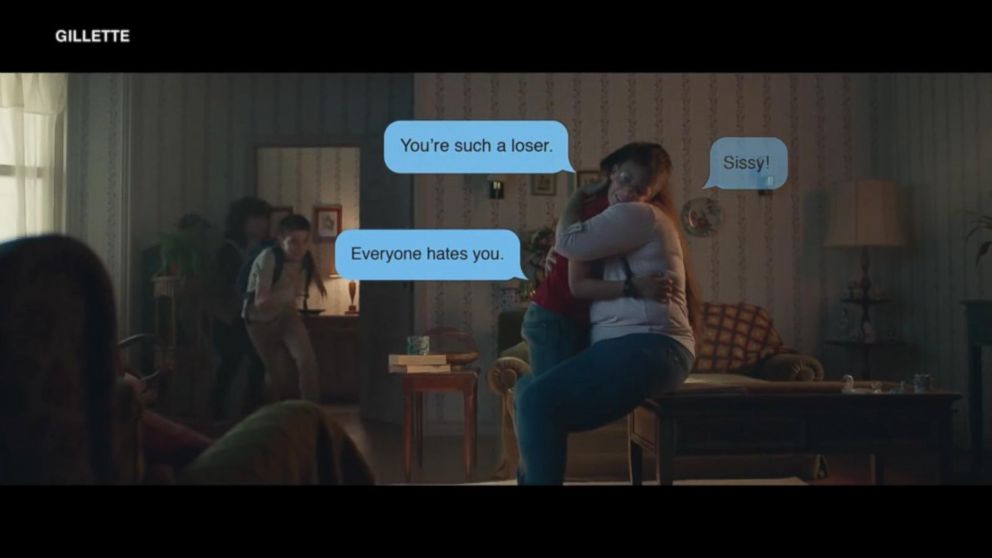
These are questions an increasing number of psychologists must consider as dialogue around toxic masculinity, sexual abuse and harassment and the #MeToo movement continues across the country. Most recently, an ad for the razor company Gillette prompted many men to throw away their Gillette products in a defensive protest. The ad asked men to be better, to stand against toxic masculinity and stop excusing sexual harassment, bullying, and fighting as “boys will be boys.”
@DollarShaveClub I’m going to try you out for the first time. If I get a good shave, if you don’t try to shame an entire class of people, and if you just want to SELL a good product, you have me.
The ad was released just days after the American Psychological Association (APA) published new guidelines that are meant to help mental health professionals with treating boys and men. They are the latest in a series of guideline updates from the APA dating back to the 1960s, and were not a direct response to the #MeToo movement. Although the guidelines aren’t intended for the general public, they generated their own controversy after an accompanying APA article said that “traditional masculinity — marked by stoicism, competitiveness, dominance and aggression — is, on the whole, harmful.”
In a tweet linking back to the article, the APA added that these claims were supported by “more than 40 years of research showing that traditional masculinity is psychologically harmful and that socializing boys to suppress their emotions causes damage.”
(ABCNews.com) VIDEO: New Gillette ad calls for men to take action, be better in #MeToo era
ABC News spoke to Ryan McKelley, Ph.D., a professor of psychology at the University of Wisconsin and president of the Society for the Psychological Study of Men and Masculinities, the division of the APA that published the guidelines. Here’s what he had to say about them.
The guidelines are not ‘anti-masculinity.’ The APA’s view is more nuanced.
McKelley said that the APA’s tweet was viewed as a definitive stance against masculinity, when the APA actually sees masculinity as multifaceted.
“Unfortunately, when the guidelines came out, the tweet said something about traditional masculinity being harmful, and what we saw was that people latched onto that. … It got out of hand,” he said.
Leadership abilities, confidence, assertiveness and courage. These are all aspects of traditional masculinity that are positive, healthy and pro-social in most circumstances, McKelley said. However, he also said that when these qualities are taken to their extremes — like many other behaviors and attitudes — they can cause problems.
Men should also be able to express their emotions more freely, he added. Those who aren’t able to might find themselves acting out harmfully.
“Rigid emotional inexpression, a rigid belief that aggression and violence are ways to solve problems or a rigid belief that you can’t show weakness or ask for help. The men and boys who adhere to these extreme stereotypical attitudes are the ones at most risk for physical, psychological and social problems,” McKelley said.
He emphasized that masculinity isn’t under attack, but also said that “in a perfect world, we wouldn’t describe traits as belonging to one gender or another, because all of these things…all humans experience [them].”
The controversy distracts from real medical and mental health challenges that boys and men face.
Men are more likely to die from cancer and cardiovascular disease than women are, and it’s likely because they aren’t seeing doctors for preventive screenings as much as women, McKelley said, noting that this could be because they are taught to appear strong and that they shouldn’t ask for help when a problem comes their way
That same train of thought — in which men suppress their needs and emotions — might also contribute to the higher rates of suicide among men when compared to women in the U.S. “That is a public health problem. Men are less likely to seek help along the way or earlier on in the process, so it becomes the last, final resort of overwhelming emotional pain,” McKelley said.
Additionally, more men are perpetrators of violence than women and men are more likely to die by murder than women, McKelley said. “If some boys and men are socialized to respond to conflicts or extreme emotional stress by reacting with aggression and violence, that puts themselves and others at risk,” he said.
(STOCK PHOTO/Getty Images)
The guidelines are intended to help clinicians adapt to a variety of issues and needs in men.
They are designed to help psychologists think about men in more complex ways and talk to their clients about things they might not have been trained in or thought about before, McKelley said.
“It’s important to recognize that certain masculine traits can be helpful in some situations, but harmful in others. For example, stoicism and a tough demeanor might help someone who is in a crisis situation, like a first responder… But those same qualities can destroy a romantic relationship. We are encouraging psychologists to think about how to support men in more adaptive ways.”
Like all humans, men are complex. The guidelines, McKelley said, recognize that there are both men who have high amounts of privilege and men who are struggling, men who are overworked and men who experience consistent racial discrimination, bias and oppression. The guidelines offer psychologists ways to “understand that complexity and open traditional conversation, or ways to think about some of the problems that men and boys face.”
Many men, for example, might not realize that they have depression because of societal expectations to not talk about their feelings. “If a man comes into my office and says, ‘I don’t feel right,’ and he doesn’t look like a classic clinical representation of depression… If I don’t pay attention to other ways he might be experiencing distress, such as overworking, substance use, or irritability, I could miss the depression. The guidelines say, ‘If you’ve got a male client, here are some things to consider.'”
(STOCK PHOTO/Getty Images)
Although the guidelines are for psychologists, there are other organizations working to help men directly.
The Men’s Story Project, founded by public health researcher and educator Jocelyn Lehrer, is an organization that uses storytelling and community dialogue to explore ideas around masculinity.
Lehrer told ABC News that she started the organization because she felt that many of society’s problems, such as violence, bullying, and sexual health, were being impacted by the ways that boys and men are taught about masculinity. After meeting many boys who had been negatively affected by toxic masculinity — both as the aggressors and as the victims — she told ABC News that “people have to realize, they’re not alone.”
The Men’s Story Project allows men to share their personal stories with each other and live audiences and then have a group discussion about them. Representatives in the audience are also available to connect people with resources that pertain to the topics discussed.
“Masculinity is a socially made construct,” Lehrer said. “People tend to learn attitudes and behaviors from peers and role models.” Lehrer said, and her organization offers opportunities for men and boys to do that.
Her organization gives men and boys the opportunity to meet role models who can teach them new ways to cope with their emotions, and she said that since she started the Men’s Story Project in 2008, many other groups have popped up across the U.S. and the world. They are making a positive impact.
One participant at the Men’s Story Project, for example, told Lehrer that the project had made him realize he wasn’t the only man having trouble understanding his masculinity. Another one told her about how he learned that “being a man” doesn’t have to be defined in any specific way.
“I learned more about gender identity and how fluid that can be,” he said, “and I learned more about what it means to be a man, and not the type of man that society has created.”
Tens of thousands of embryos are stuck in limbo in fertility clinics, leftovers from pregnancy attempts and broken dreams of parenthood. Some are outright abandoned by people who quit paying storage fees and can’t be found. In other cases, couples are struggling with tough decisions.
Jenny Sammis can’t bring herself to donate nearly a dozen of her extras to research. She and her husband agreed to do that when they made their embryos 15 years ago, but her feelings changed after using some of them to have children.
“I have these two gorgeous, smart people who came from this process,” Sammis said. “These embryos are all like seeds that could become potential people. That reality to me was all abstract when they were in the freezer.”
Tank failures at two clinics in Ohio and California last year revealed hidden issues with long-frozen embryos, including some from the 1980s when IVF began. A few years ago, medical groups developed sample consent forms clinics could use for new patients, spelling out what could happen to unused embryos. But that hasn’t resolved what to do with ones made long ago.
“It’s a real dilemma for these clinics,” said Rich Vaughn, a Los Angeles lawyer who headed the American Bar Association’s assisted reproduction committee for many years. “We don’t quite know what to do with them and everyone’s afraid to act” for fear they’ll be sued if people surface decades later and want their embryos.
The number is growing as more couples try IVF and because of changes in how it’s done. The old way was to mix eggs and sperm in the lab and transfer multiple fresh embryos to a womb, hoping at least one would lead to pregnancy. Now, couples usually freeze many embryos, test for health problems and transfer the most viable one at a time to avoid multiple births. That often means leftovers once the desired family is complete.
How many embryos are in storage isn’t known — centers don’t have to report that. One study estimated there were 1.4 million in the U.S. Researchers think 5 to 7 percent are abandoned, though it’s as high as 18 percent at some clinics. Some define that as a year of no contact or storage payments after reasonable efforts to find the owners; others draw the line at five years. Some clinics search social media and hire investigators to find owners when abandonment is suspected.
“It has vexed our field” from the start, said Dr. Mark Sauer, a fertility specialist at Rutgers Robert Wood Johnson Medical School who is on the ethics committee of the American Society of Reproductive Medicine.
It also has vexed couples, many of whom never expected so many leftovers. Sara Raber of New York’s Long Island had five extras after conceiving two children.
“Your goal in the beginning is just to get pregnant,” so making a lot of embryos seems necessary because you don’t know how many tries it will take, she said. But disposing of extras brings a finality to family building that’s different for IVF couples than it is for those who conceived naturally.
“You’re making a conscious decision not to have a baby anymore,” said her husband, Howard Raber. “That’s what makes it hard.”
In this Tuesday, Oct. 2, 2018 photo, containers holding frozen embryos and sperm are stored in liquid nitrogen at a fertility clinic in Fort Myers, Fla. LYNNE SLADKY/AP
Even after the Rabers agreed to donate theirs to research, which usually means to a fertility clinic to let staff practice IVF, the paperwork sat on her desk for months, Sarah Raber said.
In Arlington, Virginia, Sammis is having a similar struggle. “I get to the point of signing the papers and I just can’t deal with it,” she said.
Sammis said a friend who couldn’t decide what to do with her embryos moved away and “didn’t give the fertility center her forwarding address … That was her way of dealing with it.”
When couples have abandoned embryos, “it was largely because they did not want to be responsible for making a very difficult decision. They would rather let the program do it,” Sauer said.
Andrea Braverman, a health psychologist at Thomas Jefferson University in Philadelphia, said it’s not an easy choice. A study of 131 couples in Canada found that one third had not returned for frozen embryos after five years. Another study found that up to 70 percent of couples delayed a decision for at least five years and many changed their minds about what they thought they’d do after they had IVF.
“This is a fluid decision. It is not a one-and-done,” Braverman said.
Frozen embryos remain viable for decades as far as anyone knows. Last year, the National Embryo Donation Center in Tennessee reported a birth using an embryo that had been frozen for 24 years.
Dr. Craig Sweet, who runs a fertility clinic in Fort Myers, Florida, supplied a Chicago woman an embryo that had been frozen for 17 years and made one request:
“When the baby is born,” he said, “I want you to see if you can register the kid to vote.”
Teens addicted to electronic cigarettes have few treatment options to help them quit, and physicians treating nicotine-addicted kids have little information to guide them in helping their underage patients kick the e-cigarette habit, according to the FDA commissioner.
Scott Gottlieb, MD, was speaking Friday at the opening of a day-long public hearing, which was devoted to exploring the possible role of cessation therapies approved for adults to help youth who have become addicted to nicotine through the use of Juul and other vaping products.
“For these addicted young people, the reasons that they tried e-cigarettes may not matter anymore,” Gottlieb said. “These young people are hooked on vaping, and their worried parents, physicians, and the public health community are searching for tools to help them quit.”
He noted that while there is a tremendous amount of research on smoking cessation for adults, the treatment of nicotine addiction among adolescents and teens is not well understood.
“There is little information about how drug or behavioral interventions might support youth e-cigarette cessation, as well as youth tobacco use more generally,” he said.
Gottlieb cited 2018 National Youth Tobacco Survey (NYTS) figures that confirmed the epidemic rise in e-cigarette use among middle- and high school students between 2017 and 2018.
During this period, current e-cigarette use among high school students increased by 78% and current use among middle school students increased by 48%, with the total number of middle and high school students estimated to be current users rising to 3.6 million.
“I fear that the survey data that we’ll get for next year will show continued increases in youth use of e-cigarettes. We’ll be in the field between March and May with the 2019 National Youth Tobacco Survey. I’ll tell you this: If the youth use continues to rise, and we see significant increases in use in 2019, on top of the dramatic rise in 2018, the entire (e-cigarette) category will face an existential threat.”
The FDA gained regulatory authority over electronic cigarettes with the passage of the 2016 deeming rule, but the following year the agency announced that newly deemed e-cigarettes would be exempted from premarket review — essentially remaining unregulated — until 2022.
In his remarks on Friday, Gottlieb reiterated a previous threat to revisit the regulatory delay if e-cigarette companies do not engage in good faith efforts to prevent use of their products by youth.
Criticism of the FDA’s decision to delay regulatory oversight was a recurring theme at the hearing.
“Reversing these trends and ultimately eliminating youth e-cigarette use will take a multifacited approach, and strong tobacco control policies must take a primary role,” said Susanne Tanski, MD, speaking for the American Academy of Pediatrics. “While it is important to discuss how drug therapies can help adolescents who are already dependent on tobacco products, preventing youth use in the first place should be FDA’s primary goal. We have to recognize that if an adolescent has developed a nicotine addiction as a result of vaping, we have already failed.”
Tanski said FDA’s recently announced actions aimed at eliminating youth e-cigarette use “do not go far enough.”
“We urge much stronger action regarding e-cigarettes,” she said. “Strong tobacco control policy aimed at keeping these products away from adolescents may be more effective in achieving adolescent cessation than medical intervention. Indeed, it is likely that nothing FDA does to advance tobacco dependence treatment for adolescents will be as powerful or effective as addressing the availability of flavored e-cigarette products that are attracting and sustaining youth use.”
Prinston Pharmaceuticals recalled one lot of irbesartan tablets and seven lots of irbesartan HCTZ tablets. The medication contained unacceptable levels of the probable carcinogen nitrosodiethylamine, or NDEA, the company said.
The drugs ingredients were made by Zhejiang Huahai Pharmaceuticals, a factory in China that has been linked to several recalls of commonly prescribed blood pressure drugs since July. The Food and Drug Administration has issued a warning letter and halted all new drug shipments from Zhejiang Huahai since uncovering a series of problems at the factory.
The Food and Drug Administration posted information on its website listing the blood pressure medications recalled for containing carcinogens. Here’s what to watch out for. USA TODAY
Another factory in India, Hetero Labs Limited, also has been tied to multiple recalls.
The irbesartan recall is the latest involving a large class of blood pressure drugs called angiotensin II receptor blockers, which work by blocking the effects of a hormone that narrows blood vessels. Several versions of valsartan and losartan also have been recalled since July.
Prinston advised patients to check with their doctor or pharmacist before they stop taking their medications. Discontinuing a recalled drug could cause more immediate harm than staying on the medication.
Prinston said the following irbesartan and irbesartan hydrochlorothiazide tablets have been recalled:
• Irbesartan, 300 mg, 90 count, lot number 331B18009, expires February 2021
• Irbesartan HCTZ, 300 mg/12.5 mg, 30 count, lot number 327A18001, expires March 2021
• Irbesartan HCTZ, 300 mg/12.5 mg, lot number 327A18002, expires March 2021
• Irbesartan HCTZ, 300 mg/12.5 mg, 90 count, lot number 327B18008, expires March 2021
• Irbesartan HCTZ, 300 mg/12.5 mg, 90 count, lot number 327B18009, expires March 2021
• Irbesartan HCTZ, 150 mg/12.5mg 30 count, lot number 325D18004, expires March 2021
• Irbesartan HCTZ, 150 mg/12.5 mg, 90 count, lot number 325B18004, expires March 2021
• Irbesartan HCTZ, 150 mg /12.5 mg, 30 count, lot number 325D18005 expires March 2021