Search This Blog

Saturday, October 17, 2026

Limoges town hall ablaze amid mass protests in France


The historic town hall in the city of Limoges in southwest-central France was set ablaze and caught fire as mass protests rocked the country on Saturday. According to the latest information, the hall's belfry collapsed, and the building sustained heavy damage.

Violence was recorded in France's two biggest cities, Paris and Marseilles, with crowds breaking into the town hall, while in the capital, rioters attempted to approach the Elysee Palace, but were repelled. Looting has also been reported in Paris and other cities.

Government officials and opposition figures condemned the violence, and French President Emmanuel Macron vowed to punish the perpetrators.

https://breakingthenews.net/Article/Limoges-town-hall-ablaze-amid-mass-protests-in-France/67339316

Threatproof: College Safety for Young Women


A young woman steps off a curb at two in the morning and gets into what she believes is her rideshare.

A young mother hears a knock, sees a delivery bag through the glass, and opens the door to tell the driver he has the wrong house.

A woman working out alone at night sees a man at the gym door. She’s seen him around the complex before. She lets him in, turns her back, and goes back to her set.

None of those starts as an attack. That’s the whole point. Every one of them is an ordinary moment that a reasonable person handles that exact same way a hundred times and nothing happens. Which is precisely why they’re worth studying.

In all three, the danger began before the attack.

When I break down a real-world incident, I often ask three questions.

What was the first easy opportunity to make the person safer?


What was the last opportunity to change the outcome?


What 60-second lesson would have made the biggest difference?

That first question is the one I want parents to teach. Because there’s almost always a moment where the decision is still cheap, and it could often have changed with a short 60-second lesson. Then I ask what layer of S.M.A.A.R.T.S. was the failure point.

For young women out on their own, early prevention and action are even more valuable. Those actions are still socially comfortable and still reversible. They are easier in both the required training and the risks of the results. Avoiding a dark alley is free; carrying yourself with a touch of confidence takes little work; pulling a gun or fighting for your life can be very costly, even if it works out in your favor eventually.

Of course, when the early actions don’t work, or you find yourself in a situation you couldn’t avoid, you better have a functional handle on those later skills and tactics exactly because getting them wrong can be a big problem and getting them right might be the last thing to save you or your loved ones.


WHY I BUILT THE FRESHMAN 15

A couple months ago I put together a program called the Freshman 15. It’s a play on words. The original freshman 15 is the weight some people put on their first year away from home because of bad habits. This one is about a different set of habits.

I built it because I have several relatives and plenty of friends with young daughters heading off to college for the first time, and they wanted something specific. Not general safety advice. Something aimed at what these young women were actually going to run into.

The first thing I realized is that they needed a framework that covers both criminal predators and social predators.


We all know that much of the risk to young women, maybe most of it, comes from young men who are already familiar to them. A friend, a date, someone in the building. That’s a different problem than a stranger in a parking lot. But the same awareness, the same assertiveness, the same boundary control works on both. That’s the useful part. You don’t need two separate skill sets.

So I built it around fifteen conversations parents should have with their daughters before she goes.

https://threatproof.substack.com/p/college-safety-for-young-women-the

Missing Ilhan’s missing defense

by Bill Glahn

 More dogs not barking. The Congresswoman from Minnesota hasn’t been seen in public since her DC-area home was raided by the feds back on Monday (Columbus Day). Her legal defense has also been mostly missing in action.

On her Congressional Twitter (X) account, her “office” issued a single “statement” in the form of a non-denial denial. Her personal account includes just a single post on the subject. One does have the right to remain silent, a right she has rarely exercised over the years.

A letter from her lawyers is getting a lot of attention. CBS News reports,

Attorneys for Rep. Ilhan Omar accuse DOJ of violating judge’s orders to follow protocols to protect her rights as member of Congress

So lawyers for Ilhan have leaked a letter to the DOJ to the press, but I have not seen the letter itself published anywhere, just described.

In the letter to the Justice Department, Omar’s lawyers alleged several key requirements imposed by the judge had been violated.

So, Ilhan’s lawyers have seen the search warrant. At least so far, they are only challenging how the search was conducted, not the underlying issuance of the warrant, nor have they challenged the existence of the probable cause used to obtain it.

Nor have I heard of any court petitions (emergency or otherwise) being filed to quash the many subpeonas issued, or to restrain government investigators, or to enforce the requests contained in their letter to the DOJ.

Rep. Omar is not without her defenders. A reader pointed out this morning a column published (paywalled) by the Minneapolis Star Tribune’s Rochelle Olson,

Trump just upped his targeting of Ilhan Omar. Now let’s see the warrant.

Olson hasn’t seen the warrant, but you know who has? Omar and her lawyers.

They aren’t, so far, demanding it be unsealed..

https://www.powerlineblog.com/archives/2026/10/missing-ilhans-missing-defense.php

Cancer Vaccines May Be on the Horizon

 by Devon Herrick

No other disease worries Americans more than cancer. Cancer is the second leading cause of death after heart disease. It is the leading cause of death among Americans younger than 85. Approximately 1.9 million new cancers were diagnosed in Americans every year. In 2023, a total of 613,349 Americans died of cancer according, to the CDC. Some of those may have been among those newly diagnosed. Or more likely, they were diagnosed years earlier. The 5-year survival rate for patients diagnosed with cancer between 2015 and 2021 was 70%, compared to just under half (49%) in the mid-1970s. The huge jump in cancer survival is mostly due to lower smoking rates compared to 60 years ago (42% vs. 11%).

About one-in-five cancer deaths are from lung cancer, the leading cause of cancer deaths. Lung cancer is responsible for more deaths than number 2 (colon cancer) and number 3 (pancreatic cancer) combined. Half of all cancer deaths are from lung, colorectal, pancreatic and breast cancer. 

What if there were a vaccine against cancer? The National Institutes of Health is betting vaccines will become the next big thing in the fight against cancer. From the New York Times:

A new type of cancer treatment — vaccines — is so promising that it demands a national effort to expedite discoveries, said the director of the National Cancer Institute, Dr. Anthony Letai.

[T]he vaccine program was expected to begin in December, starting with a focus on pancreatic cancer, liver cancer, and colorectal cancer as well as a subset of pediatric tumors.

Cancer vaccines would be delivered using messenger RNA (mRNA), as is the case with Covid vaccines. A cancer vaccine will differ from, say, flue vaccines and covid vaccines in that a cancer vaccine will attack a cancer that is already present. More from NYT:

Initial results from studies of vaccines for melanoma, pancreatic cancer, renal cell cancer and even glioblastoma — the brain cancer that has so far resisted all forms of treatment — are “incredibly encouraging,” Dr. Knudsen said.

So far, just one vaccine study has been large enough to show definitive results. It involved 1,137 people with advanced melanoma.

Merck and Moderna, which conducted the study, reported in August that the vaccine increased the time before cancers recurred and increased the time before they spread. The companies plan to reveal the full data set later this month.

There have been a few other small clinical trials with promising results. Unfortunately, with small trials it is more difficult to know with any certainty if the cancer is gone for good or will come back. Or perhaps a booster shot is needed. From NYT:

[O]ne involving patients with kidney cancer… The researchers took tumor cells from patients with advanced kidney cancer at the time of their initial surgery. Then, for each patient, they created a vaccine designed to attack the tumor’s unique mutations.

It is impossible to know if the patients were entirely cured in such a small study, but all nine were cancer-free after 40 months. Ordinarily, 30 to 50 percent would have relapsed within two years.

Another trial involved pancreatic cancer, which only has a 5-year survival rate of about 10%. While only half of 16 test subjects responded to the vaccine, 88% of those who did are still alive more than five years later. A much bigger clinical trial is underway. Pancreatic cancer is arguably the most difficult cancer to treat. Experts report if they can create vaccines to effectively treat pancreatic cancer, they will be easier to create vaccines for the other cancers. 

https://www.goodmanhealthblog.org/cancer-vaccines-may-be-on-the-horizon/

"Trans ID In Free Fall": After Decade-Long Surge, Far Fewer Teens Identify As Lesbian, Gay, Or Bisexual

 by Janice Hisle via The Epoch Times,

The percentage of American high schoolers who say they are homosexual or bisexual has plummeted after years on the rise.

Based on data from the U.S. Centers for Disease Control and Prevention, psychologist and researcher Jean Twenge found that "the decline appears to be driven almost entirely by girls."

Girls identifying as lesbian, gay, or bisexual dropped 5 percentage points, hitting 22 percent last year. Among boys, that percentage fell by 2 percentage points to 7 percent.

"The trends are striking," especially compared to data from a decade ago, Twenge, a professor at San Diego State University, wrote on her blog in late September.

Reasons for the decline in teen in lesbian, gay, or bisexual identification are not readily apparent. "I have to confess: I have no idea," Twenge wrote.

Determining whether the numbers reflect the start of a trend requires further examination, she and other professionals say.

Competing explanations for the shift are emerging amid a larger debate over alternative sexuality in America.

Patterns Emerge

By comparing the CDC's newly released 2025 Youth Risk Behavior Survey with its 2023 figures for grades 9 through 12, Twenge identified a pattern: The younger the grade level, the sharper the decline in lesbian, gay, or bisexual identification.

Ninth graders calling themselves lesbian, gay, or bisexual dropped from 17 to 11 percent.

For 12th-grade students, the number dipped by 2 points, from 18 to 16 percent.

Twenge's analysis excluded responses from students who said they describe their sexual orientation "another way," were unsure, or didn't understand the survey question.

Identifying as transgender - which is a gender identity, rather than a sexual orientation - also was not specifically addressed.

The newly reported drops contrast with data from preceding years.

With 2015 as a baseline, the number of girls identifying as lesbian, gay, or bisexual ballooned 128 percent in six years; for boys, the number went up 99 percent in eight years, Twenge wrote.

At the same time, the percentage of young adults aged 18 to 24 identifying as lesbian, gay, or bisexual "is no longer racing upward as it did between 2014 and 2022," Twenge wrote in another blog post.

In 'Free Fall'?

A few studies appear to reflect findings similar to those Twenge described in the CDC data.

Between 2022 and 2025, students identifying as "straight" or heterosexual climbed from 76 percent to 83 percent, the University of Minnesota reported. That study surveyed Minnesota schoolchildren in grades 5, 8, 9, and 11.

And, a year ago, Canadian political science professor Eric Kaufmann pointed to a few studies reporting non-heterosexuality was dropping among high schoolers and college students.

The data showed "trans identification is in free fall among the young," he wrote on X.

Twenge referenced Kaufmann's quote and wrote that while declining lesbian, gay, or bisexual identification is not dramatic in older teens, the data for ninth graders "really does look like a free fall."

That observation about Generation Alpha - young people born in 2010 or later - "could be a harbinger of a coming wave of change, or it could be a blip - it's hard to say," Twenge wrote.

Presidential Politics

Liberals and conservatives alike opined that the pro-traditional-family policies of President Donald Trump appear to be playing a role.

Terry Schilling, president of the American Principles Project, which combats "anti-family extremism," told The Epoch Times that his organization has supported the Trump administration's efforts to "eliminate transgender ideology from school curriculum" and to ban boys from playing in girls' sports.

The administration has done a good job overall with "getting this type of ideology out of our schools, and instead embracing normalcy," he said.

A married father of eight, Schilling said: "It's very clear across all social data that families are incredibly important to someone's fulfillment and happiness and well-being in life."

He has witnessed lesbian, gay, bisexual, and transsexual ideology tearing families apart and distorting what "love" means.

"So many of these young people are getting lost in this seemingly attractive ideology that proposes tolerance and acceptance - when, ultimately, it doesn't provide either of those things," Schilling said. "It's eliminating anyone in their lives that might have concerns or questions about these newfound identities, it's just a totally tragic and sad political ideology that's taking hold."

'Oppression'

Biology professor and blogger PZ Myers, who calls himself a "godless liberal," is skeptical about the CDC data possibly revealing a trend.

"Are teenagers actually becoming straight again? That makes no sense," he wrote in an essay.

Those young people are "in the process of discovering their sexuality; it's not as if ten year olds were biased towards gayness and then 'straightened up' when they were 15," Myers wrote on his blog.

His essay - titled, "Oppression Works!" - implies that the respondents may have been unwilling to admit they are lesbian, gay, or bisexual in the current political climate.

"This is not a good time to honestly express yourself, because the [expletive] crazy Republicans are running roughshod over schools, education, and science," Myers wrote.

The data Twenge compiled shows that a slight drop in lesbian, gay, or bisexual identification began in 2021 for students in ninth and tenth grades. That year, Trump ended his first term in office.

More noticeable declines began around 2024, during Democratic President Joe Biden's tenure, even though his administration advanced pro-LGBT policies.

'Fad' Versus Human Nature

Politics aside, Pennsylvania licensed professional counselor Andrew Rodriguez believes cultural influences and human nature could be driving the decrease, if it holds.

"It's clear there was a social contagion, because of the 'fad' aspect of this," he told The Epoch Times. "And now people are starting to realize, 'Oh, this isn't truly who I am.'"

"Social engineering" - using society-wide influences to steer a culture in a desired direction - helped make identifying as lesbian, gay, or bisexual socially acceptable or even cool, especially for girls, Rodriguez said.

For some young people, "it just was an idea, and they jumped on it ... there was some social capital they got out of it, and now they're realizing that's not as popular anymore," he said.

Rodriguez, who owns and operates Integrity Christian Counseling, said he believes God instilled people with a drive toward unions with the opposite sex.

He thinks more girls are probably realizing "I really do want to be a wife and mom."

Texas psychologist David Pickup said a recent historic U.S. Supreme Court ruling will help more people face "reality" about sexuality and gender.

In Chiles v. Salazar, the court held that a Colorado law violated therapist Kaley Chiles's constitutional right to fully explore sex and gender issues with some clients.

Pickup leads a group that includes therapists, scholars, and researchers who believe adolescents and their parents "should not be pressured to affirm homosexual identity."

With the ruling, coupled with other societal shifts, "some people are realizing that LGBT issues are not inborn and change is possible," Pickup said.

https://www.zerohedge.com/political/trans-id-free-fall-after-decade-long-surge-far-fewer-teens-identify-lesbian-gay-or

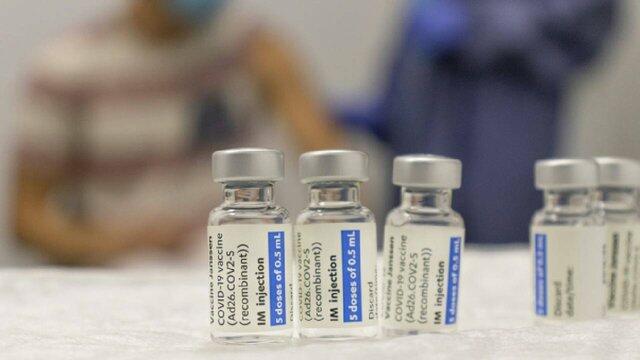
Nurse Deemed 'Not Disabled Enough' For Payout After COVID Jab Paralysis

 by Steve Watson via Modernity.news,

An NHS nurse in the UK has been denied compensation despite being permanently damaged by a COVID vaccine during a trial.

Marie-Claire Hoyle, who volunteered for the AstraZeneca COVID-19 vaccine trial in 2020 developed transverse myelitis two weeks after her second dose, temporarily shutting down the global trial.

The qualified advanced nurse practitioner and NHS England's network manager for high-consequence infectious diseases, lost the use of her hands, became numb from collarbone to thigh, and still carries permanent spinal cord damage visible on MRI. The Vaccine Damage Payment Scheme acknowledged the vaccine caused her condition yet refused the £120,000 one-off payment because her disability improved below the rigid 60% lifelong threshold.

Hoyle that's related how she was on shift when pain hit her neck and spine, spreading within an hour into her shoulders and hands. "I lost the ability to use my hands, I couldn't hold a pen, I couldn't hold a toothbrush. I was completely numb from my collarbone down to my thigh level because the signals from my spine and brain had been damaged."

An MRI confirmed transverse myelitis. The trial paused worldwide while her case was assessed; she survived and recovered enough for it to resume. Permanent damage remains. "I've had an MRI since and there is still damage in my spinal cord, which will never heal. I have really poor grip in my fingertips, so I constantly drop things. I still have nerve pain down the left side of my arm and numbness across my central chest and that will never resolve," she further stated.

She received a high five-figure out-of-court settlement from Oxford University. The VDPS, however, ruled she no longer qualified. "They acknowledged that the vaccine caused my transverse myelitis, based on the evidence I supplied with all my medical records, and at the time I was seriously harmed on a value of up to 60%. However, they said: 'You aren't now, so you don't need the payment.'"

Hoyle, a mother of three who later had her youngest vaccinated and says she continues to support vaccines in principle, wants a scalable system matching actual ongoing harm rather than an all-or-nothing cutoff.

AstraZeneca later withdrew its Vaxzevria vaccine worldwide in 2024, officially citing commercial reasons and the shift to updated formulations. The company had already admitted in court documents that the shot can cause thrombosis with thrombocytopenia syndrome. Kate Scott, whose husband was left with permanent brain injury, said the decision looked less commercial and more like recognition that the product no longer sat "within the acceptable safety parameters," given 445 confirmed VITT cases and 81 deaths in the UK alone. The company maintained the vaccine had saved over 6.5 million lives in its first year.

Baroness Hallett's COVID-19 Inquiry Module 4 report, published in April 2026, called the scheme "not sufficiently supportive" and demanded urgent reform: raise the £120,000 payment at least in line with inflation (suggesting over £200,000), introduce graduated payments by degree of injury, and scrap or soften the 60% threshold that leaves people with significant neurological damage with nothing.

The government published its response on 16 October 2026, accepting the need for reform and committing to a review to make the scheme "fit for purpose and delivered effectively," while noting concerns over administrative costs.

A Department of Health and Social Care spokesman offered "deepest sympathies" and said officials were carefully considering the recommendations.

More than 24,260 COVID-related claims had reached the scheme by 30 June 2026, yet only 264 resulted in awards - just over 1%. Roughly 580-603 claims had causation accepted by medical assessors yet failed the 60% disability bar.

Running costs since April 2022 hit £83 million, more than double the roughly £32 million paid to victims. Transverse myelitis was later listed among the vaccine's extremely rare side effects, and dosing intervals were widened after cases like Hoyle's.

Officials maintained benefits outweighed risks, but the scheme's design - built for older industrial-style injuries - fits poorly with the neurological, fluctuating, and sometimes partially recovering harms seen with these products.

Patterns of injury have been gradually acknowledged. Last year, Post-Vaccination Syndrome research from Yale was published, documenting high rates of brain fog, exercise intolerance, extreme fatigue, sleep disruption, tingling or numbness, and confirmed signals for myocarditis, tinnitus, thrombosis with thrombocytopenia, and Guillain-Barré Syndrome.

A Taiwanese study of 467 healthcare workers, all of whom had received at least three doses, found neurological and psychiatric symptoms matching "long COVID" in a group that had never been infected.

Of the 222 with no record of infection and negative nucleoprotein antibodies, more than 30% reported mild fatigue, nearly 10% reported trouble concentrating, and 11.7% reported worsening memory.

The authors noted no statistically significant difference in symptom severity between those with confirmed infection, asymptomatic infection, and those never infected, yet did not examine vaccination as a possible cause.

A South Korean cohort study of more than 8.4 million people, published in Biomarker Research in September 2025, reported associations between COVID-19 vaccination and elevated risks of six cancers.

Booster doses were linked to a 125% increase in pancreatic cancer risk. Prostate cancer risk rose 69%, lung cancer 53%, thyroid 35%, gastric 34%, colorectal 28%, and breast 20%.

The authors stated that "COVID-19 vaccination could be associated with an increased risk of six specific cancer types" and noted that booster doses substantially affected risks for gastric and pancreatic cancers.

In the United States, the picture is similarly lopsided. The Countermeasures Injury Compensation Program (CICP), which covers COVID vaccines, had received 14,250 claims by 1 October 2026, the bulk alleging vaccine injury. Of 8,369 decisions, only 66 had been compensated and 120 found eligible.

A Senate Permanent Subcommittee on Investigations hearing in April 2026 examined VAERS data showing COVID vaccines associated with more adverse events and deaths than all other vaccines combined over the system's history, including rates 55 times higher for deaths than the flu vaccine. FDA staff had flagged masking of safety signals and were ordered to stop certain analyses.

Myocarditis and pericarditis signals for the mRNA vaccines appeared in Israel within a month of rollout in early 2021. Israel shared the data with the CDC and EMA in February, yet public and clinician alerts came only months later, after most eligible young people had already received two doses.

An Oxford analysis found an eight-fold risk of myocarditis in under-40s within a week of a second Pfizer dose and a 44-fold risk after Moderna. Hong Kong reported a one-in-3,000 risk in adolescent boys after a second dose and switched to a single-dose policy.

A Thai study of teenagers found 29% with signs of heart disturbance after a second Pfizer dose. No comparable reckoning has followed the delayed disclosure.

In Australia, FOI documents showed 35 people died on the same day as their COVID vaccination. The Therapeutic Goods Administration completed causality assessments for only 24 of them and referred none to its Vaccine Safety Investigation Group.

Of more than 1,000 deaths reported to the TGA's database, only 14 were officially linked to the vaccines. Where timing data existed, one in four occurred within three days and 39% within a week.

Dr Suzanne Niblett called the claim of thorough review "very misleading" when most cases had not been properly analysed. Dr Rado Faleti noted that in the vaccine-injured community, "not a single person reports being followed-up or investigated by the TGA."

Meanwhile, new Moderna formulations for the 2026-2027 season received FDA approval in late August 2026, 81 days before the scheduled start of the human Phase 3b/4 safety and immunogenicity study.

Legislation introduced in September 2026 would further tilt the process: S. 3323 would require the CDC director to adopt ACIP recommendations unless unsupported by a preponderance of peer-reviewed evidence, while raising the bar for withdrawing recommendations or removing entries from the Vaccine Injury Table.

Hoyle's case is not isolated. Hundreds of people whose injuries medical assessors linked to the vaccines sit below the arbitrary 60% line and receive nothing from the state scheme, even as the bureaucracy costs more than the payouts.

The inquiry has forced an official admission that the current rules do not match the injuries that occurred. Whether the promised review produces real graduated support or simply more process remains to be seen.

People who stepped forward under official assurances of safety and necessity now face the same bureaucratic gatekeeping that defined the rollout.

Accountability for the injuries, and the freedom to weigh risks without coercion or denial, still lag behind the volume of claims.

https://www.zerohedge.com/covid-19/nurse-deemed-not-disabled-enough-payout-after-covid-jab-paralysis

Automated Insulin Delivery in T2D: Latest System FDA Cleared

 The FDA has cleared the twiist Automated Insulin Delivery (AID) System (Sequel Med Tech) for use in adults aged 18 years and older with insulin-treated type 2 diabetes (T2D). 

The twiist continuously adjusts basal insulin delivery to accommodate individual dosing needs and is unique in its direct measurement of insulin volume delivered. The system has a 300-unit capacity and is changed every three days. It is compatible with the Abbott FreeStyle Libre 3 Plus and Senseonics' Eversense 365 continuous glucose monitors, but not Dexcom's. 

It uses a "proprietary iiSure Technology, which includes checkpoints to ensure accurate delivery and detect blockages up to nine times faster than other AID systems," according to a Sequel statement. 

The twiist was FDA-cleared in 2024 for use in people aged 6 years and older with type 1 diabetes. Clearance for T2D was supported by data from a multicenter pivotal trial of the system in 307 adults with insulin-treated T2D. At 13 weeks, mean A1c levels dropped from a baseline 8.1% to 7.4% (P < .001). Those with baseline A1c of 9% or greater showed the most improvement. Mean time in range rose from 57% to 73% (P < .001), with no reports of severe hypoglycemia. 

The twiist now joins the Omnipod 5, the Tandem Control-IQ+ algorithm, and the Minimed 780G in availability for use in T2D. 

https://www.medscape.com/viewarticle/automated-insulin-delivery-t2d-latest-system-fda-cleared-2026a100132k