Search This Blog

Thursday, July 13, 2023

Fired COVID Whistleblower Will Take His Case to Trial With New Lawyers

 Ming Lin, MD, the emergency physician who was fired early in the COVID pandemic

opens in a new tab or window for airing alleged safety concerns, has hired new lawyers to take his case to trial.

After parting waysopens in a new tab or window with lawyers working for the American Civil Liberties Union (ACLU) because he didn't want to settle his case as they recommended, Lin selected the San Francisco boutique firm Millstein Fellner LLPopens in a new tab or window to represent him when he goes to trial in February 2024.

He said he's "lost a lot of sleep thinking about" taking on the risk of a trial, but that ultimately, he wants to try to make medicine better than when he found it -- particularly because his daughter has expressed interest in going to medical school.

"I think that's one of the main things, when I thought about this case. I can't just sit back and walk away with a settlement," Lin told MedPage Today. "I would really regret it, if I didn't at least try to change healthcare. If I can make even a small difference, I would feel much more satisfied."

Millstein Fellner is the same firm that the American Academy of Emergency Medicine (AAEM) is working with in its lawsuitopens in a new tab or window against private equity-backed physician staffing firm Envision for allegedly violating California's ban on the corporate practice of medicine.

Lin provided more details to MedPage Today about the early days of COVID-19 and the outspokenness that led him to lose his job of 17 years. He worked at PeaceHealth in Bellingham, Washington, as an employee of physician staffing firm TeamHealth.

Though he enjoyed his work, he said he had developed an itch to work on Native American reservations: "You get to an age in medicine where you say, I need to explore beyond my comfort level," he said. "[It] was my midlife crisis in medicine, I guess."

His first short-term assignment -- which he did between shifts in Washington state -- was at a reservation in South Dakota that began just as COVID was starting to hit the U.S.

When Lin arrived in South Dakota, he expected few resources to combat the virus, but instead he was "surprised that we were doing temperature checks. We were doing triage outside, treating patients in their cars. People were geared up thinking there was COVID out there."

That was more than what was happening back home in Washington state, he said, even though a nursing home not far from Bellingham was an early epicenter of COVID cases and deaths.

Lin was also calling other doctors in the northwest and California, asking them about how their facilities were trying to protect workers and patients from potential COVID spread.

"They confirmed what we were doing in South Dakota, restricting or limiting visitation, doing outside triaging, temperature checks, everything they can to protect themselves and their patients," he said.

He brought up his concerns with his superiors, but he said the concerns were not addressed, so he took to social media. Not long thereafter, Lin said the hospital asked TeamHealth to remove him from the schedule.

After he was terminated, Lin said he had "lots of lawyers contacting me," and he ultimately went with the ACLU-sanctioned team. But after 3 years, those attorneys "decided abruptly that we should settle, even though we have a court date set in February."

"They said, 'If you don't settle, we will have to consider walking away from the case,'" Lin said. "So they withdrew from the case."

He considered many alternatives, including representing himself at trial, before landing on hiring Millstein Fellner.

He knows the path ahead will not be an easy one: "When you're facing major corporations, especially one that's backed by a private equity company, it could be financially and mentally challenging."

He's now footing the bills for legal services, but in the future, AAEM and Take Medicine Backopens in a new tab or window may help raise funds for him if necessary.

Still, he's adamant about taking on the problem of the profit motive in healthcare, which he blames for those early days of not doing enough to protect staff and patients against COVID.

"We need to take the greed out of medicine," he said. "There's no reason why CEOs should be making $10 to $20 million."

"You see your patients get charged an incredible amount of money for a simple suture, and you have no control over the billing," he said. "Physicians should know what our patients are being charged for what we're doing. If I knew I was charging somebody $2,000 for a suture, I wouldn't do it. I would find another way."

As long as administrators are incentivized by profit, he said, healthcare won't change: "People with business degrees do not see the complications of diabetes," he said. "Doctors and nurses see amputations, kidney failure, retinopathy, strokes, heart attacks. Someone with a business degree, all they see is a number."

Lin is currently working for Tribal Healthopens in a new tab or window, a company that helps place doctors on Native American reservations -- particularly those where tribes have gone through a process of self-determination and the tribes themselves manage the hospitals, instead of the Indian Health Service.

"He's a guy who you instantly like because he's humble and affable and well-meaning and has high integrity," John Shufeldt, MD, JD, MBA, founder and CEO of Tribal Health, told MedPage Today. "We send him to places that need his level of skill and diplomacy and expertise, and he crushes it every time."

"I think how he was treated really lacked foresight," Shufeldt said. "This is about being heard and setting the record straight."

https://www.medpagetoday.com/special-reports/features/105471

Aspartame Is a 'Possible' Carcinogen, WHO Declares

 The WHO has declared aspartame, a food additive used frequently in diet soda and other low-calorie beverages, "possibly" carcinogenic to humans, but did not make any changes to its recommendations for maximum daily aspartame consumption.

"It is very important to note that this was a hazard identification and not a risk assessment," Mary Schubauer-Berigan, PhD, acting head of the WHO's International Agency for Research on Cancer (IARC) monographs program, said Wednesday during an online briefing with reporters; she was discussing the conclusions of the agency's 25-member expert panel. "A hazard identification aims to identify the specific properties of the agent and its potential to cause harm -- that is, the potential of an agent to cause cancer. The classification reflects the strength of the scientific evidence as to whether an agent can cause cancer in humans, but it does not reflect the risk of developing cancer at a given exposure level."

"The working group classified aspartame as possibly carcinogenic to humans -- that is, Group 2B -- based on limited evidence for cancer in humans," Schubauer-Berigan continued. "This was specifically for hepatocellular carcinoma."

Joint Expert Committee on Food Additives Weighs In

In addition to the IARC's conclusion, the WHO also announced the results of an analysis by its Joint Expert Committee on Food Additives (JECFA). "The main conclusion of the panel was that there is no convincing evidence from experimental or human data that aspartame has adverse effects after ingestion, within the limits established by previous committee [members]," said Francesco Branca, MD, PhD, director of the WHO's Department of Nutrition and Food Safety.

That limit, he said, is 40 mg/kg of body weight in aspartame per day, or the equivalent of 9 to 14 cans of soda, for an average-sized adult weighing 70 kg (154 lb); the number of cans varies depending on how much aspartame is in a particular beverage. For children, specifically a child who weighs about 20 kg (44 lb), the limit would be 800 mg of aspartame, or two to three cans of soda per day.

In analyzing both in vitro and in vivo genotoxicity studies, "these studies were giving conflicting results," said Branca. "It was not possible to demonstrate any general toxic effects ... It was also not possible to have any consistent or convincing evidence from the animal studies." In the 12 animal studies that JECFA analyzed, "the majority of them were giving negative results, and the panel also felt that the studies that were giving positive results were limited in the design and in the quality of the interpretation of the data."

The epidemiological studies in humans that JECFA analyzed identified some effects related to type 2 diabetes and to cancer, particularly liver cancer, breast cancer, and lymphoma, Branca said. He added, however, that limitations couldn't be ruled out, "particularly the estimate of exposure; the issue of not being able to identify specifically aspartame -- using exposure to all sweeteners as a proxy for aspartame -- and also issues around reverse causality, bias, and confounding."

Water is Still the Best Choice, Experts Say

The U.S. beverage industry, which uses aspartame in diet sodas and other products, framed the WHO statements as a victory. "Aspartame is safe," Kevin Keane, interim president and CEO of the American Beverage Association, said in a statement. "After a rigorous review, the World Health Organization finds aspartame is safe and [there is] 'no sufficient reason to change the previously established acceptable daily intake.' This strong conclusion reinforces the position of the FDA and food safety agencies from more than 90 countries. People all around the world can be confident in consuming food and beverages with aspartame."

"With more than 40 years of science and this definitive conclusion from the WHO, consumers can move forward with confidence that aspartame is a safe choice, especially for people looking to reduce sugar and calories in their diets," Keane said.

But others disagreed, including Thomas Galligan, PhD, principal scientist for food additives and supplements at the Center for Science in the Public Interest (CSPI), in Washington, D.C. "That's pretty much in line with what CSPI has been saying for years," Galligan said of IARC's classification of aspartame as a possible carcinogen. "It really reemphasizes the need for consumers to avoid aspartame."

However, Galligan said in a phone call, "it's very important that consumers don't go back and start drinking sugar-sweetened beverages," because that might contribute to weight gain and development of diseases such as diabetes. "Really your best bet is to avoid aspartame by choosing the best beverage: water, whether that's still, sparkling, or flavored. [Plain] coffee or tea are also good options, but water is the best bet."

George Kyriazis, PhD, who researches artificial sweeteners at the Ohio State University College of Medicine in Columbus, agreed. "If aspartame alone was an independent risk factor for the average prudent consumer, we would already know by now," he wrote in an email to MedPage Today. "However, not every individual responds the same to any given dietary choice, so if one has other risk factors it would be reasonable to cut down or even eliminate aspartame and other artificial sweeteners from their diet."

How should clinicians advise their patients on this issue? "That depends!" Kyriazis said. "For those who wish to lose weight, aspartame and other artificial sweeteners are a better choice than sugar-containing sodas. However, water is the best alternative because it carries no risk. Individuals who are overweight or have metabolic or other diseases should always consult with their attending physician to tailor the recommendation based on the person's medical history and dietary objectives."

The WHO's announcement is a good opportunity for the FDA to revisit the aspartame issue, said CSPI's Galligan. He noted that the Delaney Clauseopens in a new tab or window, a federal law passed by Congress in 1958, prohibits the use of cancer-causing additives in foods, and that the FDA has previously said that no amount of cancer risk is acceptable. "We would like to see the FDA protect consumers by banning aspartame," Galligan said. "We strongly hope that the FDA will take notice and re-evaluate, and even though they've said many times that aspartame is safe, we hope they'll take the WHO's evaluation very seriously."

https://www.medpagetoday.com/primarycare/dietnutrition/105470

Roivant stock rallies on report of pending drug sale

 Shares of Roivant Sciences Ltd. (ROIV) surged in the extended session Thursday following a report that Roche Holding was close to buying an experimental drug from the biotech company. Roivant shares surged 10% after hours, following a 1.6% gain during the regular trading day to close at $11.60. Late Thursday, the Wall Street Journal reported that Roivant was close to cutting a deal to sell its treatment candidate for ulcerative colitis and Crohn's disease drug for more than $7 billion, citing unnamed sources close to the matter. That happens to be in the neighborhood of Roivant's market cap, which was $8.9 billion at Thursday's close, according to FactSet data. The Journal said the deal could be announced "in the coming days." In December, Roivant and Pfizer Inc. (PFE) formed a subsidiary RVT-3101 to commercialize the drug. Pfizer owns a 25% stake of the subsidiary.

https://www.morningstar.com/news/marketwatch/202307131166/roivant-stock-rallies-on-report-of-pending-drug-sale-wsj

Fed's rate hike lags are about to bite

 For the Fed and the U.S. economy, the hard bit starts now.

Depending on the length of monetary policy's 'long and variable' lag, a good chunk - perhaps even most - of the Federal Reserve's 500 basis points of interest rate increases since March 2022 have yet to be felt in the real economy.

As the U.S. central bank nears "peak rates," policymakers, consumers, businesses and financial markets find themselves in limbo - grateful for the "soft landing" that seems to be underway, but aware that the full impact of the tightening cycle is still to come.

The amorphous lag explains the cat-and-mouse game between the Fed and markets that has played out since the central bank began its tightening cycle last year.

Keen to be sure that inflation is dead and buried, Fed officials have tried to steer rates markets away from loosening financial conditions and disavow them of their long-held view that policy will be eased almost as soon as the terminal rate is reached.

For their part, markets have long expected the Fed to quickly pivot to a pretty aggressive series of rate cuts, largely to counter the accumulated lag effects of the tightening cycle.

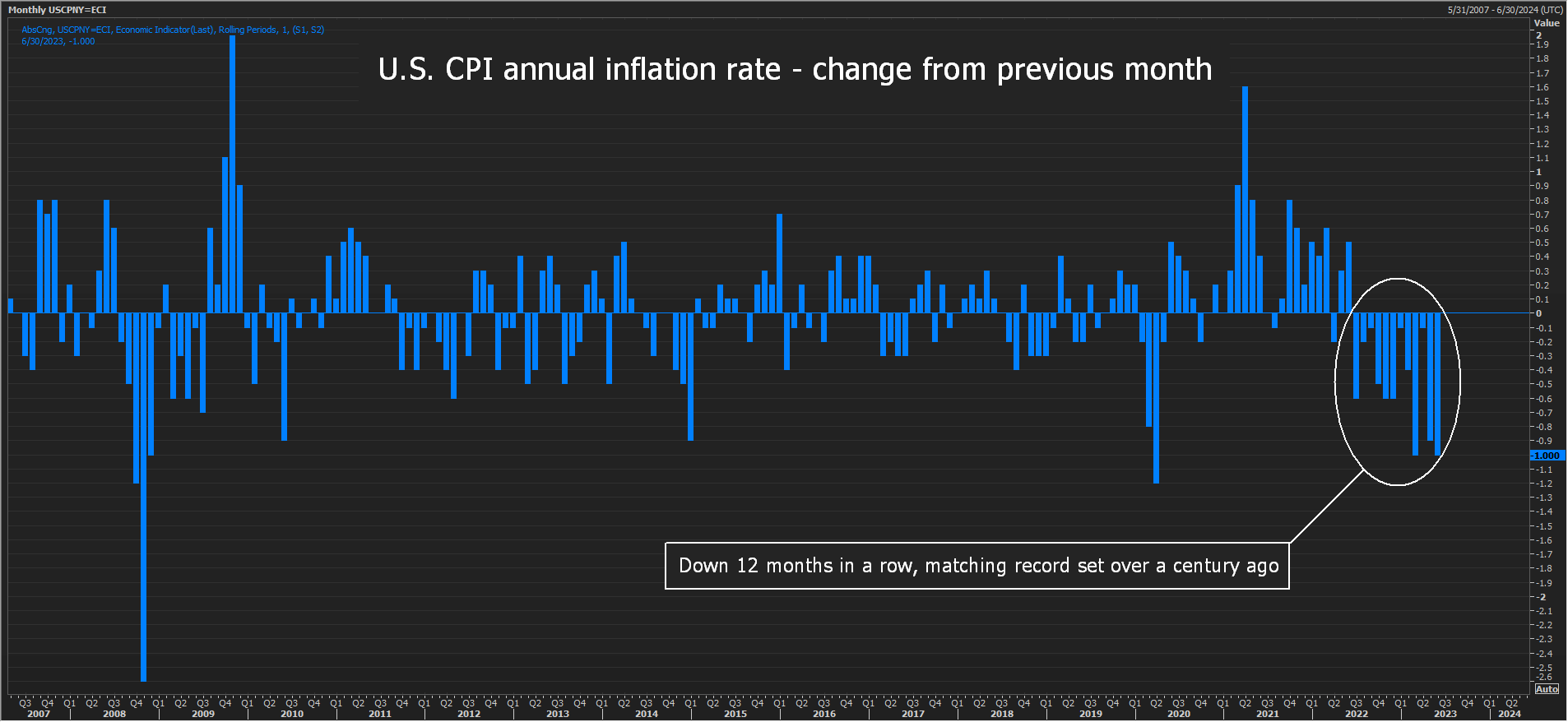
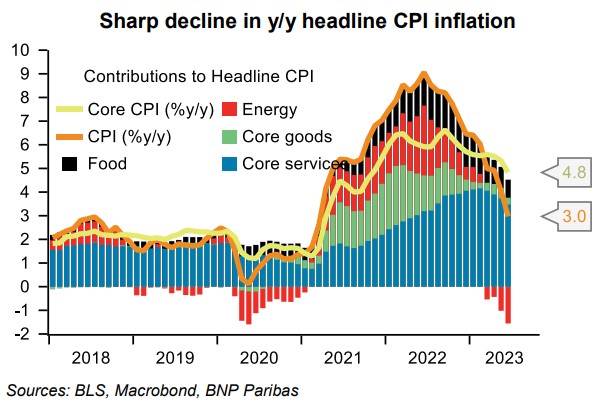
With consumer price inflation dramatically down to 3% on an annual basis and the Fed's rate hiking campaign near its end, the 'long and variable' lags coined by economist Milton Friedman in 1961 will now come under closer scrutiny.

US annual CPI inflation - change from previous month

Reuters Image

NEW RULES OF THUMB

An old rule of thumb is that it takes around 18 to 24 months for monetary policy moves to be to be felt in the real economy. Taken at its most literal level, the 500 basis points of tightening since March 2022 - 17 months ago - have still not registered at all.

This would suggest a significant hit to employment and growth is hurtling down the pike. It is not that simple of course, as the transmission of tighter policy in the modern world via forward guidance, swooning asset prices and tighter financial conditions is quicker.

There is a growing body of opinion that the lags have shortened considerably since Friedman shared his 'long and variable' theory.

Fed Governor Christopher Waller in January said policy moves now have an impact in 9 to 12 months, and a Kansas City Fed paper in December found that "the peak deceleration in inflation may occur about one year after policy tightening," although it stressed "high" uncertainty around that.

This would imply that as much as 200 to 275 basis points of rate hikes - the cumulative tightening since last July, 12 months ago, or September, nine months ago - have not begun to be felt yet.

Last September was when the Fed raised its federal funds target the 3.00%-3.25% range, above what its officials consider to be the 'neutral' rate around 2.5% which neither spurs nor slows the economy.

If policy has been restrictive all that time but has yet to be fully felt, while inflation has slumped to 3% from 9%, there's a case to be made that the Fed's job is pretty much done.

With inflation falling towards target and slowing at its most consistent pace in 100 years, and unemployment near a 50-year low, the central bank is close to meeting its dual mandate goals.

Breakdown of US annual CPI inflation - BNP Paribas
Reuters Image

Data on Wednesday showed that consumer prices rose at an annual rate of 3.0% in June, down from 4.0% in May. Annual inflation has now slowed for 12 months in a row from a 41-year high of 9.1% last summer, the longest uninterrupted decline since the June 1920-June 1921 period.

"The disinflation process has been rapid and is now well advanced," economist Phil Suttle wrote on Wednesday.

Factoring in the policy lags still to come, the conversation now will likely turn to how much of the 150 basis points of rate cuts by the end of next year priced into rates markets will actually be delivered.

https://www.reuters.com/markets/europe/feds-rate-hike-lags-are-about-bite-2023-07-13/

Caribou's cell therapy shows promise in early-stage cancer study

 Caribou Biosciences Inc said on Thursday its experimental CAR T-cell therapy helped clear all signs or decrease tumor size in 94% of patients being treated for a type of cancer in the lymph nodes in a small, early-stage trial.

The responses seen in patients treated with Caribou's CAR T-cell therapy, which uses stem cells from a donor, rival those seen in patients treated with approved CAR T-cell therapy where patients' own stem cells are harvested, the company said.

The study also showed the therapy helped achieve complete response, meaning no detectable sign of cancer, in 69% of patients, and a complete response for 6 months and more in 44% of 16 patients.

Non-Hodgkin's lymphoma that develops in the lymph nodes, which is part of the body's immune system typically affects patients over the age of 60, but can also be seen in all ages.

The therapy was well tolerated with adverse events consistent with existing approved CAR T-cell therapies in the study, the drug developer said.

Pfizer Inc earlier this month paid $25 million for a minority stake in Caribou, gaining the right to negotiate first for a license or purchase of another CAR T-cell therapy, CB-011, which is in early-stage testing for patients with a type of blood cancer.

CAR T-cell therapies involve genetically engineering infection-fighting cells, from healthy donors in this case, and infusing them into patients.

The California-based company said it is currently enrolling second-line patients with large B cell lymphoma for the second portion of the early-stage study, and the data is expected in the first half of 2024.

https://finance.yahoo.com/news/caribous-cell-therapy-shows-promise-200101837.html

Scientists Silencing Scientists

 Recently, uncovered emails from scientists at four major federal health agencies demonstrated how political controls are used to silence other scientists with opposing views. This is indicative of how, perhaps more than at any time in recent memory, researchers have been inhibited from challenging existing scientific paradigms. Science is a process of discovery which advances through critical reviews of the status quo. When it stagnates, society suffers.

One key event that only recently came to light occurred when, in 2015, a senior EPA manager — the head of the Radiation Protection Division — said he did not want to hear any counter perspectives to what’s known as the “linear no-threshold (LNT),” and that no review of the EPA’s “set-in-stone” policy would ever occur. Though the details might sound technical, the lesson is not.

The exposed emails discuss the old assumption used to manage both radiation and chemical risks: that any level of exposure is dangerous. When used in regulations, the LNT implies that when a high level of exposure to any substance or stressor is deemed dangerous, then the government should limit our exposure to the substance as much as possible.

The manager was responding to Dr. Ed Calabrese of the University of Massachusetts. Dr. Calabrese has been studying the origin of the LNT theory and what actually happens to people who are exposed to low doses of these substances for four decades, producing over 600 published papers. He and others have found in hundreds of thousands of pieces of research a body of evidence indicating that low doses of radiation (and many chemicals) are not dangerous. In other words, they’ve found a threshold below which there may be some beneficial effects on living creatures.

This concept is called hormesisand for humans includes increased fertility, faster healing, decreased chances of lung cancer and an increase in lifespan. The most obvious example of hormesis is water. A human needs water to survive, and yet consuming too much too fast can cause death. In 2013, one of us (Dr. Simon) published the first edition of “Environmental Risk Assessment: A Toxicological Approach,” explaining both thresholds and hormesis. (As he was editing it in a Starbucks, he explained these effects to a waitress who was studying to be an X-ray technician but, nevertheless, believed her own textbook that said, “there is no safe dose for radiation.”)

The controversy continues, and scientists like Calabrese have been attacked personally and silenced. One particularly noteworthy incident occurred in 2018 with the retraction of a prior invitation to deliver the keynote address at the American Academy of Health Physics. At the time, this organization was also unwilling to hear any views counter to the LNT.

Yet for those willing to listen, the evidence is compelling. Last year, John Cardarelli, the newly elected president of the Health Physics Society, posted video interviews of Calabrese describing LNTs history going back to the 1920s. Cardarelli has also suggested in letters to Congress that using the LNT to determine cleanup levels will result in huge costs (over $500 billion) and that agencies should “acknowledge the lack of scientific basis for the use of the LNT model in the low dose range.”

While risk aversion is human nature, we must allow science to point us toward what’s truly beneficial. Although fear of radiation is decreasing in the United States, 44% still oppose nuclear energy, perhaps because of fear of radiation poisoning. Interestingly, not a single soul perished from radiation exposure during Japan’s Fukushima nuclear disaster; in comparison, over 1,700 have since died from causes related to the evacuation.

This fear extends to medicine, causing some people reject diagnostic X-rays. Sunlight is radiation, but without it, life on Earth would never have existed. All life forms have evolved to repair almost all DNA damage that may result from low exposures to chemicals or radiation.

The dictators in science today are often policymakers in government agencies and editors of mainstream journals whose scientific beliefs are based on policy preferences or personal opinions rather than evidence. They’ve lost the most important quality any scientist can possess: humility. A good one — and there are many — keeps an open mind. The great discoveries were brought about by complete changes in thinking. In science, today’s dogma may be tomorrow’s fable.

Richard A. Williams is a senior affiliated scholar with the Mercatus Center at George Mason University and a former director for social sciences at the FDA’s Center for Food Safety and Applied Nutrition. Ted W. Simon is a former senior toxicologist with EPA’s Atlanta regional waste management division.

https://www.realclearpolicy.com/articles/2023/07/12/scientists_silencing_scientists_965480.html

The “Chilling” Effect

 My recent reporting on radical DEI programming in state universities, which helped pave the way for the abolition of those programs by Florida governor Ron DeSantis, has apparently made left-wing academics in Florida’s public universities nervous.

Last week, University of Central Florida professor Robert Cassanello told the Tampa Bay Times that his colleagues are terrified of being exposed publicly. “They’re changing their classes or they’re not assigning books they would normally assign out of fear that if that stuff gets published that Chris Rufo is going to come and target them and tweet about them and they’ll be in the crosshairs,” Cassanello said.

The following day, I received an email from a producer of the NPR program This American Life informing me that professors at Florida State University, whose DEI program I had exposed in an investigative report, were “nervous about being called out online for the content of their classes.” Furthermore, these academics apparently believed that my public criticism of one of their colleagues, sociologist Shantel Buggs, could have “endangered that professor.”

The specifics of my investigative report are worth mentioning. I devoted just two sentences to Buggs—neither of which referenced her by name—pointing out that she had taught a course titled “Critical Race Theory,” in which she promoted fringe ideological content such as “Whiteness as Pathological Narcissism” and told her students that they should “not let the constraints of the discipline stop you from being the radical you want to be.” In the original source documents, I attached the syllabus for her course to give readers a complete citation.

The FSU professors seem to want it both ways. They encourage students to pursue left-wing radicalism but wilt at the slightest criticism of their instruction—which, it should be pointed out, is subsidized by Florida taxpayers and, as such, is part of the public domain. According to the NPR reporter, however, the FSU professors were particularly outraged that Buggs’s name was not redacted from the documents, thus exposing her to harmful counter-opinion.

There are two issues at play here, one farcical, the other far-reaching. First, this situation exposes the utter fraud of academic radicals. On campus, they praise one another for their heroic resistance. But they are not the revolutionaries they imagine themselves to be; they are taxpayer-funded agents of the state, backed by the prestige of the university and a massive administrative bureaucracy. Yet, when pressed into the public debate—that is, into politics—they immediately cry foul and take refuge in a therapeutic posture.

As in any good farce, a serious issue lurks beneath the surface. It is not simply that professors are incapable of handling criticism—this has been true for a long while. It is that they are demanding the suppression of criticism altogether, under the rationale that it makes them fearful, violates their academic freedom, and “chills” their speech.

These arguments are empty. The First Amendment recognizes their freedom of speech, as it does that of all Americans, but it does not entitle them to public deference or immunize them from criticism. Public university professors, in particular, are engaged in public discourse and, as such, their ideas must be submitted to debate and scrutiny. If Cassanello, Buggs, and their colleagues are too fearful to engage in this debate, they should assess their own standards, not demand that others accommodate them. Scholarship without the possibility of robust criticism isn’t scholarship at all—it’s propaganda. 

Finally, to those tenured radicals who argue that my reporting has chilled their speech, I say: good. This is a normal, salutary part of public life. Ideas get exposed to criticism, and, if revealed as false or antithetical to the body politic, their purveyors ought to feel some desire to change.

The alternative to this situation is much worse. Critical race theorists have long proposed another solution, namely, that “words that wound” be banished from the public square in the interest of advancing left-wing intersectionality. In practice, this would mean that private citizens, journalists, and social commentators could no longer criticize the ideology and operation of the state and public institutions—such as universities.

What is more American than the right of the people to criticize? And what happens if, in order to protect the sensitivities of the academic class, that right is denied?