Search This Blog

Thursday, July 13, 2023

"Not Some Fringe Theory": Flip-Flopping Virologist Thought Lab Leak "Highly Likely" Before Toeing Fauci's Line

 Dr. Kristian Andersen, the virologist who initially told Anthony Fauci that Covid-19 appeared to have been 'engineered,' only to flip-flop 72-hours later after Fauci 'prompted' Andersen and other scientists to create a paper arguing against the lab-leak theory, told colleagues that a lab leak was 'highly likely' and 'not some fringe theory.'

Andersen notably appeared before Congress on Tuesday, where he carefully bullshitted his way through a minefield of questions from Republican lawmakers, while Democrats - apparently uninterested in anything except tribal narratives, provided cover.

In advance of Anderson's testimony, House Republicans published a cache of messages as part of a government report, however the Daily Mail has received several damning Slack messages from February 2, 2020 - the day Twitter banned Zero Hedge for suggesting a lab leak - that weren't part of that release, in which Andersen told colleagues "The main issue is that accidental escape is in fact highly likely - it's not some fringe theory."

He also admitted that he found it "strange" that Covid-19 emerged in Wuhan, China - located hundreds of miles from a cave where the closest strain to COVID-19 was found.

During testimony, Andersen said that 'facts' changed his opinion on the lab leak - though he couldn't point to anything specific.

The question of whether the global outbreak began with a spillover from wildlife sold at the market or leaked out of the Wuhan lab just eight miles across the Yangtze River has given rise to fierce debate. Some studies point to a natural spillover at the Huanan wildlife market. Positive swab samples of floors, cages and counters also track the virus back to stalls in the southwestern corner of the market (bottom left), where animals with the potential to harbour Covid were sold for meat or fur at the time. -Daily Mail

The Wuhan Institute of Virology is notably a 40-minute drive from the Hunan wet market in Wuhan, where the virus first emerged. The city itself is more than 800 miles from the Yunnan cave where Covid-19's closest relative was found, making natural transmission less likely.

Andersen was a co-author of the Proximal Origin report, which was published days after a conferenced call with Dr. Anthony Fauci, Francis Collins and others - who had been funding research to manipulate bat Covid to make it more transmissible to humans.

Fauci notably offshored banned gain-of-function research to make bat coronaviruses more transmissible to humans.

https://www.zerohedge.com/covid-19/not-some-fringe-theory-flip-flopping-virologist-thought-lab-leak-highly-likely-toeing

US Government Moves Nearly 10k Bitcoin Worth Over $300 M Related To Silk Road Seizure

 by Tristan Greene via CoinTelegraph.,com,

The government previously promised to liquidate approximately 40,000 remaining BTC from the seizure in “four more batches” over the remainder of the calendar year...

A cryptocurrency wallet associated with the United States Department of Justice (DOJ) moved approximately 9,825.25 Bitcoin worth around $299 million in a series of transactions on July 12. 

It’s unclear at this time whether the transactions, which appear to have ultimately propagated to at least 101 new wallets, were sent to exchange addresses for sale or remain in the custody of the Justice Department.

DOJ Bitcoin transactions. Source: Screenshot via Blockchain.com

Initially, approximately 9,825 of the Bitcoin associated with the Silk Road seizure moved in a pair of transactions sent to three addresses at around 1:00 pm UTC. The bulk of the coins — 8,200 BTC worth nearly $250 million as of the time of this article’s publication — were sent to a single address, which subsequently split the total amount across 101 separate addresses a little over an hour later:

An 8,200 BTC transaction from a wallet that received coins originating from the DOJ. Source: Screenshot via Blockchain.com

The U.S. government previously revealed that it had plans to offload the rest of its BTC from the Silk Road seizure over the course of four batch transactions throughout the remainder of the calendar year.

According to current on-chain data, it’s possible the U.S. government could be testing liquidity strategies. One account associated with batch transactions conducted on March 7, 2023 appears to have profited in the amount of $237,934,919 on 30,174.7 in BTC holdings not currently associated with the July 12 batch of transactions.

However, another account that received 9,825.6 BTC from the DOJ during the March 7 batch distributed those coins among 101 accounts. The same account later joined 599 other accounts to send a total of approximately 0.1 BTC (about $3,032 as of the time of this article’s publication) to yet another account, which then spread its holdings of approximately 51 BTC across 37 addresses.

An approximately 51 BTC transaction from a wallet that received coins originating from the DOJ. Source: Screenshot via Blockchain.com

While speculation abounds about the exact nature of the transactions, which now span some 800-plus wallet addresses, the sheer number of transactions and associated wallets makes tracking exactly what the U.S. government is doing with each coin an increasingly challenging endeavor.

This lack of certainty has led some members of the crypto community to fear that BTC is being “nuked” or that the U.S. government’s wake-inducing coin movement will ripple throughout the cryptocurrency economy and cause investors to abandon what some see as the early stages of a bull run.

Other enthusiasts have dismissed such commentary as unnecessary fear, uncertainty and doubt based on the lack of tidal movement — more than six hours after the transactions were clocked, BTC has seen less than 1% of market movement.

https://www.zerohedge.com/crypto/us-government-moves-nearly-10k-bitcoin-worth-over-300-million-related-silk-road-seizure

Aziyo Biologics Announces Voluntary Recall of Viable Bone Matrix Products

 Aziyo Biologics, Inc. (Nasdaq: AZYO), a company that develops and commercializes biologic products to improve compatibility between medical devices and the patients who need them, today announced a voluntary recall of its viable bone matrix products, which are bone repair products made from human tissue that are used primarily in orthopedic and spinal procedures.

Notice of the voluntary recall was issued to centers after the Company learned of post-surgical Mycobacterium tuberculosis (MTB) infections in two patients treated with viable bone matrix product from a single donor lot. Prior to release, samples from this specific lot had tested negative for MTB by an independent laboratory using a nucleic acid test that is designed to specifically detect the MTB organism. Aziyo is fully cooperating and investigating the events in coordination with the U.S. Food and Drug Administration and the U.S. Centers for Disease Control and Prevention (CDC).

Out of an abundance of caution, the Company has suspended shipments of all viable bone matrix products from all donor lots. The Company is also working closely with CDC staff to notify physicians of the patients who received the particular donor lot at issue to initiate post-exposure prophylaxis.

“We are taking immediate action to safeguard patients by implementing a full product recall as we work with the CDC to investigate this event,” said Dr. Randy Mills, President and Chief Executive Officer of Aziyo Biologics. “The people of Aziyo care deeply about the patients we serve and will continue to work with the medical community, patients, and regulatory authorities as we gather additional information.”

https://finance.yahoo.com/news/aziyo-biologics-announces-voluntary-recall-203000237.html

Homicides Soar 96% In Washington State After Passage Of Gun Restrictions

 by Patricia Tolson via The Epoch Times,

Data shows that the number of homicides in Washington State skyrocketed after Second Amendment Rights were restricted.

According to a report released July 10 (pdf), the rate of murders, violence, and property crimes rose across Washington state in 2022, while the number of law enforcement officers available to respond and protect citizens decreased.

Specifically, the report revealed there were 394 murders in 2022, an increase of 16.6 percent over 2021 and the highest number of murders since the Washington Association of Sheriffs & Police Chiefs (WASPC) began recording this data in 1980. In addition, homicides increased 96 percent since 2019 and violent crimes increase by 8.9 percent.

During a July 10 press briefing, WASPC Executive Director Steve Strachan said that residents are more concerned about crime because it’s starting to affect them “in a real way in their real life.”

He specifically addressed the rise in homicides, up 16.6 percent, with an all-time high number of 394 people being murdered in 2022.

“With that increase of 16.6 percent, compared to 2021 to that all-time high of 394, that is 96 percent more murders than we had in 2019,” Strachan said.
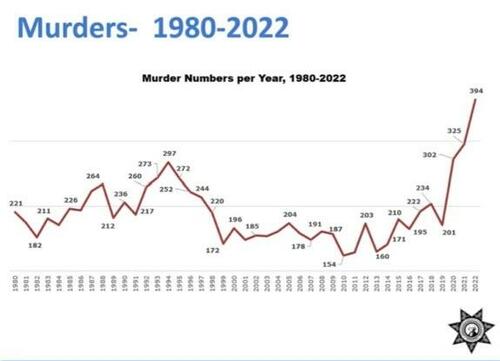
A slide shown during a media availability session hosted by the Washington Association of Sheriffs & Police Chiefs on July 10, 2023. (WASPC/Screenshot via The Epoch Times)

Strachan also noted that Washington State suffered a net loss of nearly 500 police officers or 4.4 percent of its force in 2021. The per capita loss in officers per 1,000 citizens was down to 1.38, “which was the lowest on record and also the lowest in the nation.”

Things did not improve in 2022.

Strachan said net statewide law enforcement staffing went down by an additional 70 officers, bringing the per capita number down to 1.36 per thousand, “again the lowest on record and again the lowest in the nation.”

It was the 13th straight year that Washington State had the lowest police staffing numbers in the country.
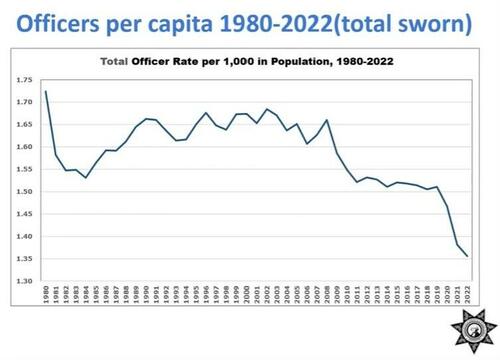
A slide shown during a media availability session hosted by the Washington Association of Sheriffs & Police Chiefs on July 10, 2023, reflecting the decrease in the number of law enforcement officers per capita. (WASPC/Screenshot via The Epoch Times)

Assaults on officers went up 20 percent, rising from 1,968 incidents in 2021 to 2,375 incidents in 2022. There was a 5-year trend of increased assaults on law enforcement, going down only slightly (by 59 incidents) during the pandemic lockdowns.

While the total population of Washington State increased by 93,262, the number of law enforcement officers decreased from 10,736 to 10,666 in 2021. This placed Washington in last place nationwide for the number of officers per thousand residents. There were also 2,375 reported cases of officers assaulted in 2022—an increase of 20.7 percent. Two officers were killed on duty.

In the meantime, Seattle’s City Council cut the police budget by nearly 20 percent in 2020, falling short of their goal to gut law enforcement funding by 50 percent. According to reports, “the agency has been in a tailspin ever since.”

‘Backfired’

In a July 10 press release in response to the WASPC report, Alan Gottlieb, chairman of the Citizens Committee for the Right to Keep and Bear Arms, says the 96 percent increase in homicides since 2019 is “damning proof that billionaire-backed gun control measures were, as we predicted, false pie-in-the-sky promises.”

“Passage of Initiative 594 in 2014 and I-1639 in 2018 have accomplished nothing other than to create massive impairments, which we believe are unconstitutional, for law-abiding Washington citizens,” Gottlieb said further.

Initiative 594 (pdf) imposes background checks on firearms purchasers and mandates that only licensed dealers may sell or transfer firearms to unlicensed persons.

Initiative Measure No. 1639 (pdf), filed on May 2, 2018, places restrictions on the purchase of “semiautomatic assault rifles,” requires the purchaser to have “undergone training within the past five years,” and subjects the purchaser to a waiting time between 10 to 60 business days. The law further mandates that gun dealers may not deliver a pistol to a purchaser “until the purchaser produces a valid concealed pistol license and the dealer has recorded the purchaser’s name, license number, and issuing agency” in “triplicate.”

Gottlieb says the WASPC data proves that all of that has “backfired.”

“These findings really validate everything we’ve said about all of the gun control measures that the State of Washington has passed, either by initiative or legislative process,” Gottlieb asserted, noting how the numbers prove that gun violence and homicides escalated after the state passed measures to restrict gun rights.

“This was the highest homicide rate recorded since 1980,” He said.

“So all of these so-called gun control measures that were going to stop violence in the State of Washington have backfired.”

He also proposed that when Americans are allowed to exercise their Second Amendment Rights freely, crime rates go down, specifically in Constitutional Carry states.

An analysis of Centers for Disease Control and Prevention (CDC) data by the United States Conceal Carry Association and released in October of 2022 showed that states that allow some form of permitless or Constitutional Carry have “fewer total and gun-related homicides.”

Conversely, Gottlieb said crime rates in “Democrat-controlled states” where gun control laws restrict the rights of law-abiding citizens from bearing arms go up dramatically.

“Chicago, New York, San Francisco, Los Angeles, Baltimore, and Philadelphia, we’re seeing it all over the country,” Gottlieb reflected.

“You are less safe when you do not have a means of self-defense.”

For Gottlieb, one of the primary struggles faced by gun rights advocates is that they are competing against “a legacy media with a gun-control agenda, and they only push one side of the equation.”

“They don’t let our data flow out to the public so the average citizen doesn’t know that all of the gun violence they’re hearing about is happening because gun laws don’t work,” he explained.

“The data doesn’t lie. But you won’t see the Sheriff’s report or our press release in response to the report on the legacy media.”

Gottlieb also discussed how most mass shootings take place in “gun-free” zones.

Data compiled by the Crime Prevention Research Center confirmed that 97.8 percent of all mass shootings between 1950 and 2018 occurred in gun-free zones.

Not much has changed.

In May of 2022, the Crime Prevention Research Center reported that 96 percent of mass shootings occurred in gun-free zones.

“These numbers shouldn’t surprise anyone,” Gottlieb said. “They always tell us we’ll see all kinds of carnage without gun control. But we’re not going to see that because we aren’t seeing it in the 26 states that have permitless carry.”

https://www.zerohedge.com/political/homicides-soar-96-washington-state-after-passage-gun-restrictions


Interferon Tumbles, Oral Agents Gain as Initial MS Treatment

 Prescribing patterns of initial disease-modifying therapies for multiple sclerosis have shifted dramatically since 2001, with oral agents driving down the use of platform injectables 73.8% by 2020.

The inflection point occurred during 2010-2013, when oral disease-modifying therapies (DMTs) began to come online and the use of injectables such as interferon beta products (Betaseron, Rebif) and glatiramer acetate (Copaxone) plummeted, Mackenzie Henderson, PharmD, of Rutgers University in New Brunswick, New Jersey, and colleagues wrote in JAMA Neurologyopens in a new tab or window.

Every year thereafter, the use of platform injectables continued to drop, while oral DMTs continue to gain popularity, said Henderson and co-authors.

There was little change in the use of infusion therapies, newer injectables, or off-label agents, each of which accounted for fewer than 10% of treatment initiations.

Several factors are likely driving the shift, the team explained. "First, [oral agents] are more convenient to take and do not require a visit to clinicians or infusion centers," they wrote. "Such considerations may have played a more outsized role early in the COVID-19 pandemic. Second, their increasing popularity may also be driven by direct-to-consumer advertising, as well as potential coverage limitations imposed by insurance companies, including formulary restrictions, prior authorization requirements, and cost-sharing."

To build the analysis, the researchers plumbed prescribing data contained in the IBM MarketScan Commercial Claims and Encounters system. They identified 153,846 new DMT initiations for adults 18-64 years old and 583 for children younger than 18. Initiations were defined as a first-time prescription for a given agent, that is, not having been prescribed in the previous year.

The researchers examined 19 DMTs, classifying them into five categories:

  • Platform injectables: interferon beta and glatiramer acetate
  • Oral products: dimethyl fumarate (Tecfidera), diroximel fumarate (Vumerity), fingolimod (Gilenya), siponimod (Mayzent), ozanimod (Zeposia), teriflunomide (Aubagio), and cladribine (Mavenclad)
  • Infusion drugs: natalizumab (Tysabri), ocrelizumab (Ocrevus), and alemtuzumab (Lemtrada)
  • Newer injectables: daclizumab (Zinbryta) and ofatumumab (Kesimpta)
  • Other DMTs including off-label therapies: rituximab (Rituxan), azathioprine, cyclophosphamide, mitoxantrone, and mycophenolate mofetil

Among adults, platform injectable therapies accounted for 99.3% of DMT initiations in 2001 -- no surprise since it was the only truly effective DMT approved at the time -- but dropped to just 25.5% by 2020 (P<0.001). This was largely driven by a precipitous decline in the use of interferon beta. Glatiramer acetate showed a more varied course, increasing from 27% in 2001 to a high of 39.3% in 2009. Thereafter, glatiramer use as an initiation therapy declined, landing at 14.4% by 2020 (P<0.001).

Infused antibodies remained the least commonly prescribed DMT initiations throughout the study period. By 2004, they accounted for just 3.2%. This increased slightly – but not significantly – with the 2017 introduction of ocrelizumab. Prescribing of natalizumab remained at 3% or fewer of initiations from its 2017 introduction to study's end.

Ocrelizumab, also approved in 2017, accounted for 4.3% of DMT initiations that year; by 2020, 5.8% were for ocrelizumab (P=0.10) The newer oral therapies, which began to show up with the 2010 approval of fingolimod, had little impact on infusion initiation rates, the researchers said. But once they were introduced, they rapidly became the initiation DMT of choice, surging from 1.1% in 2010 to 62.3% in 2020 (P=0.002).

Over the study period, dimethyl fumarate, approved in 2013, was the most frequently prescribed oral initiation. Clinicians and patients immediately embraced it, reaching 36.4% of initiations that year. It did decline somewhat over the study period, accounting for 23.3% in 2020 (P=0.001).

Fingolimod use peaked at 18.4% in 2015 and remained relatively steady. "Similarly," the authors wrote, "initiations of teriflunomide [approved in 2012] increased steadily after its approval, peaking at 15.5% in 2018 [P=0.002]. Additionally, the increase in use of oral DMTs between 2019 and 2020 was driven largely by uptake of newer agents within the class, including cladribine [3.2% of initiations in 2020], diroximel fumarate [6.7%], ozanimod [1.1%], and siponimod [3.3%]."

Off-label medications (azathioprine, cyclophosphamide, mycophenolate, rituximab) and mitoxantrone comprised less than 2% of initiations in adults over the study period.

These trends were similar among pediatric patients, with the exception of fingolimod. While fingolimod use declined in adults after 2015, it rose significantly among children and adolescents (P=0.002). By 2019-2020, fingolimod was the most commonly prescribed DMT initiation for this group (68.8%). "This distinction coincides with the 2018 publication of the PARADIGMS trial results and subsequent 2018 [FDA] approval of fingolimod in children 10-17 years old," Henderson and colleagues wrote, noting that it remains the only FDA-approved DMT for the pediatric MS population.

The results might not be capturing the full picture, cautioned John Corboy, MD, of the Rocky Mountain MS Center at the University of Colorado in Aurora. "These findings are a marker of change in use of MS DMTs over time," he told MedPage Today. "They likely reflect turnover in use of drugs, noting the persistence of medication use is higher with the infusible, more highly effective drugs, and insurance step-editsopens in a new tab or window requirements, demanding that patients fail multiple drugs before paying for newer, better, infusible drugs."

He suggested sales data to provide insight. "The alternative way to look at this question is to look at market share per year, which would take ongoing use into account, and likely give very different results."

The researchers also noted limitations of the study. The results can be broken down only by adult and pediatric use, because the MarketScan database doesn't include any information on race, ethnicity, or socioeconomic status, which can affect prescribing patterns and disease severity. And, they pointed out, the data only cover patients with commercial insurance, so the findings offer no insight on how people not included in the IBM database -- about 45% of the U.S. population -- are treated.

Nor does the database differentiate MS subtypes, which may affect a prescriber's choice of initial DMT. Finally, the group had little to no data on the newest agents, including ponesimod (Ponvory) and others approved from 2019 onward.

Disclosures

No funding was reported for this study.

Henderson reported being an employee of Daiichi Sankyo outside the submitted work. Co-authors reported relationships with Horizon Blue Cross Blue Shield, Novartis, Biogen, Cycle Pharmaceuticals, Guidepoint, and Kyowa Kirin.

Corboy disclosed relationships with MedDay, Novartis, EMD Serono, NMSS, PCORI, Immune Tolerance Network, Neurology: Clinical PracticeAnnals of Neurology, and Bristol Myers Squibb.

Primary Source

JAMA Neurology

Source Reference: opens in a new tab or windowHenderson M, et al "Initiation patterns of disease-modifying therapies for multiple sclerosis among U.S. adults and children, 2001 through 2020" JAMA Neurol 2023; DOI: 10.1001/jamaneurol.2023.2125.


https://www.medpagetoday.com/neurology/multiplesclerosis/105456

Trial: Electrical Stimulation No Better Than Sham for Depression

 When added to stable selective serotonin reuptake inhibitors (SSRI) treatment, transcranial direct current stimulation (tDCS) was not superior to sham stimulation for major depressive disorder (MDD), results from a sham-controlled indicated.

After 6 weeks in the DepressionDCopens in a new tab or window study, mean change from baseline in Montgomery-Ã…sberg Depression Rating Scale (MADRS) scores hardly differed between an active stimulation group (-8.2, SD 7.2) and patients assigned to sham stimulation (-8.0, SD 9.3; P=0.85), according to Frank Padberg, MD, of Ludwig-Maximilians-Universität in Munich, Germany, and co-authors.

Notably, more participants had at least one mild adverse event in the active stimulation group when compared with the sham (60% vs 43%, P=0.028), they reported in The Lancet

opens in a new tab or window.

Padberg and colleagues noted that the active stimulation group experienced higher rates of headaches, sleep-related problems, and local reactions at the treatment site, such as a burning sensation. However, they also emphasized that no one experienced clinically meaningful changes in their vital signs, BMI, or cognitive function.

In addition to the mild adverse events, the authors identified three serious events during the trial. Only one -- development of acute onset mania with psychotic symptoms -- was potentially related to treatment.

Unlike most other trials of tDCS, this was not sponsored by a device maker but rather by the German government.

"Our results suggest that active tDCS is not associated with any unacceptable harms, but they question its efficacy as an addition to SSRI treatment in individuals with MDD," the authors wrote.

"[W]e found no significant difference in the change in MADRS scores in patients with MDD at week 6 after either active tCDS or sham tCDS," Padberg and colleagues added. "We also found no significant difference for all secondary outcomes, including response and remission rates, patient-reported depression, and functioning and at 18-week and 30-week follow-up visits."

In particular, while the active treatment showed numerical advantages in secondary measures, they did not reach statistical significance:

  • 1.5 points in MADRS response (95% CI 0.8-3.0, P=0.25)
  • 1.2 points in MADRS remission (95% CI 0.6-2.6, P=0.59)
  • -2.3 points in self-reported depression scores (BDI-II score; 95% CI –5.0 to 0.6, P=0.18)

"These findings highlight the need for supportive evidence from multicentre studies, which are currently missing for most applications of tDCS," the authors wrote. "Future research should focus on advancing the neurobiological understanding of the effects of tDCS on depressive symptoms and incorporating technological developments to establish individualised tDCS as an alternative to a so-called one-size-fits-all approach."

In an accompanying editorial

opens in a new tab or window, Daphne Voineskos, MD, PhD, and Daniel Blumberger, MD, of the Centre for Addiction and Mental Health and the University Health Network, respectively, both in Toronto, said the study was well designed to answer "several remaining unknowns about tDCS as a therapeutic intervention for people with MDD."

"Although the results of the DepressionDC trial did not show the superiority of active tDCS over sham stimulation as an additional treatment to SSRI pharmacotherapy, clinicians and researchers should not disregard this treatment for people with MDD," Voineskos and Blumberger wrote.

While the study findings suggest that tDCS is not effective in clinical settings, the editorialists argued that it would have missed potential benefits for individual patients in nonclinical settings.

"[F]urther exploration of placebo response in less heterogeneous MDD samples and the evaluation of tDCS as an earlier treatment option for people with MDD are important areas of future research," they wrote. "Moreover, elucidating the effects of interindividual anatomical variability on electrical current distribution might lead to tDCS protocols that individualise treatment to optimise therapeutic effects...."

"Overall, there is reason for optimism about the potential to individualise tDCS and deliver it outside of the clinical setting," Voineskos and Blumberger concluded.

Study Details

Padberg's group enrolled 150 patients who were on stable SSRI doses for at least 4 weeks prior to inclusion but with continuing MDD symptoms (score of at least 15 on the 21-item Hamilton Depression Rating Scale). In total, 77 were randomized to the active tDCS group and 73 to sham stimulation.

Participants received 24 sessions during the 6-week study period, consisting of one session per day on weekdays for 4 weeks and two sessions per week for the final 2 weeks. SSRIs were continued at pre-enrollment doses.

DepressionDC was conducted at eight hospitals in Germany from January 2016 to June 2020. Among the 150 patients, 59% were women and nearly all were white. The patients had to be 18-65 years old with an MDD diagnosis. They also had to have had no response to at least one antidepressant during their current depressive episode.

To triple-blind the trial, the investigators used a tDCS device (DC-Stimulator PLUS from neuroConn) programmed to deliver active or sham stimulation without displaying any treatment information to the participants, raters, or operators.

Besides the limitations cited by the editorialists, Padberg and colleagues listed the sample size and numbers of dropouts as potentially reducing the ability to detect positive treatment effects. Also, they acknowledged that the active tDCS dosages used in the trial might have been suboptimal.

Disclosures

Funding for the study came from the German Federal Ministry of Education and Research. Padberg reported relationships with Brainsway, Sooma, Mag&More, and Neurocare Group. Other co-authors reported relationships with a variety of commercial and noncommercial entities.

Primary Source

The Lancet

Source Reference: opens in a new tab or windowBurkhardt G, et al "Transcranial direct current stimulation as an additional treatment to selective serotonin reuptake inhibitors in adults with major depressive disorder in Germany (DepressionDC): A triple-blind, randomised, sham-controlled, multicentre trial" Lancet 2023; DOI: 10.1016/S0140-6736(23)00640-2.

Secondary Source

The Lancet

Source Reference: opens in a new tab or windowVoineskos D, Blumberger DM "Transcranial direct current stimulation as a treatment for major depressive disorder" Lancet 2023; DOI: 10.1016/S0140-6736(23)00822-X.


https://www.medpagetoday.com/psychiatry/depression/105458

COVID-19 Impaired Fertility Treatments

 Couples infected with the COVID-19 virus while receiving assisted reproductive technology treatment had lower quality embryo and blastocyst rates when compared to non-infected couples, a retrospective cohort study in China showed.

In nearly 600 couples who underwent in vitro fertilization (IVF) or intracytoplasmic sperm injection (ICSI) treatment at a reproductive center, SARS-CoV-2–positive couples had significantly lower top-quality embryo rates (OR 0.83, 95% CI 0.71-0.96), top-quality blastocyst rates (OR 0.59, 95% CI 0.45-0.77), available blastocyst rates (OR 0.70, 95% CI 0.59-0.82), and blastocyst formation rates (OR 0.61, 95% CI 0.52-0.71) versus those testing negative for the virus.

"SARS-CoV-2 infection during controlled ovarian stimulation (COS) was associated with embryo and blastocyst quality," Jing Zhao, MD, of the Xiangya Hospital, Central South University in Changsha, China, and colleagues reported in JAMA Network Open

opens in a new tab or window. "This study suggests that reproductive physicians should pay attention to patients with SARS-CoV-2 infection during COS and should give these couples adequate counseling."

The researchers said the exact mechanisms of the effect of SARS-CoV-2 infection on embryo quality remain unclear. In previous studies, both messenger RNA and protein expression of ACE2 were upregulated in human ovulatory follicles after human chorionic gonadotropin injection, and in vitro experiments showed human ovarian cells were susceptible to SARS-CoV-2 infection. All of this suggested a potential adverse effect of SARS-CoV-2 infection on female fertility. Later tests, however, did not find the virus in follicular fluid in SARS-CoV-2–positive women.

In men, variable results have been reported, with some studies showing high testicular expression of both ACE2 and TEMPRSS2, and others finding expression only of ACE2. Semen samples have been positive for SARS-CoV-2 in some studies and not others, making this "even more controversial" than in female reproductive studies, Zhang and co-authors wrote.

"Regrettably, semen quality on the day of oocyte retrieval was not analyzed in the present study. Intracytoplasmic sperm injection is performed when the sperm quality is too poor, and similar outcomes are obtained with IVF."

Results were consistent whether the female or male partner was infected, Zhang and colleagues said.

In addition to the direct effect of viral invasion of cells, oxidative stress and aberrant systemic inflammation may be other possible mechanisms by which SARS-CoV-2 affects female reproduction at the molecular level, Zhang and co-authors added. "Reactive oxidative stress affects multiple aspects of reproductive physiologic processes, including oocyte maturation, fertilization, and embryo development ... [A] large amount of proinflammatory cytokines might also interfere with these processes, which may be a possible explanation for why the blastocyst formation rate and top-quality embryo and blastocyst rates were much lower in couples with SARS-CoV-2 infection."

The study was performed in 585 heterosexual couples with infertility (median age 33) in seven reproductive centers across four Chinese provinces. Infertility was a female factor in 341 (58%) of the couples; median duration of infertility was 2 years, slightly longer in the SARS-CoV-2 negative group (median 3 years).

If either member of a couple tested positive, the couple was considered positive. Thus, 135 couples were deemed positive.

Zhang and colleagues reported that ovarian reserve and ovarian response characteristics were not significantly different in the two groups, including basal follicle-stimulating hormone, antral follicle count, antimüllerian hormone, duration of COS, dosage of gonadotropin, estradiol, progesterone, and luteinizing hormone on the trigger day, and the number of oocytes retrieved.

There were no significant differences in oocyte- and oocyte-related outcomes in the fertilization methods selection, mature oocyte rate for intracytoplasmic sperm injection (ICSI fertilization), oocyte degeneration rate, normal fertilization (two pronuclei observed on day 1 after insemination [2PN rate]), 2PN cleavage rate, or available embryo rate.

The study was limited by possible bias, as data collection was not uniformly gathered. Moreover, COVID-19 symptom severity, outcomes, and viral load information were not collected.

Disclosures

Chinese government grants supported the study. Authors declared they had no relevant financial interests.

Primary Source

JAMA Network Open

Source Reference: opens in a new tab or windowTian F, et al "Association of SARS-CoV-2 infection during controlled ovarian stimulation with oocyte- and embryo-related outcomes" JAMA Netw Open 2023; DOI: 10.1001/jamanetworkopen.2023.23219.


https://www.medpagetoday.com/obgyn/infertility/105461