Search This Blog

Saturday, October 3, 2026

'Smartwatches on Iran's security chiefs spark row within the inner circle'


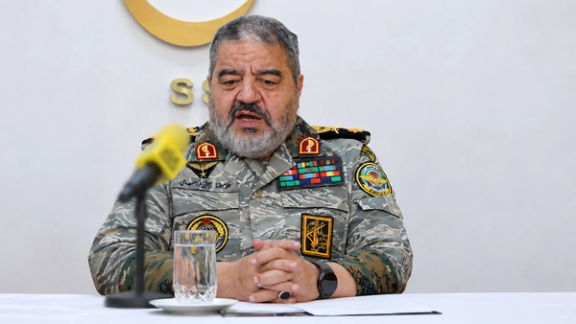
IRGC General Gholamreza Jalali has been heading Iran’s National Organization for Passive Defense since 2005.

Senior Iranian military and security officials have been photographed wearing smartwatches, drawing fresh criticism of their basic security discipline after years in which Israel has tracked and killed Iranian commanders through the devices around them.

The images were posted on X on Friday by Ali Gholhaki, a conservative commentator with ties to Iran's security establishment. Some Iranian outlets describe him as close to parliament speaker Mohammad-Bagher Ghalibaf.

They show smartwatches on the wrists of three men: Gholamreza Jalali, who heads the Passive Defense Organization, the body that protects Iran's critical infrastructure; Reza Farahi, a Defense Ministry official; and Ali Shamkhani, the former secretary of the Supreme National Security Council.

Shamkhani was killed in US-Israeli airstrikes on February 28, on the first day of the current war. He had survived an Israeli strike in June 2025.

Asked about his watch by a Fars News reporter, Jalali asked whether people had smart televisions at home and said his device was effectively the same thing.

Gholhaki rejected the comparison. The man in charge of protecting the country's critical infrastructure, he argued, faces a different order of risk from an ordinary citizen, and such devices are hard to justify for senior security officials when Israel has repeatedly exploited electronic lapses to track Iranian personnel.

Smartwatches can transmit location and activity data through GPS, Bluetooth, Wi-Fi or a paired phone, and some carry microphones and other sensors.

The US military has long restricted location-tracking devices, smartwatches included, in operational areas because they can expose movements and routines; in 2018, a fitness app's public heat map revealed the outlines of American bases from soldiers' running routes.

'Careless use'

The row touches a much larger argument inside the Islamic Republic about repeated intelligence failures.

During the 12-day war in June 2025, Iran's Cyber Security Command banned officials and their security teams from using any device connected to public communication or telecommunications networks, Fars reported, as concern grew that mobile tracking was being used for targeted assassinations.

The directive named smartphones, laptops and smartwatches, and warned that switching a device off might not prevent it from being located.

It came too late. The New York Times later reported, citing Iranian and Israeli officials, that Israel tracked and targeted senior Iranian leaders and nuclear scientists in that war by hacking the phones of their bodyguards and drivers.

On June 16, 2025, the Supreme National Security Council met in a bunker deep beneath a mountain in western Tehran; none of the officials carried phones, but the Israelis found the meeting through the phones of the bodyguards who had driven them there. The bodyguards had long been exempt from the strict phone bans imposed on the commanders themselves, even after earlier assassinations.

Gholhaki tied the smartwatches directly to those failures, arguing that complacency had helped Israel and the United States kill senior military, security and political figures in successive wars. He called for fundamental changes in security practice and renewed his demand for a broad postwar inquiry into how the failures happened.

Gholhaki himself was among a group of Telegram channel operators arrested by the Revolutionary Guards' counterintelligence arm in 2022, accused of disturbing public opinion and publishing classified documents.

A blogger on death row

The judiciary has shown no such tolerance for ordinary Iranians accused of far smaller breaches.

Marziyeh "Sevda" Ebrahimi Shamsabadi, a 33-year-old blogger from Bandar Abbas who has been held since March, was sentenced to death in August by a Revolutionary Court on charges including insulting the supreme leader, intelligence activity on behalf of hostile governments, and taking and sending photographs to Persian-language media abroad.

One allegation concerned a photograph she was said to have taken, from a distance, of a site hit by a missile. She was held in solitary confinement for 20 days and faced severe pressure during interrogation.

https://www.iranintl.com/en/202610027377

'Iraqi state tanker carries 2 million barrels of crude through Hormuz'


Iraq’s Oil Tankers Company transported 2 million barrels of Iraqi crude through the Strait of Hormuz aboard a very large crude carrier, the company’s director general said Saturday.

He described the voyage as the state-owned company’s first such operation in decades.

The shipment comes as traffic through the critical waterway remains disrupted by the US-Iran war and attacks on commercial vessels.

https://www.iranintl.com/en/202610036294

'Pezeshkian floats ‘new posture’ as Iran economy strains'


Iran’s government has adopted a “new posture” to manage what President Masoud Pezeshkian described as exceptional conditions, as the country faces mounting economic pressure.

“The enemy’s plan in recent months has been to cut the country’s vital arteries with the aim of putting pressure on the Iranian people,” Pezeshkian wrote on X.

He acknowledged that economic pressure had increased but said government measures and public cooperation had prevented Iran’s adversaries from achieving their objectives in what he called an “economic war.”

Pezeshkian’s comments come as a US maritime blockade has severely constrained Iran’s oil exports and Washington has expanded sanctions against key sectors of the economy.

https://www.iranintl.com/en/202610030246

'Vucic vows no Russia sanctions if coalition wins Serbia vote'

 Former Serbian President Aleksandar Vucic said on Saturday that Serbia would continue refusing to impose sanctions on Russia if the coalition he leads wins the October 25 parliamentary election.

"We will continue to pursue international policy as we have always done: with a love of freedom, independence, and autonomy," Vucic told supporters in Belgrade, according to RIA Novosti. He said Serbia would continue its path toward the European Union while preserving "our national interests" and "traditional friendship" with Russia.

Vucic resigned as president on September 27, eight months before the end of his second presidential term, to lead the Serbian Progressive Party (SNS) into the snap election and seek the premiership after nearly two years of protests and unrest. Last month, Russian President Vladimir Putin and Vucic discussed numerous topics in a phone call, including bilateral relations, energy supply, and the upcoming parliamentary elections in Serbia.

https://breakingthenews.net/Article/Vucic-vows-no-Russia-sanctions-if-coalition-wins/67228386

"Medvedev on Iran state TV again: Russia poses no threat to Europe'

 Russian Security Council Deputy Chairman Dmitry Medvedev said on Saturday that Russia poses no threat to Europe or the West.

"We are not a threat to anyone in Europe or the West," Medvedev told Iranian state television. "We have no special interests there other than normal relations with European states, as the Russian leadership has repeatedly stated. We need nothing from them other than a full-fledged, normal dialogue and calm cooperation. If they want it, we will do it. If they view us as a threat, so be it," he said.

Medvedev claimed that portraying Russia as a threat is used to influence public opinion, win elections and "knock money out of their military budgets."

https://breakingthenews.net/Article/Medvedev:-Russia-poses-no-threat-to-Europe/67228414

'Medvedev to Iran state TV: Warns of economic collapse amid Iran conflict'

 Russian Security Council Deputy Chairman Dmitry Medvedev warned that the conflict involving Iran is already having major economic consequences and said negotiations are needed to prevent further damage.

"I believe the security situation in the region is extremely dire. This is primarily due to the aggression carried out by the United States and Israel," Medvedev told Iranian state television. "We need to negotiate, not rattle our weapons. Otherwise, the world faces economic collapse," he added, saying higher oil and diesel prices had "hit American taxpayers hard."

Medvedev also said US actions against Iran could push more countries to seek nuclear weapons, claiming that "a significant number of countries, including those in the Middle East, will seek to acquire nuclear weapons. Because only nuclear weapons, in essence, are capable of preventing a global conflict."

https://breakingthenews.net/Article/Medvedev-warns-of-economic-collapse-amid-Iran-conflict/67228399

'GLP-1s Tied to Detached Fingernails in New Study'

 Users of GLP-1 receptor agonists had as much as fourfold higher likelihood for nail disorders, particularly onycholysis (separation of the fingernails or toenails), compared with patients not taking the drugs, a large prospective study showed.

The data showed that 39.3% of 575 GLP-1 agonist users had onycholysis as compared with 8.7% of obese/diabetic patients not taking the drugs, which translated into a 4.5-fold higher likelihood. For dyschromia (nail discoloration), the rates were 45.6% versus 17.0%, representing a 2.7-fold greater likelihood among GLP-1 receptor agonist users. Nail fragility and presence of ridges or grooves also were more common in GLP-1 agonist users.

Overall, 66.3% of GLP-1 drug users and 52.8% of non-users reported any type of nail disorder, a statistically significant difference (P<0.001). An analysis that took into account comorbidities, including dermatologic conditions, still showed almost a two- to threefold higher likelihood of onycholysis and dyschromia among GLP-1 agonist users. An analysis limited to patients who lost weight did not appreciably change the results, reported Bianca Maria Piraccini, MD, PhD, of the University of Bologna in Italy, at the European Academy of Dermatology and Venereology (EADV) meeting in Vienna.

Almost half of patients taking GLP-1 receptor agonists had a history of nail problems before starting the drugs, said Piraccini. Sensitivity analyses accounting for that continued to show a two- to four-fold difference in onycholysis and dyschromia among GLP-1 agonist users. However, an analysis of new-onset nail lesions showed no difference in onycholysis or dyschromia between GLP-1 drug users and non-users. Investigators think the true association probably lies somewhere between the fully adjusted and new-onset results, leaving room for possible effects attributable to the drugs.

"After adjusting for age, sex, country, comorbidities and so on, we have a really high prevalence of onycholysis in patients undergoing GLP-1 receptor agonist treatment," said Piraccini. "This is quite unusual because onycholysis cannot be related to weight loss. Weight loss is commonly associated with nail plate surface abnormalities, which can be described as rough, uneven nails. Nail detachment is not a sign of low caloric intake or protein deficiency or other signs, so we think it could be directly related to the drug. This will prompt us to do more studies."

For clinicians who have patients on GLP-1 receptor agonists, the message is "don't forget to look at the nails and ask if [nail abnormalities] were present prior to starting the treatment or if the onset was during treatment," she added. "Look carefully at [affected nails] and try to correlate them to the drug. I think that a specific drug effect is possible and warrants confirmation."

In response to a question, Piraccini said investigators ruled out other possible causes of onycholysis, such as trauma or fungal infection, because patients did not have active nail disorders when they started treatment with a GLP-1 agonist.

Co-investigator Charles Taieb, MD, PhD, of European Market Maintenance Assessment in Fontenay-sous-Bois, France, said the study is one of the first large-scale analyses of nail and hair effects of GLP-1 receptor agonists.

"Until now, nail changes associated with GLP-1 therapies had essentially been anecdotal," Taieb said in an EADV press release. "Our findings show a clear association, but they also underline an important point: Not everything that happens during GLP-1 treatment is necessarily caused by the treatment itself."

Interesting Observation, But ...

Though the study raises an interesting issue, the results should be viewed cautiously, said Joe Tung, MD, of the University of Pittsburgh Medical Center, who was not involved in the study.

"It should not worry people who are currently doing well on a GLP-1 medication, and I would be cautious about reading it as proof that the drugs themselves have any direct effects on nails," Tung told MedPage Today. "At first glance, nail lifting looked about four times more common in GLP-1 users ... . However, that gap shrank considerably once the researchers accounted for other comorbid health conditions and nutritional deficiencies."

"In the most rigorous analysis presented, which counted only nail changes that began after starting the GLP-1 medications, the association disappeared entirely ... . That happened in part because about half of GLP-1 users said their nail problems were already present before treatment. The results were also self-reported in an online survey without a dermatologist examining anyone's nails."

The findings have biologic plausibility, as rapid weight loss and lower intake of protein and micronutrients could affect the rapidly growing nail unit, just as it can trigger hair shedding, Tung added.

"I would encourage patients who notice nail changes to see a dermatologist, because common causes of nail disorders are very treatable," he said. "These findings alone, however, would not justify stopping an otherwise beneficial GLP-1 medication for the appropriate patient."

Study Details, Key Findings

The study involved patients recruited in France, the United States, Brazil, and Mexico. The 575 GLP-1 receptor agonist users were compared with a control group of 1,329 participants with obesity and/or type 2 diabetes who had never used a GLP-1 drug. Patients in the control group were older (56.7 vs 45.3 years), but sex distribution was approximately 50/50 in both groups.

An unadjusted analysis showed a 4.5-fold higher prevalence of onycholysis and 2.7-fold higher prevalence of dyschromia. A series of adjusted analyses produced the following odds ratios for onycholysis and nail dyschromia, respectively:

  • Age, sex, country: adjusted OR (aOR) 4.4 (95% CI 3.3-5.8) and aOR 3.3 (95% CI 2.6-4.2)
  • Adding comorbidities and nutritional deficiencies: aOR 2.9 (95% CI 2.2-3.9) and aOR 2.2 (95% CI 1.7-2.8)
  • Sensitivity, new-onset only: aOR 1.0 (95% CI 0.6-1.7) and aOR 0.9 (95% CI 0.6-1.3)

Analyses limited to patients who lost weight showed similar results for the prevalence of onycholysis and dyschromia, which Piraccini reported as odds ratio ranges:

  • Age, sex, country: aOR 4.4/3.3
  • Adding comorbidities and nutritional deficiencies: aOR 2.9/2.2
  • Sensitivity, new-onset only: aOR 1.0/0.9

Piraccini said the results provide a basis for additional studies examining the nail effects of GLP-1 drugs.

Disclosures

The study was supported by Pierre Fabre-Ducray.

Piraccini disclosed relationships with Eli Lilly, Almirall, Difa Cooper, Dercos-L'Oreal, ISDIN, Legacy Healthcare,Pierre Fabre-Ducray, Giuliani, Olistic, and Pfizer.

Taieb has disclosed a relationship with La Roche-Posay.

Tung has no relevant financial disclosures.