Chinese suppliers sent around 1,300 shipments of dual-use components to Iran’s defense ministry in the first half of 2026, helping sustain its weapons programs, The Wall Street Journal reported.
Iranian customs records showed one delivery arriving on June 17, when Washington and Tehran signed a 60-day truce and China promoted its peacemaking role. More than a dozen shipments followed two days later, carrying over $6 million in parts usable in drones.
The findings put Chinese support for Tehran at the center of Xi Jinping’s Washington visit this week, alongside trade, artificial-intelligence safety and Taiwan. Trump told aides that preserving relations with Xi was a priority, the Journal reported.
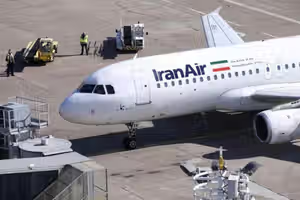
Iranian airlines continue foreign flights after US sanctions deadline - Bloomberg
Iran warns it would disrupt regional airports if its flights are barred
Records supplied by ImportGenius, covering January 2025 through June 2026, listed thousands of shipments to Iranian companies and the defense ministry, including GPS devices, motors and aircraft engine parts. Many cited Article 119, which exempts defense imports from tariffs.
Days before war began on February 28, China delivered 300 tons of chemical compounds to the ministry. Trade initially collapsed, and April’s US naval blockade restricted supplies further. Iran responded by expanding air connections.
US-sanctioned Mahan Air increased flights from Beijing, Shanghai and Guangzhou to Tehran from four weekly in early March to about 27 by late April, FlightRadar24 data showed. It operated 39 China–Iran flights in September’s first week, twice its prewar level. Several were unavailable for passenger bookings. China services continued despite announced suspensions to Oman and Turkey.
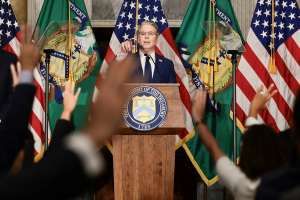
CSIS researcher Kate Koren identified Chinese companies advertising sensitive electronics used in Shahed drones. Suppliers cultivated Iranian customers through trade fairs and Persian-language marketing.
Chinese chemical supplies also helped replenish missile production damaged by Israeli attacks in 2024. After reports of those exports in 2025, US forces raided a ship carrying dual-use components from China to Iran.
In a December letter, sanctioned Chinese company Haokun Energy said it had coordinated confidential export licensing for sodium perchlorate, used in missile propellant, and created a Beijing shell company for the transaction. The Journal verified the company’s registration but could not establish whether the deal proceeded.
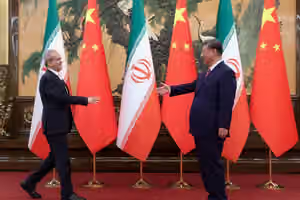
Iran bets on China to blunt Trump’s economic offensive
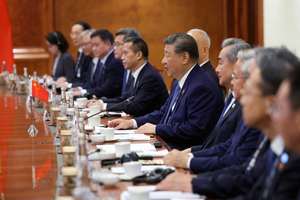
Xi’s BRICS peace call sparks debate in Iran over China’s role in war
Washington also targeted networks seeking newer Chinese shoulder-fired missile systems for Iran, which manufactures versions based on older Chinese designs. One unsuccessful effort sought delivery through Belarus to conceal Iran’s Center for Innovation and Technology Cooperation as the recipient. Tasnim separately published footage of IRGC personnel training with portable launchers.
Iran's biggest buyer
China became Iran’s dominant oil buyer after Trump’s 2018 “maximum pressure” campaign; the countries signed a 25-year pact in 2021. US lawmakers put China’s share above 80% of Iranian crude exports. Banks and shell companies have facilitated payments, including in yuan, US officials and other sources told the Journal.
One arrangement involved Iranian petrochemical sales to Egypt through Banque Misr’s UAE branch. After US objections to dollar payments, proposed transactions shifted to yuan through China’s Cross-Border Interbank Payment System. Washington intervened, stopping the plan, and later moved to restrict the branch’s dollar access.
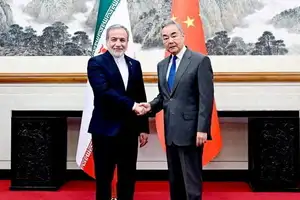
Tehran sees Beijing as potential bridge to Washington
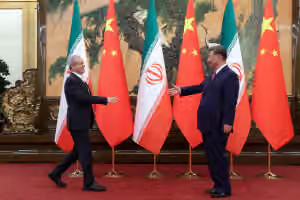
Iran routed up to $2.5 billion via China sanctions workaround in past year - Reuters
Egypt and the bank said they were engaging US authorities; the bank affirmed regulatory compliance. Beijing suspected Egyptian officials had shared information with Washington, and Xi raised the matter in Cairo on September 1, the Journal reported.
US officials also linked Chinese satellite imagery obtained before and after a July 17 Iranian strike to the attack, which killed three American troops in Jordan. Washington had sanctioned three Chinese imagery companies in May.
Despite hundreds of sanctions, disagreements persisted inside Trump’s administration. Hegseth said China and Russia enabled Iran; Trump cited Xi’s assurances against weapons deliveries, saying: “I trust them.” Rubio said Chinese assistance had not changed the war’s trajectory.
July measures targeted Mahan-linked entities, including a Chinese sales agent. Late-August Operation Economic Outcast targeted a Chinese-owned tanker and procurement networks, but no major Chinese companies. Kpler recorded roughly four million barrels reaching China the following week.
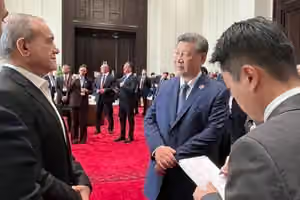
Lawmakers from both parties urged tougher action; Senator Elissa Slotkin called for Iran to become central to the summit. Rubio promised frank talks, while Treasury and the White House defended their enforcement efforts.
China rejected accusations of improper support, citing export controls and opposition to unilateral sanctions. Hong Kong said it implements UN sanctions only.

No comments:
Post a Comment
Note: Only a member of this blog may post a comment.