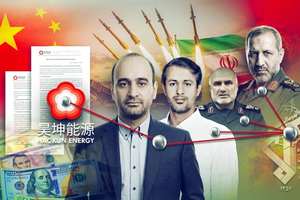
Iran routed an estimated $2 billion to $2.5 billion through a China-based trade mechanism over the past year, using proceeds from oil sales to pay for Chinese goods and, at least once, contracts for military equipment, Reuters reported on Thursday.
The barter-like arrangement allowed Tehran to turn payments for Iranian oil into credits for Chinese imports without sending money directly through international banking channels, Reuters said, citing two senior Iranian sources and three other people familiar with the mechanism.
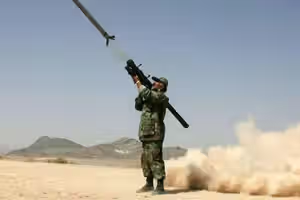
Iran used the system to buy medicines, vehicles and communications equipment, while it was also used in connection with contracts worth millions of dollars to supply Iran with air defense equipment over the past year, the sources said.
Billions routed outside normal banking channels
The mechanism has been operating since at least 2021 but has become more important as Washington tightened sanctions on Iran and companies doing business with Tehran, according to the report.
A buyer acting on behalf of Chinese state-owned oil trader Zhuhai Zhenrong had, at least until this year, deposited hundreds of millions of dollars a month with a China-based financial entity known as ChuXin, three people familiar with the arrangement told Reuters.
Those payments covered Iranian oil purchases. ChuXin then sent funds to Chinese exporters and companies involved in infrastructure projects in Iran, likely through other Chinese financial institutions, Reuters reported.
Around 70% of the Iranian oil proceeds handled through the arrangement went to infrastructure projects, while the rest entered accounts belonging to a special purpose vehicle, or SPV, used to pay suppliers of goods to Iran, the sources said.
The two Iranian sources confirmed the existence of the SPV, which Reuters said had not previously been reported.
Oil exchanged for access to Chinese goods
The SPV is managed by two entities, one acting on behalf of China's Ministry of Commerce and another linked to Iran's central bank, according to all five sources.
When Iran's central bank approves an importer to use funds held in the SPV, the Iran-linked entity informs its Chinese counterpart so payments can be made to suppliers, three of the sources said.
The structure gives Chinese manufacturers access to payment without dealing directly with Iran, according to the report. Reuters said there was no indication that the Chinese manufacturers supplying civilian goods had broken sanctions.
Reuters could find no record of a financial institution called ChuXin in Chinese corporate registries, and one source said it may exist only on a spreadsheet.
China says unaware of arrangement
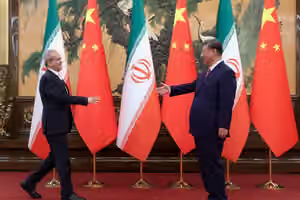
China's foreign ministry told Reuters it was "not familiar with the situation you describe" when asked about the mechanism.
"China has consistently opposed unilateral sanctions that have no basis in international law and have not been authorized by the United Nations Security Council," the ministry said.
Iran's UN missions in New York and Geneva did not respond to Reuters requests for comment. Iran's central bank, China's commerce ministry, the National Iranian Oil Company and Zhuhai Zhenrong also did not respond to questions about their reported roles.
US pressure raises stakes
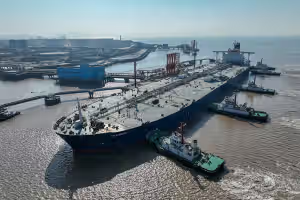
China has long been the main buyer of Iranian oil. More than 80% of Iran's shipped crude went to China in 2025, averaging around 1.4 million barrels per day, according to Kpler data cited by Reuters.
The arrangement has helped Tehran keep trade flowing despite years of sanctions, while giving China access to discounted Iranian crude.
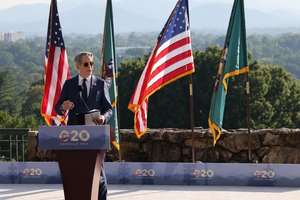
Its importance has grown as the United States has increased economic pressure on Iran during the six-month-old war. Treasury Secretary Scott Bessent warned countries in August to cut business ties with Tehran or risk losing access to the dollar-based financial system.
Reuters said it could not determine how the US naval blockade on Iranian oil exports had affected the China trade mechanism. No Iranian crude cargoes had successfully passed through the Strait of Hormuz to China since the blockade was reinstated on July 14, according to the news agency.
A UN embargo on exports of most major conventional weapons to Iran was restored in September 2025 along with other sanctions.
Andrea Ghiselli, an international politics lecturer at the University of Exeter who studies China's relations with the Middle East, told Reuters that Beijing wanted to resist US pressure without putting major Chinese banks and companies at risk of exclusion from the international financial system.
"They want plausible deniability," he said.

No comments:
Post a Comment
Note: Only a member of this blog may post a comment.