The escalating battle between Saudi Arabia and the Iran-backed Houthis may be a test of what remains of Tehran’s Axis of Resistance after months of war and mounting pressure on Iran itself.
But the fighting is also showing why a weakened axis can remain dangerous: it does not have to win territory to impose costs on Iran’s adversaries.
Yemen’s Houthis dramatically escalated their attacks on Saudi Arabia on Tuesday, striking four southern cities with missiles and drones. The group targeted a Saudi airbase in Khamis Mushait and Saudi Aramco assets in Abha, Najran and Jazan, setting oil installations ablaze. Saudi authorities said 73 people were wounded, including women and children.
The attacks also threatened to widen the war’s economic impact beyond the Strait of Hormuz, where the US-Iran conflict has already disrupted energy flows. Brent crude briefly touched $99.46 a barrel on Tuesday, its highest level since July 24.
“They’re not really fighting five separate wars, they’re just using five instruments of the same coercive strategy,” Fatima Abo Alasrar, a researcher and author on Yemen and Iran and founder of The Ideology Machine, told Iran International.
The timing, Alasrar said, matters.
Iran is exerting pressure around the Strait of Hormuz while the Houthis can create another pressure point around Bab al-Mandab, forcing Iran’s adversaries to contend with threats near two of the world’s most important maritime chokepoints.

“The lesson that the Houthis appear to have learned is that escalation produces leverage,” she said, even without territorial gains.
That leaves Saudi Arabia with a difficult choice: escalate in an effort to substantially weaken the Houthis and risk a wider war or seek a political exit that could reinforce the belief in both Sanaa and Tehran that military pressure can ultimately produce concessions.
Houthis called Saudi Arabia’s bluff
Mohammed al-Basha, a Yemeni-American geopolitical analyst and risk adviser who heads the Washington DC-based Basha Report, said the Houthis helped bring about the renewed war by assuming Saudi Arabia and Yemen’s internationally recognized government would avoid a return to full-scale fighting.
“The Houthis were hoping to call a bluff — a Saudi and a government bluff,” al-Basha told Iran International.
Asked whether they miscalculated, he replied: “Of course, of course.”
Yet al-Basha said the Iran war has also reinforced the Houthis’ belief in the value of escalation.
“They feel that the best way for you to get what you want is to use force,” he said.
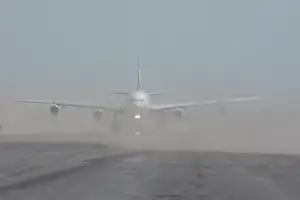
The confrontation follows an earlier dispute over an Iranian aircraft carrying a Houthi delegation back from Tehran following the funeral of Supreme Leader Ali Khamenei.
Analysts told Iran International at the time that the flight may have been an opening move in an effort to establish an air bridge into Houthi-controlled Yemen and rebuild the group’s strategic capabilities.
“The alliance is no longer secretive or covert, it’s very public,” al-Basha said of the Iran-Houthi relationship.
Can battlefield gains change the equation?
Forces loyal to Yemen’s internationally recognized government have now launched counterattacks across several fronts, with officials openly declaring their intention to eventually recapture Sanaa.
But al-Basha cautioned against assuming the Houthis are close to defeat. He said losing strategically important territory, rather than simply patches of ground, could eventually push them toward negotiations.
One place to watch is Hodeidah, whose port al-Basha described as “the lung that the Houthis breathe from.” The group’s position around Hodeidah, Bab al-Mandab and the Red Sea is central to its ability to threaten maritime traffic.
Alasrar, however, said territorial losses do not necessarily eliminate Houthi leverage.
“They can lose ground and still increase their regional leverage,” she said.
The Houthis have threatened further attacks against Saudi economic and military infrastructure, raising the prospect of greater disruption around Bab al-Mandab while the Iran conflict continues to put pressure on Hormuz
A ‘win-win’ for Tehran?
Danny Citrinowicz of Israel’s Institute for National Security Studies sees that predicament as advantageous for Iran.
“For them it’s amazing. So it’s a win-win for them,” Citrinowicz told Iran International.
If Saudi Arabia backs down, he argues, Iran gains room to strengthen the Houthis. If Riyadh keeps fighting, instability around Bab al-Mandab creates another source of economic pressure while Iran contests Hormuz.
“It definitely worked in the Iranian favor,” he said. “The Iranians are learning from that, unfortunately.”
But it leaves Saudi Arabia with two costly options. Citrinowicz said the Houthis have “crossed the Rubicon” and are unlikely simply to retreat. As Saudi-backed forces approach areas the group considers critical, he expects Houthi attacks against the kingdom to intensify.
A moment of truth for the Mecca Defence Alliance
The escalation is also posing an early test for the Mecca Defence Alliance, the collective defense pact signed by Saudi Arabia, Turkey and Pakistan on August 7.
The agreement stipulates that an armed attack against any one of the three countries is to be regarded as an attack against all three.
Yet neither Turkey nor Pakistan has so far entered the fighting militarily on Saudi Arabia’s behalf.
Citrinowicz calls it “a moment of truth” for the alliance, with neither country so far entering the fighting militarily.
Will Washington hold Iran responsible?
The United States is now explicitly pointing toward Tehran.
“The Houthis in many ways are agents and proxies of the Iranians. I think behind some of this is clearly the Iranian hand,” US Secretary of State Marco Rubio told reporters when asked about the attacks on Saudi Arabia.
Rubio said Washington has a strong defensive military relationship with Riyadh and is closely watching developments.
His comments revive a warning President Donald Trump issued on July 23.
Trump said then that Washington would hold Iran responsible if the Houthis resumed attacks, describing the group as a “Surrogate and/or Proxy of Iran” and warning of “major military punishment” against Iran and the Houthis.
The Houthis have now resumed major attacks against Saudi Arabia. Rubio has publicly pointed to an Iranian hand, but Trump has yet to publicly repeat the threat he made in July.
That leaves a consequential question as the conflict widens: if Washington considers the Houthis an Iranian proxy, how far is it prepared to go in holding Tehran responsible for what they do?
The coming days and weeks are likely to bring advances and retreats on both sides, with territory changing hands and apparent victories proving temporary. The battlefield remains highly fluid, and both sides appear determined to keep fighting, making it too early to draw sweeping conclusions from any single development.
But even without a clear Houthi victory, Iran may stand to gain. As long as the fighting forces Saudi Arabia to expend resources, keeps pressure on Bab al-Mandab and stretches the attention of Tehran’s adversaries, the Houthis can continue to provide Iran with leverage even while under pressure themselves.
The conflict has a long way to go for now and consequences reverberate from Yemen across an already destabilized region.

No comments:
Post a Comment
Note: Only a member of this blog may post a comment.