As a father of three, I think a lot about how much childhood has changed since I was growing up in Houston. My kids have access to more information on a phone than I could have imagined at their age, and advanced computing is accelerating that change. There are real risks that Emily and I have to think about as parents, from inappropriate content and scams to too much screen time and now the possibility that kids let AI do their thinking for them.
But there are enormous opportunities, too. That is why I keep coming back to the same principle I’ve written about for years: parents know their children better than politicians and bureaucrats ever will. New research from Google provides some pretty compelling evidence that teenagers understand this, too.
Google’s new U.S. Future Report 2026 (all figures below are from this Report) surveyed a nationally representative group of 1,003 American teens ages 13 to 17, supplemented by larger state surveys and focus groups. The findings tell a much more interesting story than the usual narrative that kids are helpless against technology and therefore government must step in.
Kids Are Already Adapting
Consider how quickly advanced computing has become normal. Google reports that 94% of teens surveyed used an AI tool during the previous year. About 74% use it for learning at least weekly, and 57% use it creatively at least weekly.
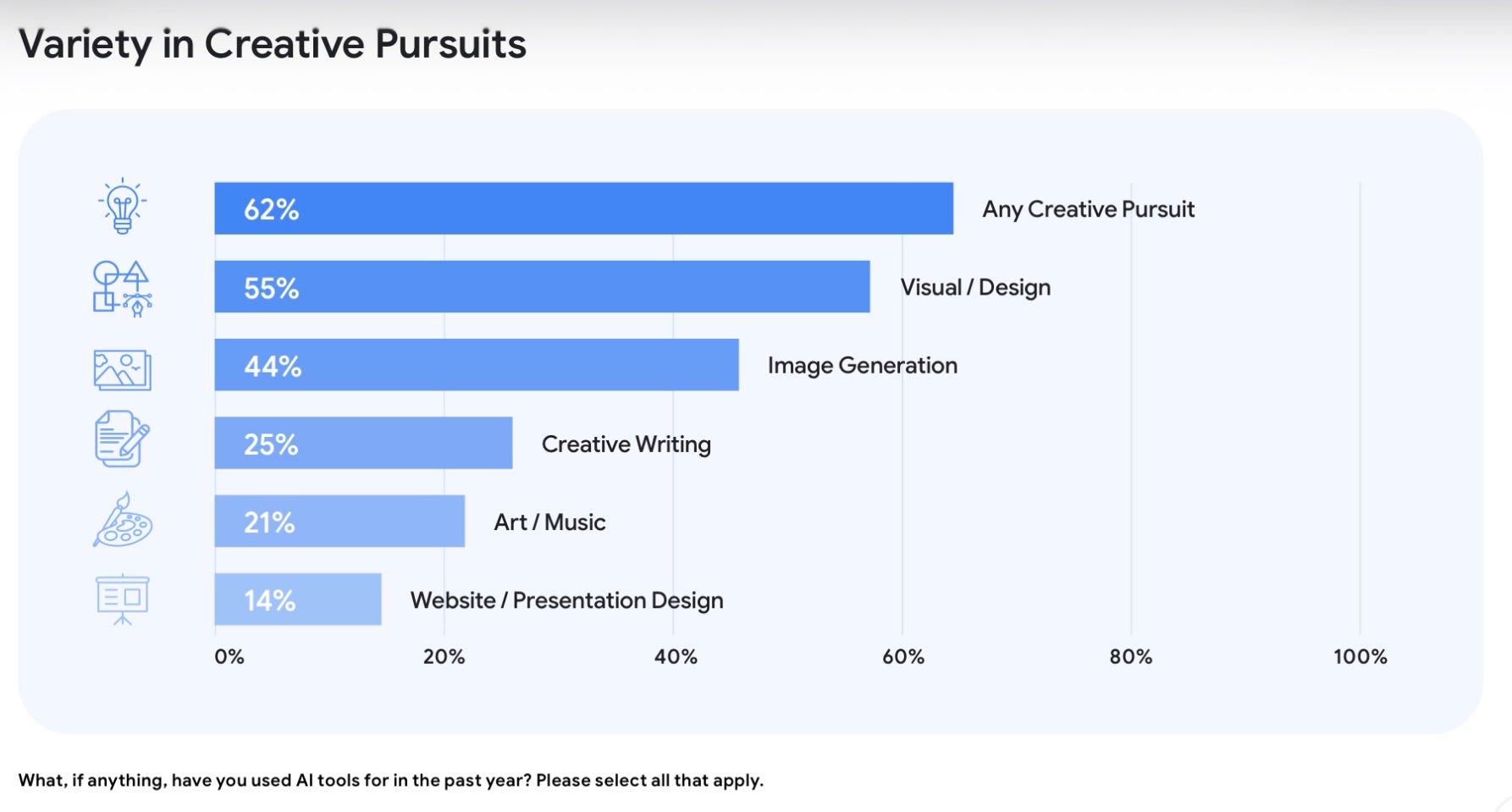
That doesn’t mean everything is going well. Kids can use these tools to cheat, avoid difficult thinking, or consume things they shouldn’t. But they can also use them to understand algebra, improve their writing, explore a new subject, learn another language, or pursue an interest far beyond what their school offers.
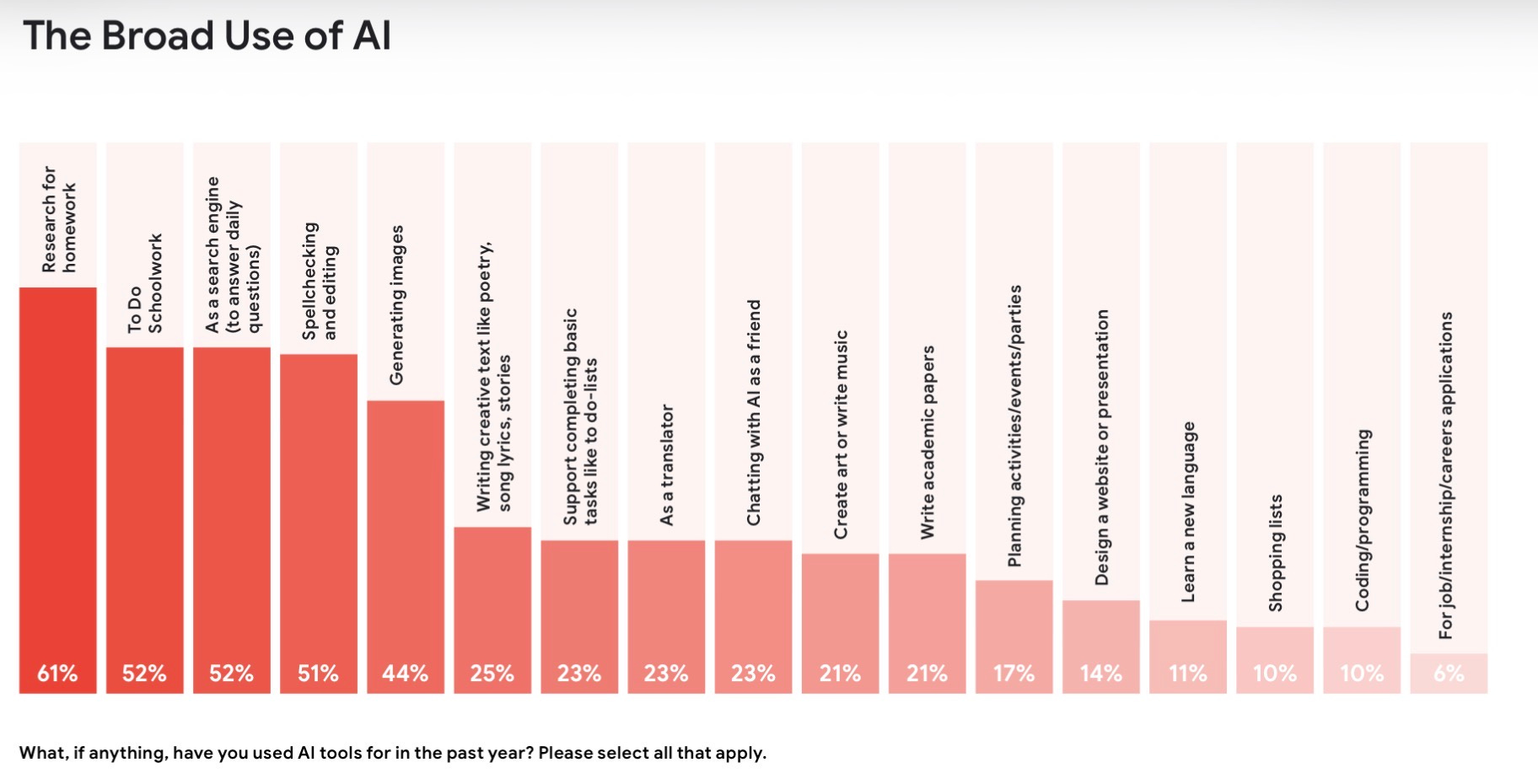
I’ve written previously about how advanced computing could dramatically lower the cost of personalized education. A private tutor has traditionally been expensive. Now a student can have a tool available around the clock that adjusts explanations to how that student learns. That has tremendous potential, especially when combined with the education freedom Jenny Clark and I have advocated so families can choose among public schools, private schools, microschools, homeschooling, and other options.
The goal shouldn’t be to have advanced computing replace teachers or parents. It should be to give teachers, parents, and students better tools.
Teens Still Trust Mom and Dad
The finding that stood out most to me had almost nothing to do with AI.
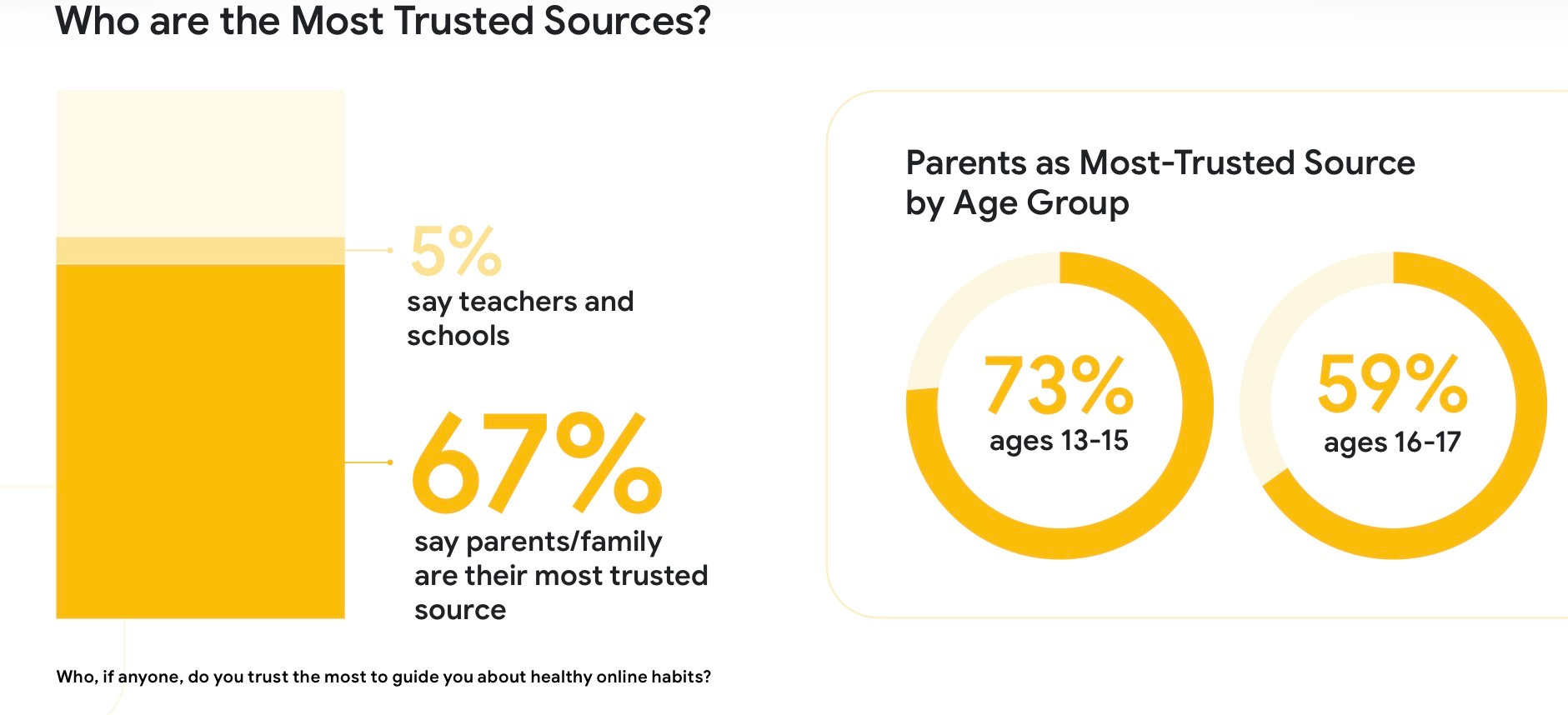
When Google asked teens whom they trust most for guidance about healthy online habits, 67% chose parents or adult family members. Just 5% chose teachers or schools. Among younger teens ages 13 to 15, reliance on parents and family rises to 73%.
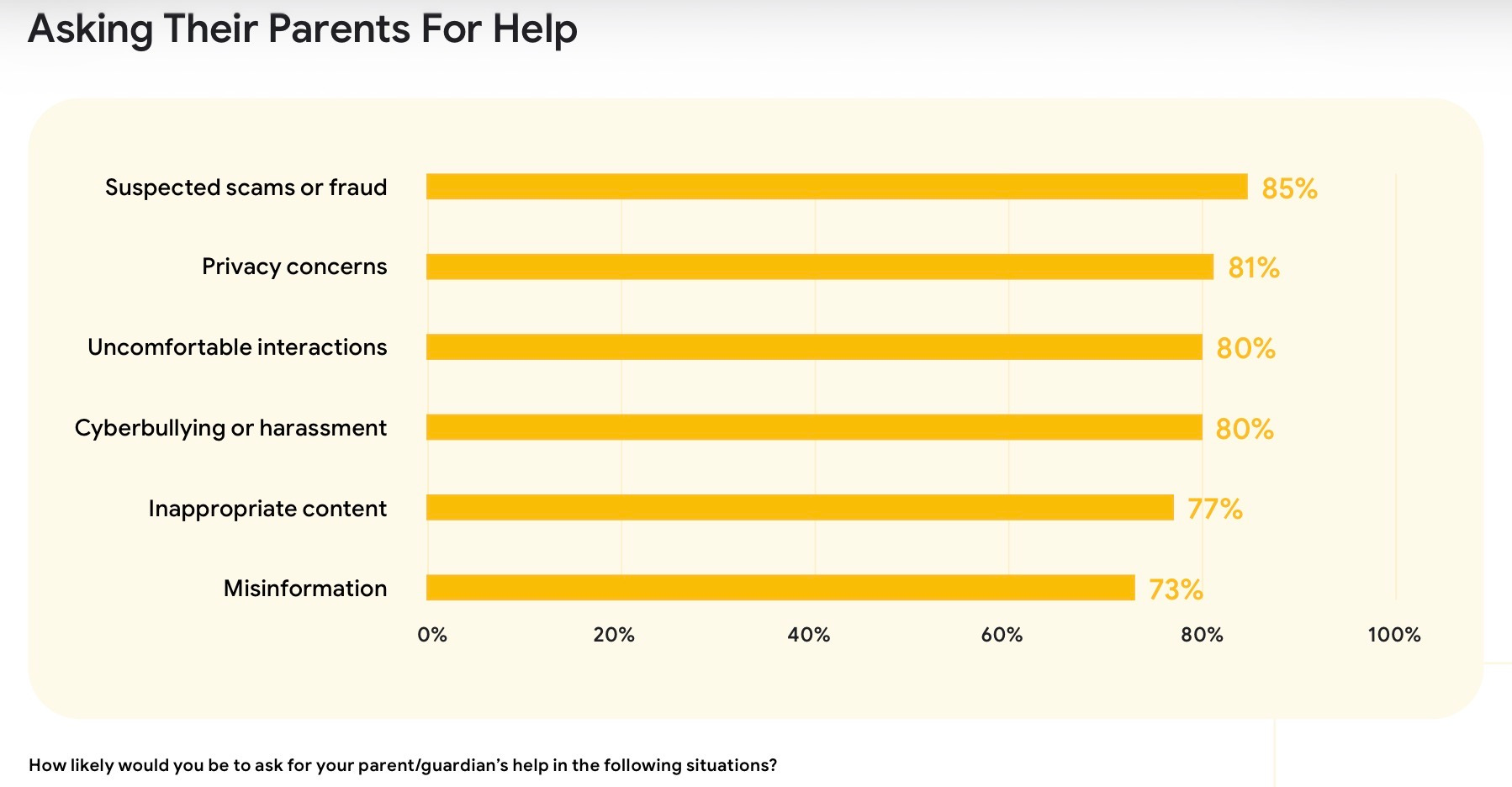
When something actually goes wrong, the numbers become even more striking. Large majorities say they would turn to a parent or guardian about scams, privacy concerns, cyberbullying, uncomfortable interactions, or inappropriate content.
That matters because lawmakers across the country are considering increasingly aggressive online-safety and age-verification mandates. I’ve opposed these approaches in Texas and written about the same problem in Kansas. The intentions are often good. I want my kids protected online, too. But good intentions don’t eliminate tradeoffs.
Government-mandated age verification can mean more personal information collected and stored, higher compliance costs, barriers for smaller competitors, and government increasingly determining how families interact with lawful technology. Ironically, regulations aimed at Big Tech can strengthen the biggest companies because they can afford armies of lawyers and compliance officers that startups cannot.
The Knowledge Problem Matters
There is also a more basic economic problem with one-size-fits-all rules: government doesn’t have enough information.
Google found that 51% of 13-to-15-year-olds report parental management of their device or phone settings, compared with 36% of 16-to-17-year-olds. That makes sense. Parenting changes as children mature. Even children of the same age can have very different levels of maturity, needs, and circumstances.
Emily and I know our three kids differently. We know their strengths, weaknesses, habits, and personalities. A legislator writing a statewide rule cannot possibly possess that information.
This is Hayek’s knowledge problem applied to parenting. Knowledge is dispersed among millions of families, and no central authority can gather enough of it to determine the right answer for every child. That doesn’t mean every parent will make the right decision. It means government officials are human, too, and they have far less information about my children than I do.
Freedom Requires Responsibility
The Google report shouldn’t be treated as the final word. Google has commercial interests in the future of technology, and these are largely self-reported behaviors. We should continue studying what advanced computing does to learning, attention, social development, and other outcomes.
But the findings reinforce what I’ve argued in my work on online safety: protect children by enforcing laws against exploitation, fraud, threats, and abuse. Hold businesses accountable when they violate people’s rights. Give parents better tools and clearer information. Teach kids how to think critically and use technology responsibly.
Then leave room for families and innovators to figure out what works.
My kids are going to grow up with technologies I didn’t have at their age. I don’t want government trying to freeze the world in 1995 to protect them from 2035. I want Emily and me to prepare them for that world by teaching them judgment, responsibility, faith, curiosity, and self-control.
Technology will change. Those principles won’t.
And if teenagers themselves say Mom and Dad are the people they trust most when the digital world gets difficult, policymakers should pay attention.
Empower parents. Protect kids from actual harm. Let innovation flourish. That’s a better path for families, freedom, and prosperity.
Until next time, God bless you, and let people prosper.
Vance Ginn, Ph.D.
President, Ginn Economic Consulting
https://vanceginn.substack.com/p/trust-parents-with-ai-not-government

No comments:
Post a Comment
Note: Only a member of this blog may post a comment.